
Root Shadow vs. Root Smudge: A Practical Comparison

Choose root depth and transition softness rather than treating service names as identical formulas. Compare a deeper root shadow, a softer root smudge, and a natural-root blend. Your starting base and color history affect what a colorist can achieve.

Read the Color Direction Before Choosing a Look
Brunette roots can fade into softer blonde lengths in more than one way. Decide whether you want the root to read as a deeper area, a short blurred connection, or your own natural color flowing into the lightened hair. Look at the crown and the first section of the lengths, not just the bright ends.
Depth describes how light or dark a color appears; tone describes its color direction within that depth. In Wella’s hair color chart, the number before the stroke indicates depth and the number after it indicates tone. This is a named manufacturer’s system, not a universal numbering rule or a formula for your hair. Salon names vary too, so compare the depth and softness you can actually see rather than assuming that “shadow” or “smudge” sets a processing time.
Compare Deeper Root Shadow, Softer Root Smudge, and Natural-Root Blend
These are editorial examples of visible directions, not fixed service definitions. In each one, check root depth, tonal reflection, and where the transition ends. A photo cannot tell you which color process produced the result.
| Direction | Depth and reflection | Placement to compare | Ask your colorist |
|---|---|---|---|
| Deeper root shadow | Root visibly deeper than the blonde lengths; check whether its reflection reads neutral, cool, or warm | Readable darker area at the crown, with a softened edge into the lengths | How deep and how wide should that darker area be on my base? |
| Softer root smudge | Root close to the starting depth, with a less pronounced depth change | Short, diffused boundary near the scalp; brightness remains near the upper lengths | Where will the blur stop, and how much lightness stays near my part? |
| Natural-root blend | Natural root remains the depth reference; reflection in the colored lengths may differ | Visible natural root easing into previously colored lengths | Can we soften the existing connection without making my root look like one solid new shade? |
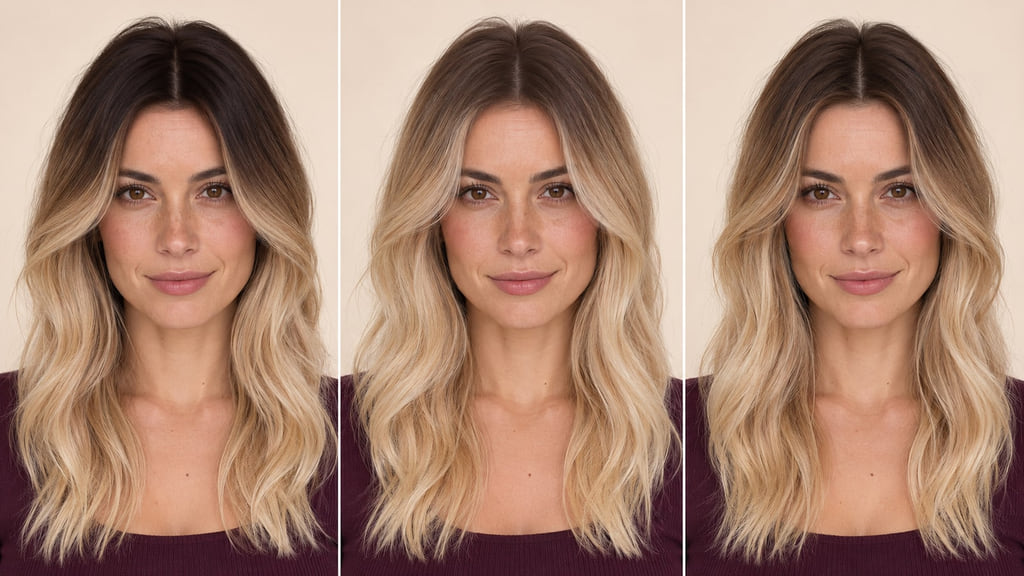
For example, put the deeper shadow beside the softer smudge at the same light level. In the first, ask for a crown that stays visibly darker than the blonde lengths. In the second, ask for a shorter, diffused edge with less added depth. The difference to discuss is the visible boundary, not which service name sounds better.
Deeper Root Shadow
A deeper root shadow makes the change in depth readable at the crown while the edge still blends into the lengths. In the left comparison view, follow the dark area around the part and toward the sides. If you like its contrast, ask which areas should stay bright so the root does not extend farther than you want. This is a design direction, not a claim that the same depth suits every starting base.
Softer Root Smudge
A softer root smudge keeps the boundary shorter and more diffused. The center view lets you compare that blur against the darker shadow with the face, cut, and light held steady. Ask how much of the visible root area would change and where the blend would stop. The word “smudge” alone does not specify a formula or timing.
Natural-Root Blend
If you want to keep your natural root visible, compare how it meets the previously colored lengths. The right view illustrates a visible brunette root fading into blonde lengths; the photograph cannot establish how that root color was achieved. Ask whether the existing transition can be softened while preserving the natural area you prefer.
Account for Your Starting Base
The brunette-to-blonde reference shows a direction, but your natural depth, previous color, and current lighter placement shape the consultation. A deeper shadow over an already darkened root is a different starting point from a natural brunette root beside lightened lengths. Bring a photo of your own crown and upper lengths in neutral light, plus a record of past color services. Wella’s starting-point guidance also treats hair history and underlying pigment as inputs to color planning; the reference image cannot replace that assessment.
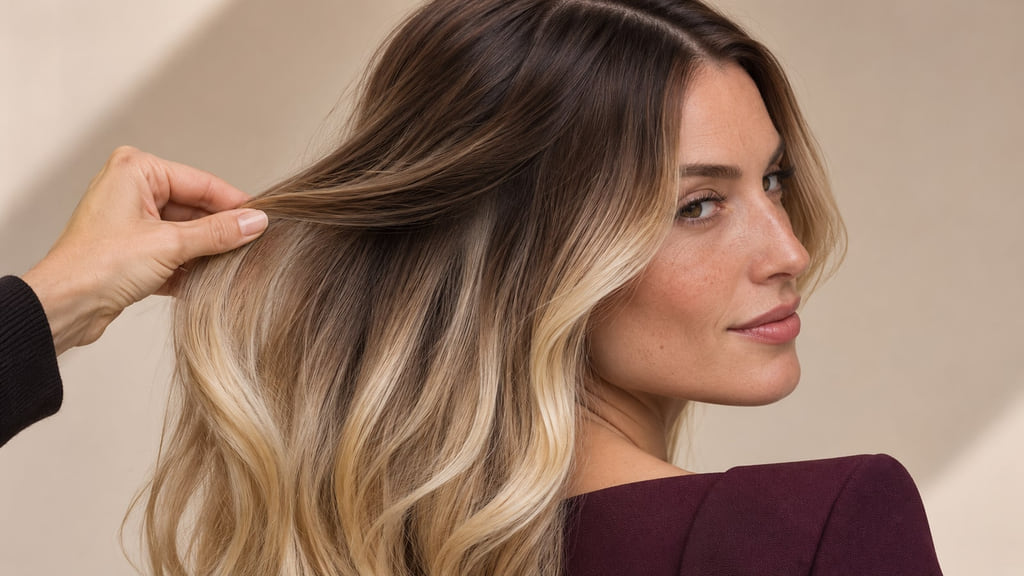
If a softer smudge is your preference but the reference has much brighter lengths than your hair, keep the requested short boundary as your goal and discuss the achievable brightness separately. Likewise, if your usual part exposes more root than the photo shows, check the side and crown before agreeing on placement. A colorist can help translate the visual goal to your actual base without a home application recipe.
Plan Regrowth and Color Upkeep
Watch for two different changes: your natural root becoming more distinct, and the colored areas changing tone or apparent depth. With a deeper shadow, you may want a refresh when the darker crown no longer connects to your natural growth or the contrast becomes stronger than you intended. With a softer smudge, you may notice the short blur losing its definition before the lighter lengths need another placement decision. These are observation points, not a universal appointment schedule.
| Direction | Daily check | Change to watch | Salon support to discuss |
|---|---|---|---|
| Deeper root shadow | Check the part and crown in your usual style | Natural growth or fading changes the depth contrast | Whether the darker area needs refreshing or a different edge |
| Softer root smudge | Notice how the short blur reads with your usual part | The boundary or reflection becomes more visible | Whether a tonal refresh is enough for your goal |
| Natural-root blend | Compare the natural root with the upper lengths | The join becomes sharper as the hair grows or color changes | Whether the existing transition needs softening |
The option that feels easiest depends on which change you are comfortable seeing and how much salon upkeep you want. Tell your colorist whether you prefer to preserve a deliberate darker crown, a brief blur, or your own root. That preference is more useful than an invented number of weeks between visits.
Build Your Color Reference
Save one photo that shows the crown, part, and upper lengths together. Add a side or back-three-quarter view so the transition is visible beyond the front hairline. Use similar light for your own photos and the two references you compare; a different exposure can make one root appear deeper even when the color is similar.
“I want to compare a deeper root shadow with a softer root smudge. My reference shows brunette roots fading into softer blonde lengths. Keep my natural hair density as it is, and show me the difference in root depth, reflection, and where the blend ends before we choose a service. My current color history is ___. I want to keep brightness near ___, and I do not want the darker area to extend past ___.”
Choose the root depth and transition softness you prefer, then discuss that brief with your colorist. You can optionally preview a color direction to compare appearances. A virtual preview cannot predict a dye formula or the result on your actual hair.
Frequently Asked Questions
How do I compare these shades at a similar depth?
Keep the light and camera exposure similar, then look at the reflection and the length of the transition. Depth describes lightness or darkness; tone describes color direction within that depth in Wella’s named chart system. A darker-looking photograph alone is not proof that one service adds more depth.
Does my starting color change the achievable result?
Yes. Natural root depth and previous color change what the colorist starts with. Show your own crown and lengths beside the deeper-shadow and softer-smudge references, and explain your color history before asking which placement is realistic.
Can a virtual preview predict the dye result?
No. Use it to compare a visible direction, not to forecast how color will process on your hair. Salon terminology varies, so describe the root depth and blend you want without trying to derive a DIY timing recipe from the image.