
Face Shape Detector Quiz
Use visible relationships—face length, forehead, cheekbones, jaw, and chin—to find the closest one or two face-shape descriptions. Mixed proportions are normal. This face shape detector is a transparent comparison quiz, not a diagnosis, and its result routes you to the guides that can help with your next hairstyle decision.
Give the Result Before the Explanation
This is a five-question face shape quiz with visible scoring, not photo analysis. Choose the answer that looks closest in a mirror or a front-facing reference photo. Every option tells you which named result it supports. Select Show my result to receive one guide or, when the top scores tie, two guides to compare.
Your closest comparison
Your next step:
A preview or quiz result is a starting point, not a guarantee. If an answer sits between two options, choose the closer one and let the final score preserve a tie rather than changing an observation to force a single shape.
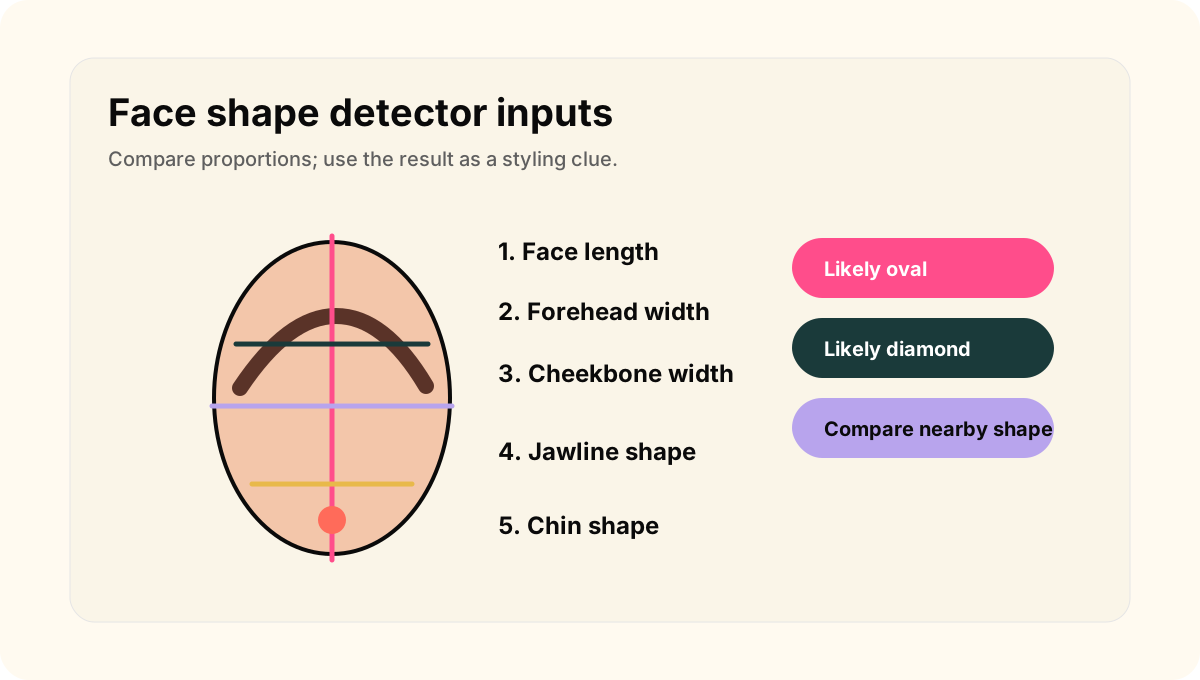

Your practical next step is to answer from one consistent view, submit the quiz, and save the one or two named results before reading further.
Use One Clear Decision Framework
Read the features in a fixed order. Start with length compared with width, because that separates clearly long outlines from outlines whose length and width are closer. Next, identify whether the forehead, cheekbones, or jaw appears widest—or whether those widths feel similar. Finish with jaw and chin shape, which can distinguish angular, curved, tapered, and lengthened lower outlines.
Do not treat one feature as decisive. A wide forehead can appear with several overall patterns, and a rounded chin does not automatically produce one result. The useful result comes from the relationship among all five answers.
| Variable | What to compare | Why it matters in this quiz |
|---|---|---|
| Length to width | Clearly longer, slightly longer, or similar | Separates oblong and oval clues from a rounder overall proportion. |
| Forehead | Its visible width relative to cheeks and jaw | A wider upper outline can support a heart result. |
| Cheekbones | Whether they form the widest point | A pronounced widest point can support a diamond result. |
| Jaw | Width, corners, curve, and taper | Distinguishes square clues from softer or narrower lower outlines. |
| Chin | Rounded, tapered, broad, or lengthened | Refines the lower outline without overriding the other answers. |
The framework is a comparison vocabulary, not a rule about what your face must be called. Your next step is to keep the highest-scoring description and any tied second description.
Compare the Main Options

Oval result
Length: slightly longer than wide.
Width pattern: forehead, cheeks, and jaw feel balanced.
Lower outline: softly curved jaw and rounded chin.
Open the oval guideRound result
Length: close to the overall width.
Width pattern: cheek area and outline read as softly full.
Lower outline: curved jaw and rounded chin.
Open the round guideSquare result
Length: often close to the width.
Width pattern: forehead, cheeks, and jaw feel similar.
Lower outline: visible jaw corners and a broader chin.
Open the square guideHeart result
Length: can vary.
Width pattern: forehead appears wider than the jaw.
Lower outline: jaw narrows toward a tapered or pointed chin.
Open the heart guideDiamond result
Length: commonly longer than wide.
Width pattern: cheekbones appear widest while forehead and jaw narrow.
Lower outline: defined or tapered chin.
Open the diamond guideOblong result
Length: clearly longer than wide.
Width pattern: forehead, cheeks, and jaw stay fairly similar.
Lower outline: longer jaw or chin rather than a wide curve.
Open the oblong guideThese cards stop at observation. The linked guides own the hairstyle recommendations. Your next step is to open only your top result, or both tied results, and compare their examples.
State Limits and Practical Constraints
This quiz cannot diagnose a face shape, provide an accuracy percentage, evaluate attractiveness, or predict how a haircut will look. Hairline visibility, facial expression, head angle, and the point from which you compare widths can change your answer. Natural asymmetry and mixed proportions are also expected reasons for a close result.
A photo is optional. If you use one, choose a front-facing image with a relaxed expression, level head, even light, and hair moved away from the forehead and jaw. Avoid relying on a close angled selfie: research measuring digital portraits found that short camera-to-subject distances can distort facial features (2024 Laryngoscope study). Compare the photo with a mirror view instead of treating either as exact.

Your practical next step is to repeat uncertain answers once under consistent conditions, then keep the result probabilistic.
Route the Reader to the Next Best Page
Use the result as navigation, not as a complete haircut prescription. If one result leads, open its dedicated shape guide. If two results tie, read both introductions and note which proportion description matches more consistently. The face shape overview is the correct owner when you need to understand the broader framework before choosing a shape label.

Once you have one or two guide routes, choose the next decision by intent. Use bangs by face shape when fringe length, density, or opening is the unresolved choice. Use bob haircuts by face shape when perimeter length and side volume are the main comparison. Those pages can combine your shape clue with the specific haircut geometry without turning this detector into a generic style guide.
Your next step is one owned page and one concrete haircut question—not a search for a more certain label.
Frequently Asked Questions
How accurate is the face shape detector?
It does not have a validated accuracy percentage. It is a transparent comparison aid built from your answers, not a measurement system or diagnosis. Use the result to narrow the guides you compare, and keep two results when the observations remain close.
Can I use the quiz without a photo?
Yes. The quiz is designed to work from mirror observations of length, forehead, cheekbones, jaw, and chin. A front-facing photo can be a second reference, but there is no upload or photo-analysis step on this page.
What if I match two face shapes?
Keep both. The result panel returns two names when the highest scores tie, and each name links to its own guide. Compare which description remains stable across a mirror view and a neutral photo; do not alter an answer merely to remove the tie.
Does my hairline change the result?
It can change how wide or tapered the visible forehead appears, especially when fringe or a side part covers the outline. Move hair away from the forehead for that question, then treat the hairline as one clue rather than the deciding feature.
Should face shape decide my haircut?
No. Face shape is one optional filter. Texture, density, growth patterns, dry length, daily styling, comfort, and the effect you want can matter more. Use the quiz to prepare a focused comparison, then make the haircut decision in the dedicated guide or with a licensed stylist.