
Hairstyles for Oblong Faces: A Practical Comparison

Choose side volume, fringe, and perimeter with a longer face outline. Compare fuller fringe, cheek-level width, a shorter perimeter, and soft waves. The useful choice is a shape you can describe and maintain with your own texture, density, and routine.

Start with the feature you want to see in a reference: more forehead coverage, width beside the cheeks, a higher bottom edge, or movement through the sides. An oblong outline is one way to describe proportions, not a problem a haircut must correct. You can choose any of these features, combine them, or keep a long, open silhouette.
Read the Cut Outline Before Choosing a Look
Trace three parts of a reference photo: the front framing, the widest point of the hair, and the dry perimeter—the visible bottom edge. Shoulder-length waves, for example, can extend beside the cheeks without a full fringe. Layers distribute length and visual weight within a cut; Sam Villa’s layering explanation distinguishes techniques by weight distribution and cutting-line visibility and describes horizontal sectioning as one way to build weight into a shape.
Those terms help you describe what you see, but they cannot predict the same volume on different heads of hair. A fuller fringe changes the visible forehead area; cheek-level width changes the side outline. Neither is a required correction for face length. Sam Villa’s discussion of face shape places it alongside texture and density as one consideration in a haircut choice.
Compare Fuller Fringe, Cheek-Level Width, and a Shorter Perimeter
Compare one visible variable at a time. The examples below show different people, so use them to identify cut features rather than as a controlled before-and-after test.
| Option | Visible feature | Check with your stylist |
|---|---|---|
| Fuller fringe | A broad front section covers more of the visible forehead. | Will my section density and growth direction support that line? |
| Cheek-level width | Waves or curls extend sideways around the cheeks without adding crown height. | Where will the widest point sit when my hair is dry? |
| Shorter perimeter | The bottom edge moves upward while the front frame and side fullness stay comparable. | Which landmark should my dry ends reach? |
| Soft waves | Loose, separated bends change the side outline while the underlying density stays the same. | What styling would maintain those bends in my texture? |
For a useful A/B comparison, place a fuller-fringe photo beside one with cheek-level width. In A, notice how much of the forehead the front section covers. In B, follow the outer wave or curl near the cheeks while keeping the crown in view. Ask which visible change you want before discussing how to cut or style it.
Fuller Fringe
A fuller fringe creates a broader line across the forehead. Its feasibility depends on the hair available in the front section and the direction it grows. Compare a reference with your own hair in its dry state, then ask how much of the current front frame you would need to change.

Cheek-Level Width
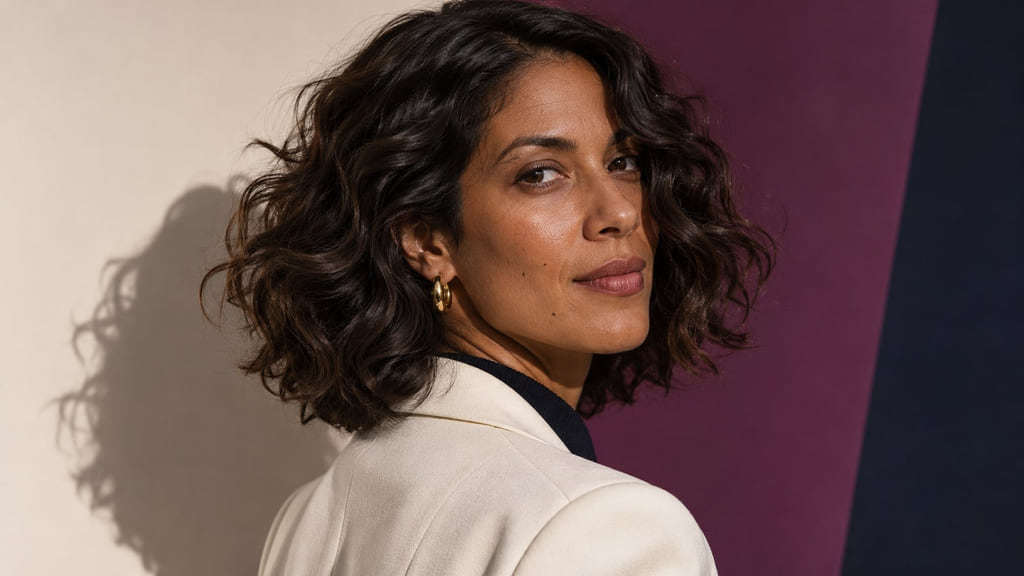
Waves or curls can extend outward around the cheeks while the crown remains relatively quiet. Look at where that fullness starts and ends, rather than assuming the reference has the same density as your hair. Ask what part of the side outline could be changed while keeping your preferred length.
Shorter Perimeter
A shorter perimeter moves the visible bottom edge upward. Name a landmark—jaw, shoulder, or collarbone—rather than asking for an arbitrary number of inches. When comparing photos, keep the fringe and side fullness in view so a changed length does not get mistaken for a changed texture.

Soft Waves
Loose, separated bends can change the side outline without changing your face or adding hair. A straight reference and a waved reference may also differ in cut, so follow their perimeter and front framing before attributing the whole effect to styling. Ask how the bends would look with your own texture after a normal day.

Account for Texture, Density, and Growth Direction
Check the reference against your natural texture, density, growth direction, and dry length. A dense fringe in a photograph may use more hair than you want to bring forward. If your front section separates or lifts at the hairline, ask how the fringe would fall on an ordinary day before committing to its shape. Face shape remains one consideration alongside these practical inputs.
For cheek-level width, decide whether the reference shows your natural pattern or a styled wave. If your hair falls straighter, ask how much daily styling would be needed to keep the side outline. If curls spring upward as they dry, choose the perimeter from the dry shape. You can pursue the same visible goal through different cuts and routines without copying a photograph exactly.
If you are still comparing neighboring outlines, use the Face Shape Guide as a descriptive starting point. Your haircut choice does not depend on fitting a single category.
Plan Styling and Grow-Out
A fuller fringe may need a morning reset when it separates, lifts, or stops sitting at the length you chose. Cheek-level width may call for a different routine: refreshing waves or curls and watching whether the widest point shifts as the cut grows. Decide which action you are willing to repeat, and which change would prompt a salon visit.
| Option | Daily attention | Grow-out cue | Salon discussion |
|---|---|---|---|
| Fuller fringe | Check the front section's fall and separation. | The line reaches a position you no longer want. | How much front density can I keep in the fringe? |
| Cheek-level width | Refresh side movement if your pattern needs it. | The widest point drops or loses its shape. | Where should the side volume sit when dry? |
| Shorter perimeter | Notice how the bottom edge sits after drying. | The edge passes your chosen landmark. | How will the line grow with my texture? |
| Soft waves | Restyle bends if they relax during the day. | The movement becomes harder to place. | Can the cut support this outline with my routine? |
These are qualitative tradeoffs, not a shared trim calendar. Bring up the effort you actually tolerate before choosing the most styled reference.
Build Your Haircut Reference
Save a photo that shows the entire crown, front framing, widest point, and bottom edge. Add a second view from the side or back so the perimeter is readable. Keep the lighting and angle as consistent as possible when comparing two options; a photograph cannot show how a cut will behave with your own density.
I want to compare fuller fringe with cheek-level width. My reference is shoulder-length waves with visible cheek-level width. Keep the natural density and show me the difference in perimeter, front framing, and crown shape before we choose a service.
Choose the feature you want to discuss first, then bring both the reference and your usual styling routine to the consultation. Ask your stylist to show where the front framing, widest point, and dry perimeter would sit on your own hair.
Frequently Asked Questions
Do I have to follow a face-shape rule?
No. Face shape describes an outline and can help you name where you want fringe, side volume, or a perimeter. Your texture, density, routine, and preference still shape the decision.
How can I compare fringe and volume placement?
Look at the front edge in one reference and the widest side point in another. A fuller fringe changes forehead coverage; cheek-level width changes the outer hair silhouette. Ask which feature you want to change and which you want to keep.
What if my face does not fit one category?
Use the features you can observe rather than forcing a label. A longer outline does not need correction, and bangs are never mandatory. Compare the cut’s visible lines with your dry hair and choose the effect you prefer.