
Haircuts for Round Faces and Fuller Jawlines: A Practical Comparison

Compare length and face-framing placement around a fuller jawline. A below-jaw perimeter, off-center fringe, modest crown lift, and soft long layers each change a different part of the hair outline. Choose the shape you can describe and maintain with your own texture, density, and routine.

Start with the outline you want your hair to make, then compare where its ends, front section, and volume fall. A below-jaw lob with an off-center front piece is one example, but your dry hair and daily routine decide whether that reference is useful. A haircut changes visible framing; it does not change facial anatomy or body weight.
Read the Cut Outline Before Choosing a Look
Trace the outer edge of the hair in a reference photo. Where does it end in relation to the jaw? Where does the front section open? A lob whose dry ends sit below the jaw draws a different lower line from fringe that opens to one side, even when both appear in the same cut. Neither is a rule for a round face.
Layers distribute length and visual weight within a cut. Sam Villa’s explanation of layering distinguishes techniques by where weight sits and how clearly the cutting line shows; it describes horizontal sectioning as one way to build weight into the shape. Those terms help you discuss a reference with a stylist. They do not promise more hair or an identical result. Sam Villa’s face-shape discussion also treats face shape as one consideration alongside texture and density.
Compare Below-Jaw Perimeter, Off-Center Fringe, and Crown Lift
Use the same dry-hair landmarks for each option: the perimeter, the shortest front section, and the point where volume is strongest. Trace those features in each photo before deciding which placement you prefer.
| Option | Visible feature | Question to bring to a stylist |
|---|---|---|
| Below-jaw perimeter | Dry ends fall below the jaw; the full lower face remains visible. | Where will my ends settle after drying? |
| Off-center fringe | The front opening shifts from the middle, creating unequal framing. | Will my natural part hold this opening? |
| Crown lift | Root direction adds modest height above the face. | How much lift can I reset in my routine? |
| Soft long layers | Longer internal sections move while a connected bottom edge retains length. | Where would the shortest visible layer begin? |
For a practical A/B comparison, place a below-jaw perimeter beside an off-center fringe. In A, follow the dry ends around the lower face. In B, trace where the shorter front section opens and joins the longer hair. Choose the feature you want to change first, then ask what can remain from your current cut.
Below-Jaw Perimeter
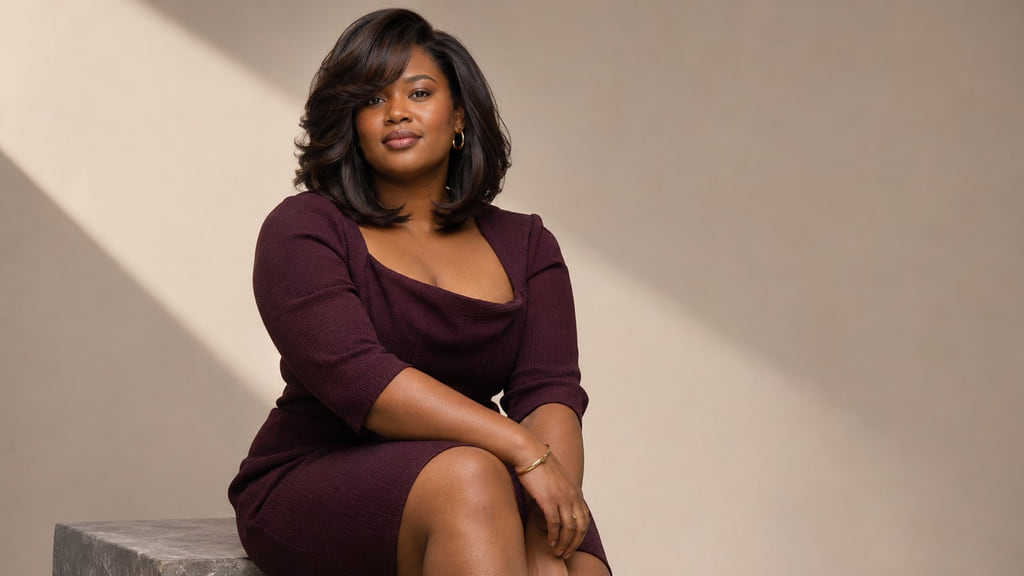
Keep the ends below the jaw in the dry outline, with the full lower face visible. This editorial example shows how the lower edge frames the face without suggesting that the face itself changes. If your hair springs upward as it dries, ask your stylist to assess the length on your natural texture before choosing the cutting line.

Off-Center Fringe
Move the opening away from the middle and let one front section frame more of the forehead than the other. The result depends on your growth direction, especially if the hair naturally parts elsewhere. Try the placement on dry hair and discuss how short the front can go while still connecting to the sides.
Crown Lift
Lift at the crown changes the upper outline when the roots can be directed upward. Keep the height believable for your density and the styling you are willing to repeat. Ask whether the same effect can be made with your existing cut before removing length elsewhere.

Soft Long Layers
Longer internal sections can move while the bottom edge stays connected. That is a different shape from a short, separated crown shelf. If retaining length matters most, ask your stylist to show where the first visible layer would begin on your hair and how much of the lower edge would remain.

Account for Texture, Density, and Growth Direction
Look at your hair after a normal wash and dry. Straight, wavy, curly, and coily hair can place the same cut’s ends at different visible heights; density affects how full a photographed outline appears. A below-jaw reference is useful only after you check where your own dry perimeter sits. Bring a front and side view so the stylist can see the edge and the amount of hair supporting it.
If an off-center fringe in a photo falls against your natural part, keep the desired opening as a reference and ask how your growth pattern would change it. A parting adjustment may be enough, or the front may need a different length. For broader options, compare hairstyles for round faces, bobs by face shape, and bangs by face shape.
Plan Styling and Grow-Out
For a below-jaw perimeter, notice whether the ends still form the lower line you chose after ordinary drying. For an off-center fringe, check whether the opening returns after washing and whether the front pieces still connect as they grow. Crown lift asks for a root reset; long layers ask you to notice whether the moving sections remain distinct. None has one universal trim interval.
| Option | Daily check | Grow-out cue | Salon support to discuss |
|---|---|---|---|
| Below-jaw perimeter | Check where the dry ends land. | The lower edge falls past the intended landmark. | Which part of the edge needs refreshing? |
| Off-center fringe | Reset the opening if it moves. | The front pieces fall into the eyes or lose their connection. | How short should the front remain? |
| Crown lift | Redirect roots after washing or sleep. | The upper shape becomes harder to lift. | Would shaping help your routine? |
| Soft long layers | Check that the bottom edge stays readable. | The layer endpoints blend into the length. | How much movement should be restored? |
Build Your Haircut Reference
Save a front and side photo that clearly show the full crown and dry ends. Add a photo of your own unstyled hair. Then try this salon brief: “I want to compare a below-jaw perimeter with an off-center fringe. My reference is a below-jaw lob with an off-center face-framing section. Please keep my natural density in mind and show me the difference in perimeter, front framing, and crown shape before we choose a cut.”
Pick the placement you want to discuss first, then take the reference and a photo of your own dry hair to a stylist. Ask where the perimeter and front section would fall with your texture and routine.
Frequently Asked Questions
Do I have to follow a face-shape rule?
No. Face shape is one descriptive starting point alongside texture, density, and personal preference. Compare the perimeter and front framing you actually want rather than treating any cut as mandatory.
How can I compare fringe and volume placement?
Hold the lower length similar in two references. In one, inspect where an off-center fringe opens; in the other, inspect where the crown rises. That separates the front frame from the upper outline.
What if my face does not fit one category?
Use the visible landmarks in your own photos instead of assigning a single label. Discuss where the hair ends, opens, and gathers volume. A haircut can alter that frame, while your facial anatomy and body weight remain your own.