
Hairstyles for Round Faces: A Practical Comparison
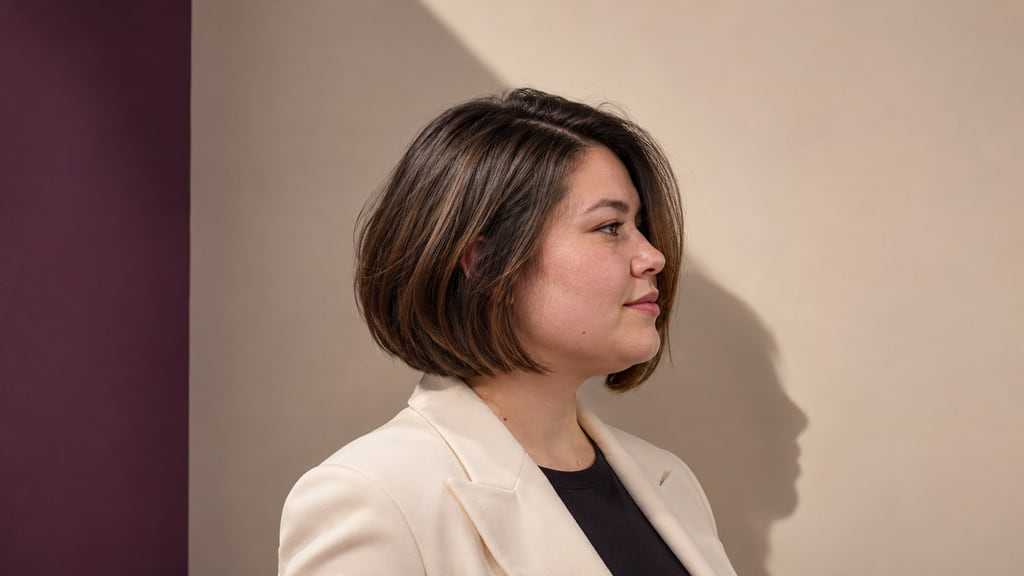
Choose where length, fringe, and volume create the effect you want. Compare a longer face frame, asymmetric fringe, crown height, and a rounded bob by their visible outline, then check each against your hair texture, density, and routine.

A longer face frame places its front ends lower, asymmetric fringe changes the line across the forehead, crown height moves the hair outline upward, and a rounded bob makes the lower edge prominent. None is a rule for a round face. Pick the line you want to see, then compare it with the way your hair dries and the styling you want to do.
Read the Cut Outline Before Choosing a Look
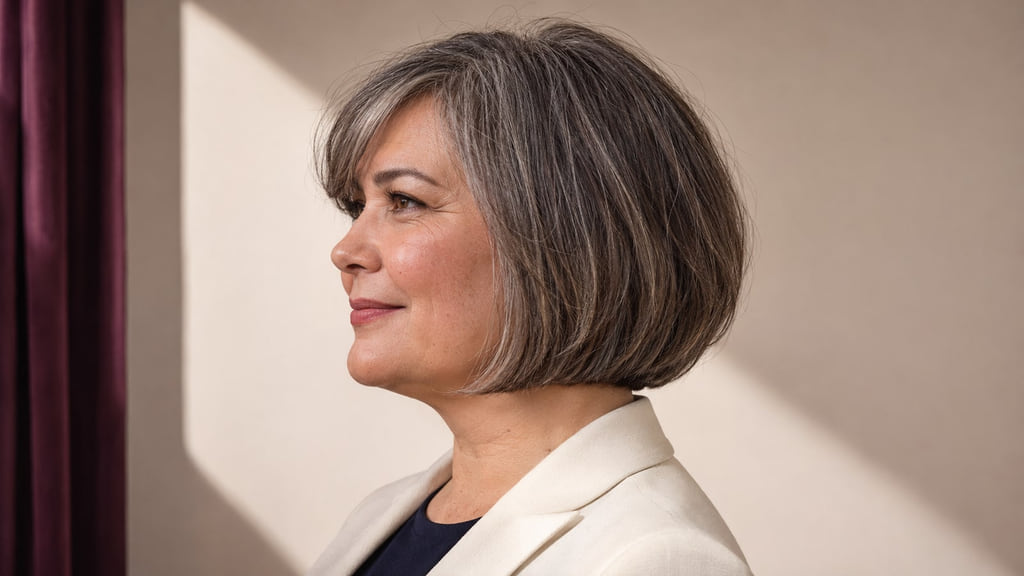
Start with the perimeter—the visible outer edge of the cut—and where its front sections end. In the bob above, a rounded lower edge and a longer off-center front piece form two separate lines. Layers are sections cut to different lengths; their placement changes where visual weight gathers. Sam Villa’s explanation of layering distinguishes sectioning patterns by weight distribution and cutting-line visibility, and describes horizontal sectioning as one way to build weight into a shape.
That vocabulary helps you describe a result, not prescribe a technique. A longer face frame changes the endpoint beside the cheek and jaw; asymmetric fringe changes the shorter front section. Ask which line you want to notice first. Sam Villa’s face-shape discussion considers face shape alongside hair texture and routine. Use your proportions as one reference while choosing the outline you prefer.
Compare Longer Face Frame, Asymmetric Fringe, and Crown Height
These examples show different people and hair textures. They illustrate distinct cut and styling features, not a controlled before-and-after result. For a closer comparison of your own references, match camera angle, lighting, dry texture, and apparent density as closely as possible.
| Option | Visible feature | Ask your stylist |
|---|---|---|
| Longer face frame | Front endpoints fall below the cheek area while the lower jaw remains visible. | Where will those pieces end when my hair is dry? |
| Asymmetric fringe | Left and right front lengths differ because of the cut, not a tilted camera or part alone. | Which side will stay shorter with my natural part? |
| Crown height | Hair moves upward at the crown while the side width remains visible. | How much lift would I style each day? |
| Rounded bob | A curved dry perimeter meets a visible chin or jaw landmark; layers remain a separate choice. | Where should the edge land, and how much weight should it keep? |
For an A/B choice, put a longer face frame beside asymmetric fringe. In A, trace the front ends below the cheek area. In B, trace the unequal lengths across the front. Decide which placement you want to change before discussing the rest of the haircut. The first does not promise a slimmer face; the second does not require changing your overall length.
Longer Face Frame
Here the front pieces finish below the cheek area, leaving the lower jaw visible. Compare that endpoint with the back perimeter: the two lengths can differ without losing the overall outline. If your own hair forms more volume around the cheek, ask how the front section would sit at its natural dry length.
Asymmetric Fringe
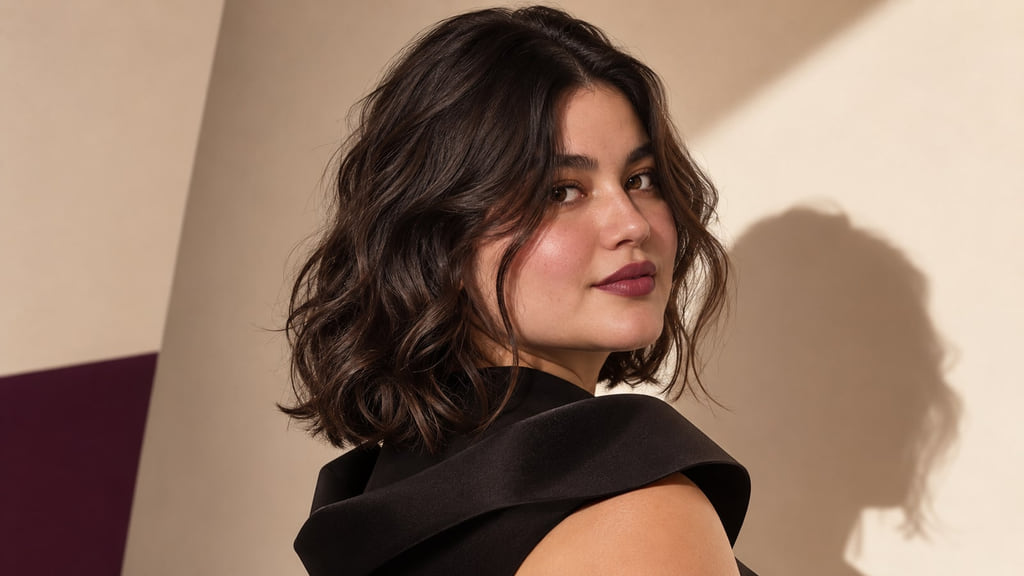
The front section has a visibly shorter side and a longer side. This example asks you to inspect the cut itself, rather than crediting a camera tilt or assuming a side part creates the same line. If your hair grows across the forehead in another direction, bring a photo of its usual fall and ask which side can hold the shorter length.
Crown Height
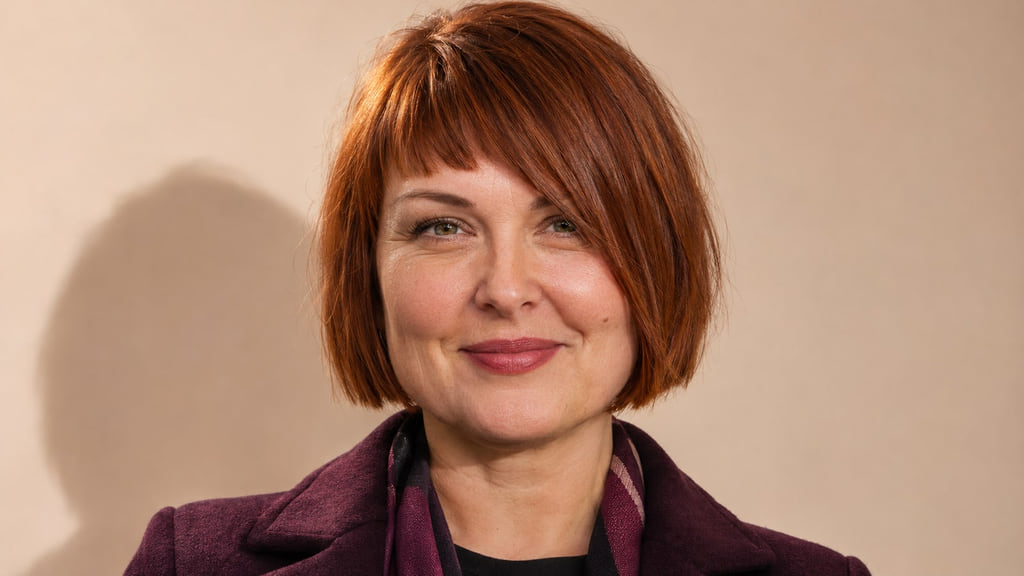
Styled lift at the crown draws the hair outline upward while leaving its side width intact. Notice that this is a styling direction, not a change to the face’s length. Ask whether your usual drying method can create the amount of lift in your reference, and what the cut looks like when the crown settles flatter.
Rounded Bob
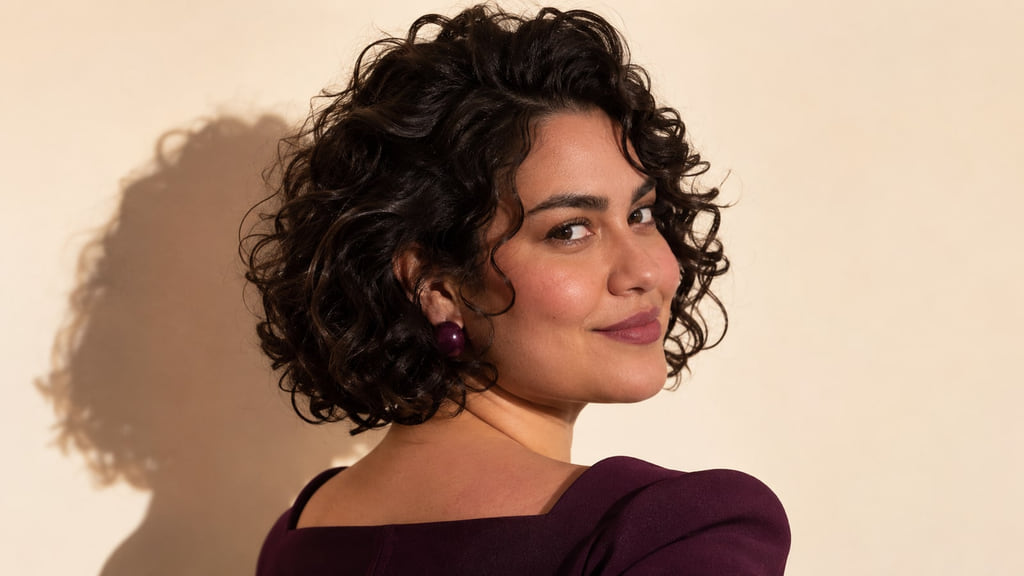
This bob gathers its dry ends near the jaw in a curved, readable edge. Look at the perimeter and the amount of layering separately: a smoother edge can look different from one with more movement above it. Ask where your own dry ends would meet the chin or jaw, especially if your texture changes shape as it dries.
Account for Texture, Density, and Growth Direction
Compare a reference with your natural dry texture, the amount of hair you have in the front section, and the direction it grows. A longer face frame on straight hair may fall close to the jaw; a wavy or curly version may settle at a different visible point. A photograph cannot add density to your hair. Ask your stylist to show how much length and weight can remain in the front while preserving your preferred lower edge. For neighboring examples, see Hairstyles for Oval Face Shape, Hairstyles for Heart-Shaped Faces, and Hairstyles for Diamond Face Shape.
Asymmetric fringe makes growth direction especially noticeable: the shorter piece may separate or turn with your natural part. Bring a photo of your everyday dry hair alongside the styled reference, and ask which length or parting would keep the intended asymmetry with your routine. Face shape is one descriptive input; texture and density affect the practical choice. For a narrower comparison of length and framing around a fuller jawline, see Haircuts for Round Faces and Fuller Jawlines.
Plan Styling and Grow-Out
For a longer face frame, check whether the dry front pieces still reach the landmark you chose and whether the back edge remains distinct. For asymmetric fringe, notice when the shorter section starts covering a different area or needs more resetting. Those visible changes are better cues for a salon discussion than one fixed trim schedule.
| Option | Daily attention | Grow-out cue | Salon discussion |
|---|---|---|---|
| Longer face frame | Check where the front pieces dry. | The endpoints move past your chosen landmark. | Can the front be reshaped while keeping the lower edge? |
| Asymmetric fringe | Reset the shorter side if it separates. | The two front lengths read less distinctly. | Which side and length should be refreshed? |
| Crown height | Style and check the lift you want. | The crown settles differently with added length. | Can the top be reshaped without changing side width? |
| Rounded bob | Notice the dry curve of the edge. | The edge passes your chosen chin or jaw point. | How much perimeter weight should remain? |
Build Your Haircut Reference
Save a front view and a side view that show the full crown and dry ends. Add a photo of your own hair after its usual drying routine. A specific request gives your stylist something to compare:
I want to compare a longer face frame with asymmetric fringe. My reference is a rounded bob with a longer off-center face frame. Keep my natural density in mind and show me the difference in perimeter, front framing, and crown shape before we choose a service.
Choose the line and amount of upkeep you want to discuss. Bring both views to your consultation and ask which front line your hair can maintain with your usual routine.
Frequently Asked Questions
Do I have to follow a face-shape rule?
No. Face shape is one way to describe proportions, while the cut’s perimeter, layers, texture, and density determine the visible outline you can discuss with your stylist.
How can I compare fringe and volume placement?
Trace the shorter front section separately from the widest point of the hair. Asymmetric fringe changes the first; crown lift changes the second. Hold camera angle and dry texture as steady as you can when comparing references.
What if my face does not fit one category?
Use whichever description helps you name a visible placement. You do not need a precise label to compare a longer face frame with asymmetric fringe. Bring your preferred reference and your own dry-hair photo, then discuss the outline and routine you want.