
Hairstyles for Diamond Face Shape: A Practical Comparison

Place fringe, side volume, and length around broad cheekbones and a narrower jaw. Compare soft fringe, jaw-level fullness, and a long face frame. The useful choice is the outline you can describe and maintain with your own texture, density, and routine.

Choose the effect you want to see: a softer front frame, more width near the jaw, or longer pieces that carry the eye below the cheeks. A diamond face description can help you name those placements, but it does not assign you a haircut. Start with the dry outline of your own hair, then compare the upkeep each option asks of you.
Read the Cut Outline Before Choosing a Look
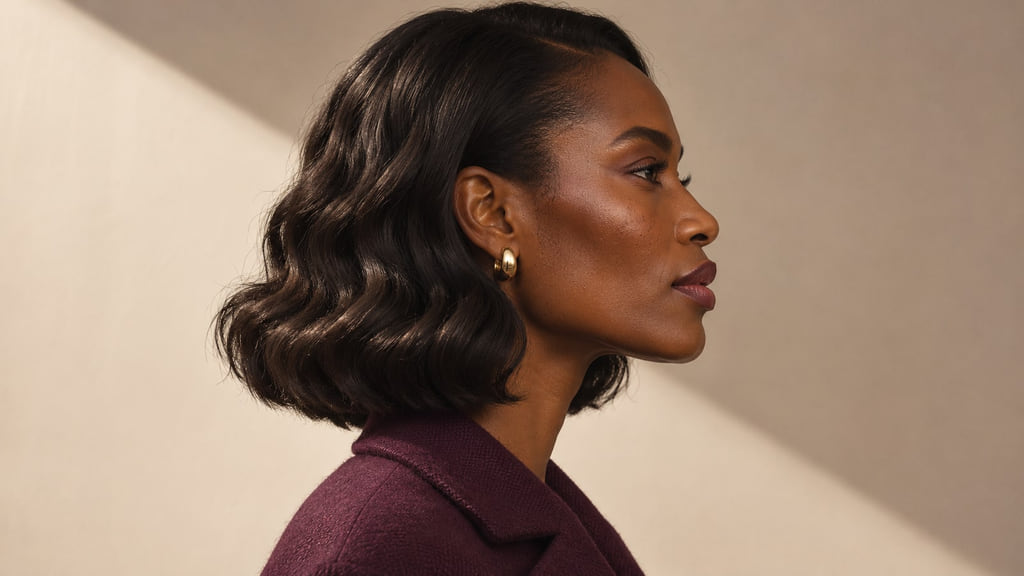
Look at three landmarks in a reference: where the front section opens at the forehead, where the hair looks widest beside the face, and where the dry ends finish. On the lob above, the visible movement sits below the cheekbones. Moving a front piece or changing the perimeter can shift that outline even if the haircut keeps the same name.
Layers distribute length and weight through a cut; they do not automatically create the same volume on every head of hair. Sam Villa’s layering explanation describes how different sectioning changes weight distribution and the visibility of a cutting line. Use that vocabulary to ask about the shape you can see. Face shape is only one reference alongside texture and density, as Sam Villa’s haircut discussion explains. The options below are visual choices, not ways to correct a face or diagnose its shape from a single ratio.
Compare Soft Fringe, Jaw-Level Fullness, and a Long Face Frame
Keep the viewing angle, light, and dry texture as similar as possible when comparing references. Then notice which part of the outline changes: the forehead opening, the widest side point, or the endpoint of the front pieces.
| Option | What to find in the reference | Decision to discuss |
|---|---|---|
| Soft fringe | A separated, gently curved front section with openings at the forehead. | Where will the fringe part naturally and connect at the temples? |
| Jaw-level fullness | The widest side outline sits near the jaw instead of the cheekbones. | Will your dry hair make that lower shape with your usual styling? |
| Long face frame | Front pieces run past the cheeks toward the jaw or lower, against a longer perimeter. | Where should the shortest front pieces end? |
If you are choosing between a soft fringe and jaw-level fullness, compare two references side by side. The fringe changes the forehead opening and front curve; the fuller shape changes the widest side point. Decide which feature you want to change first, then check how your own dry hair falls there.
Soft Fringe
A soft fringe keeps the front section separate and gently curved, with some forehead still visible. Follow the direction in which the pieces fall, then see where they join the longer sides. If your hair naturally splits elsewhere, ask to see how that growth pattern would affect the opening before committing to a shorter piece.

Jaw-Level Fullness
Here the question is where the hair looks widest after drying. A bob or lob can build a fuller outline near the jaw through its perimeter and the way its weight is distributed. The pictured waves expand below the cheekbones; your own texture and density may place the widest point differently. Ask your stylist which line can remain visible in your normal dry state.
Long Face Frame
Longer front pieces continue past the cheeks toward the jaw while the main perimeter falls lower still. In the photo, the near-side piece curves inward at the jaw against hair that runs well beyond the shoulders. If the shortest front layer stops higher than you intend, the outline changes, so bring a side view as well as a front view to the consultation.

Account for Texture, Density, and Growth Direction
Check your hair after a normal wash and dry. A wave or curl can lift a proposed perimeter, a cowlick can change where a fringe opens, and density affects whether a reference looks as full on you. A face-shape label cannot settle any of those variables. If you want a soft fringe, photograph your natural front parting before styling; ask which opening and length would work with that direction. The professional haircut discussion treats face shape as one part of the decision alongside hair characteristics.
If you want jaw-level fullness but your hair settles flat or expands above the jaw, keep the placement as the goal and ask how the perimeter and layers could support it on your hair. A cut can redistribute weight, but it does not change your natural density. For a neighboring shape decision, see Hairstyles for Heart-Shaped Faces.
Plan Styling and Grow-Out
For a soft fringe, notice whether its opening stays where you want after washing and whether the front pieces still meet the sides as they grow. You may need to reset that front section more often than a longer frame. Jaw-level fullness asks a different check: does the widest dry outline still sit near the jaw, or has the perimeter dropped and the weight shifted? A long face frame can be more forgiving of a changing front endpoint if you like a looser line.
| Option | Daily check | Grow-out cue | Salon discussion |
|---|---|---|---|
| Soft fringe | Does it part and curve where you want? | The opening or connection to the sides changes. | Which front pieces need to stay short? |
| Jaw-level fullness | Where is the widest dry side point? | The lower perimeter drops or loses its shape. | How should we preserve the lower outline? |
| Long face frame | Do the front pieces fall past the cheeks? | The front endpoint blends into the longer length. | How distinct should that endpoint remain? |
Choose the routine you are willing to repeat rather than a fixed trim schedule. Show your stylist how your hair looks on an ordinary day, including the part and the dry ends.
Build Your Haircut Reference
Save one image that clearly shows your preferred front view and one that shows the side perimeter. Add a photo of your own hair dry, without extra volume added for the picture. That lets you compare the reference with your real density, growth direction, and length.
You can say: “I want to compare soft fringe with jaw-level fullness. My reference is a soft lob with fullness below the cheekbones. Keep my natural density in mind and show me the difference in perimeter, front framing, and crown shape before we choose a service.” This is a question for a consultation, not a cutting recipe.
Choose where you want the fringe, side volume, and length to sit, then bring that reference to your stylist. Ask which of those placements your own dry texture can keep with the routine you prefer.
Frequently Asked Questions
Do I have to follow a face-shape rule?
No. Face shape can help describe proportions, while texture, density, growth direction, and your preferred outline also matter. Choose a visible effect you like and check whether your hair and routine can support it.
How can I compare fringe and volume placement?
Look at the front opening and the widest side point separately. Soft fringe changes the front frame; jaw-level fullness moves attention to a lower outline. Use similar angles and dry-hair views to decide which difference you actually want.
What if my face does not fit one category?
You do not need a precise label. Describe what you see in the hair reference and where you want its line or volume to sit. Then refine the choice with your natural texture and routine. No single face ratio can diagnose the right cut.