
Autumn Hair Colors: A Practical Comparison

Compare Soft Autumn, Warm Autumn, and Deep Autumn before opening a subtype shade catalog. Start with depth, reflection, and placement, then check your natural base and color history with a colorist.

Read the Color Direction Before Choosing a Look
If you want warm chestnut hair with visible but restrained dimension, compare Autumn family directions before entering a subtype shade catalog. Decide whether you want the color to read softer, warmer, or deeper, then take that difference to a colorist. Your starting base and color history affect what is achievable.
The Concept Wardrobe’s twelve-season framework places Autumn among four color families and describes Soft, True, and Dark Autumn within it. Here, Warm Autumn refers to the warmth-led True Autumn direction and Deep Autumn to the depth-led Dark Autumn direction. These are attributed palette terms, not mandatory hair shades or a diagnosis. This is a palette-family framework, not autumn-season trend forecasting.
For a hair reference, depth means how light or dark the hair appears; reflection means its visible tonal direction. Wella’s color chart guide uses the number before the stroke for depth and the number after it for tone. That numbering belongs to Wella’s system. You can compare a muted brown with a warmer chestnut at similar depth without treating either as the better choice for everyone.
Compare Soft Autumn, Warm Autumn, Deep Autumn
Use the same light and a similar starting depth when you compare references. Then look at how much warmth shows, where lighter pieces sit, and whether the overall impression stays soft or becomes darker. The directions below are editorial examples drawn from the attributed palette framework, not prescriptions for your hair.
| Direction | Leading quality | What to compare in a reference | Question to bring to a colorist |
|---|---|---|---|
| Soft Autumn | Muted color clarity | A warm-brown base with quiet, blended variation rather than a clear copper focal point | Can the variation stay muted at my current depth? |
| Warm Autumn | Warm dominant reflection | Chestnut or copper-brown reflection that remains visible without changing the whole cut | How much warmth would show on my starting base? |
| Deep Autumn | Deeper visual depth | A deeper brown field with restrained warm movement rather than broad pale pieces | Can I keep dimension visible if I go deeper? |
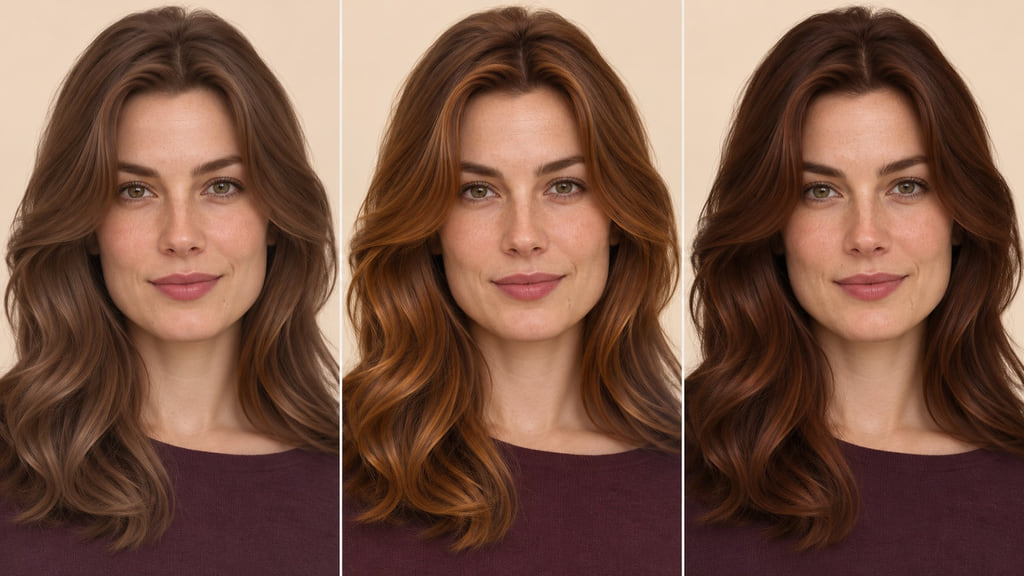
For example, compare Soft Autumn with Warm Autumn at roughly the same brown depth. If the restrained version keeps your attention on the whole hair shape, save it as option A. If the clearer chestnut reflection is the part you want to see, save it as option B. Ask which difference can be achieved on your hair before selecting a service.
Soft Autumn
In this editorial example, Soft Autumn foregrounds muted color clarity. Picture a warm-brown base with narrow, subdued variation through the lengths. Keep the face, exposure, and depth similar when comparing it with a warmer version; otherwise extra lightness can look like extra warmth. Ask which sections could change reflection while the rest of the brown base stays visible. The palette label does not require this shade.
Warm Autumn
Warm Autumn foregrounds warm reflection. A chestnut base with a more apparent copper-brown cast gives you a concrete comparison with the muted option, without requiring a brighter or lighter overall result. At the same depth and in the same light, ask whether the warmer reflection should appear throughout the hair or only in selected sections. The answer depends on the starting base and the effect you want. Compare specific options in the Warm Autumn hair color guide.
Deep Autumn
Deep Autumn foregrounds depth. Compare a deeper brown with warm movement against a medium chestnut reference while keeping the cut and lighting comparable. If a broad pale face frame is added at the same time, it changes placement and contrast as well as depth. Ask whether deeper color would still show enough strand detail and dimension for your preferred look; a subtype label cannot answer that for you.
Account for Your Starting Base
Your natural root, previous color, retained length, and desired size of change belong beside the reference photograph. A Soft Autumn example may call for only a quieter reflection on an existing brown base, or it may require more change if the current lengths are much lighter or more saturated. A screen image cannot tell you which. Use depth and reflection as separate questions, and let the colorist assess your actual hair rather than borrowing a formula from a numbered chart.
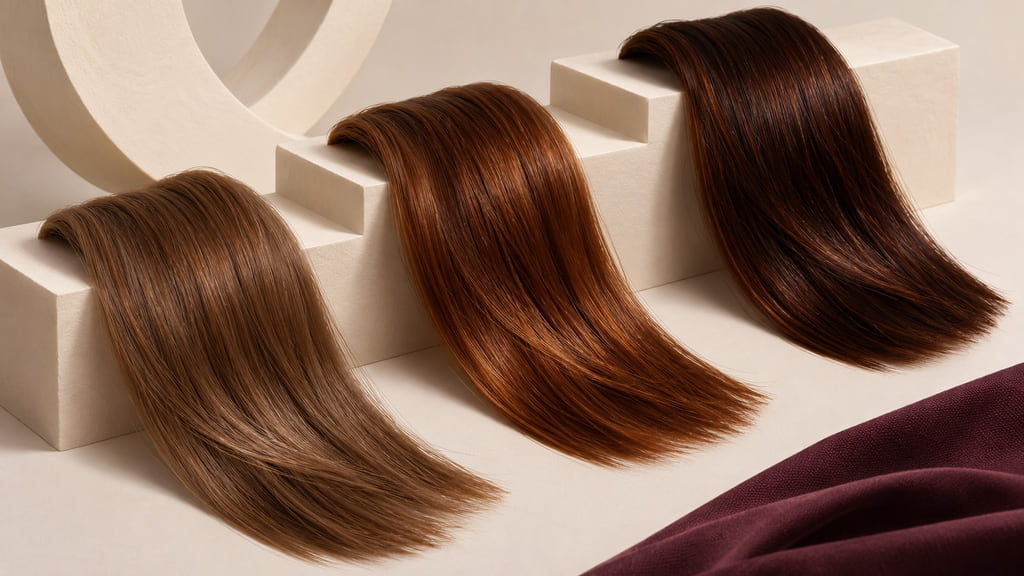
For Warm Autumn, start with the same inventory. If your ends already read copper while your root is cooler or darker, ask how much of that existing difference should remain. If your routine does not allow for a conspicuous root transition, show a reference with more of the natural base visible. You are still choosing among Autumn family directions; the service plan comes later.
Plan Regrowth and Color Upkeep
For a softer brown direction, notice whether the root starts to stand apart from the lengths, whether the muted reflection becomes less visible, and whether the lighter placement still frames the cut as intended. For a warmer chestnut, check whether the warmth still reads at the depth you chose. For a deeper direction, watch whether the ends keep enough visible movement. Bring those observations to a follow-up conversation instead of assuming one service interval fits everyone.
| Direction | Daily routine to consider | Changes you may notice | Salon support to discuss |
|---|---|---|---|
| Soft Autumn | Whether your usual styling keeps subtle variation visible | Muted reflection or small lighter pieces may become harder to distinguish | Whether refreshing reflection or placement matters to you |
| Warm Autumn | How visible you want the warm reflection in ordinary light | Root contrast or a change in copper-brown reflection | Whether the warmth should be adjusted or left to evolve |
| Deep Autumn | Whether your usual finish reveals detail in darker hair | A visible root boundary or less tonal movement through the ends | How much depth and dimension you want to maintain |
Choose the amount of change you are willing to monitor. The same direction can require different upkeep when starting depth, previous color, and placement differ.
Build Your Color Reference
Save one photograph that shows the complete hair in even light, plus a second view that reveals the root and lengths. Use them to point to the difference you want, not to request an exact copy. A useful salon brief is: “I want to compare soft autumn with warm autumn. My reference is warm chestnut hair with visible but restrained dimension. Keep the natural density and show me the difference in depth, reflection, and placement before we choose a service.”
Choose the closest Autumn family direction and discuss that reference with a colorist. If a screen comparison helps, you can preview a color direction first. A virtual preview is optional: it can help you compare visible color and placement, but it cannot predict a chemical result or confirm a palette label.
Frequently Asked Questions
Is this a diagnosis or a styling framework?
It is a comparison framework. The cited twelve-season model names Autumn as a palette family, while depth and tone describe different properties of hair color in Wella’s system. Neither source diagnoses your individual coloring or guarantees a salon result.
Do I need to dye my hair to fit a palette?
No. You can compare Soft Autumn’s muted impression with Warm Autumn’s stronger warmth using references or clothing before changing your hair. If you do want color, your existing depth and reflection give the colorist a starting point, not an obligation to dye.
How can I compare depth and reflection?
Photograph two references in consistent light and compare how dark the hair appears before judging its warm or muted reflection. Then inspect where that reflection appears. This is a palette-family framework, not autumn-season trend forecasting; the useful result is a clearer visual question for your colorist.