
Hair Color by Skin Tone: Depth, Reflection, and Choice
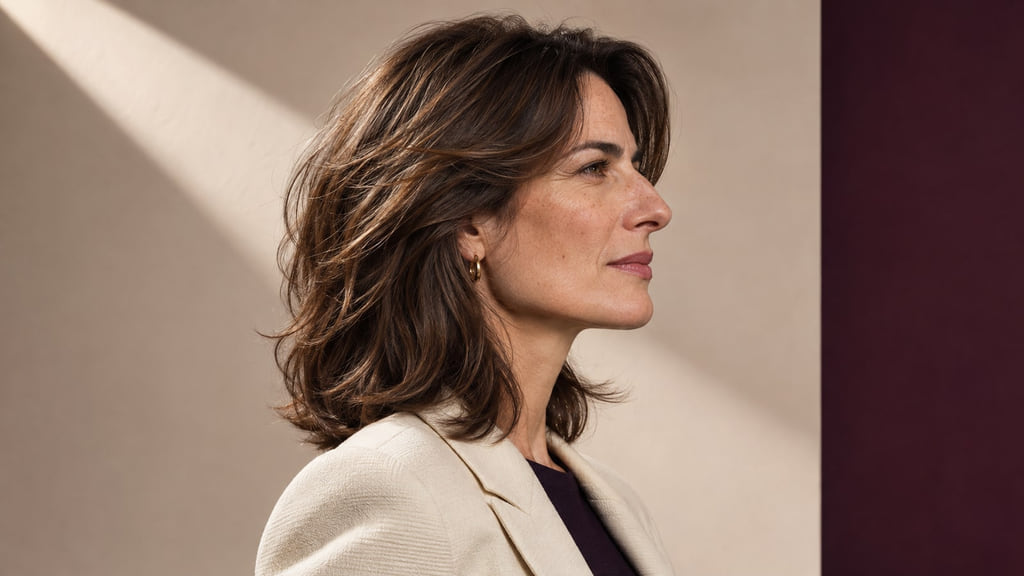
Separate skin depth, an undertone hypothesis, and your desired contrast before choosing a hair color guide. Compare your starting depth, reflection, and placement in consistent light, then discuss the direction with a colorist. Your current base and color history affect what is achievable.

Read the Color Direction Before Choosing a Look
In the portrait above, the hair is a medium-depth brunette, while the skin color is shown without a warm or cool filter. That gives you a starting reference: decide whether you want to change the hair’s lightness, its reflected color, or the amount of contrast it creates with your features. A skin-depth label alone cannot make that choice for you.
Depth describes how light or dark hair appears; tone names its color direction. In Wella’s color chart, the number before the stroke indicates depth and the number after it indicates tone. Those numbers belong to Wella’s system; they are useful vocabulary for a conversation, not a universal shade code or a promise of a particular result.
Treat warm, cool, neutral, and olive as hypotheses to compare in consistent light. Skin depth, visible surface color, and a proposed undertone are separate observations. This page helps you choose which question to pursue; it does not diagnose undertone or replace a dedicated shade guide.
Compare Starting Depth, Undertone Hypothesis, and Contrast
Use the same lighting and camera exposure for each reference. Keep the natural root and any previously colored lengths visible so that the desired shade is compared with an honest starting point. Compare the four decisions below without treating any one direction as a ranking of complexions.
| Decision | Hold steady | Change or observe | Question for a colorist |
|---|---|---|---|
| Starting depth | Natural root and colored lengths stay visible | How far the desired sample sits from the current lightness | Which sections could change while the base stays recognizable? |
| Undertone hypothesis | Skin exposure, white balance, and hair depth | Warm, cool, or neutral hair reflection; consider olive as comparison language | Which reflection do I prefer at a similar depth? |
| Contrast | Hue, exposure, and facial proportions | Light-dark separation between hair and features | How much separation do I want around my face? |
| Placement | Base shade and overall cut | Where a lighter reflection appears | Should brightness sit near my face or farther through the lengths? |
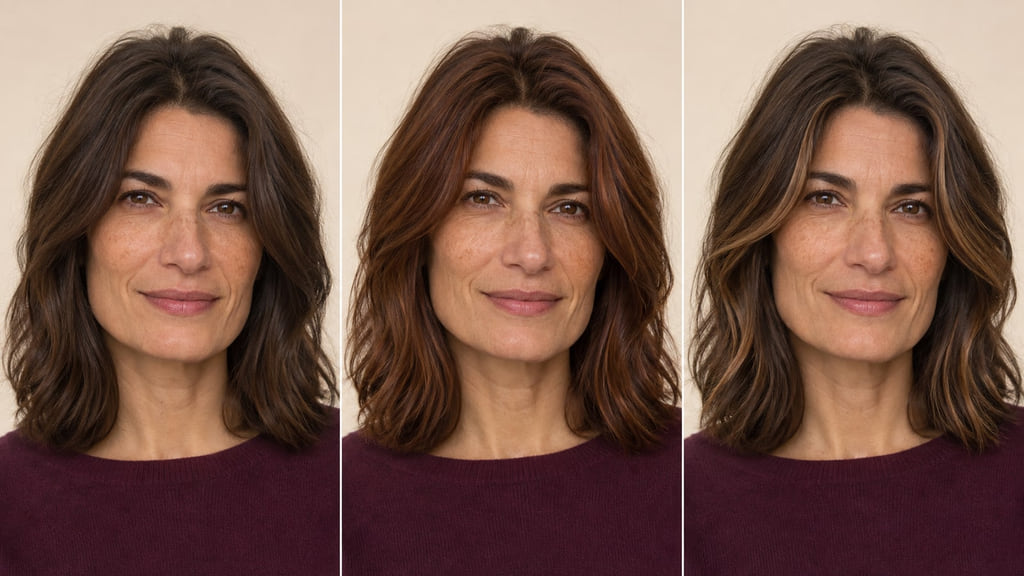
Compare the first and second views if your question is reflection at roughly the same depth. Compare the first and third if your question is where brightness sits. Use the visible differences to describe your preference alongside your own starting color.
Starting Depth
Begin with a photograph of your natural root and another of your lengths if they have been colored. Compare those areas with the lightness of your chosen reference. In the first view above, the medium brunette base remains visible; ask which part of that base you want to keep and which part you want to change.
Undertone Hypothesis
Compare the neutral brown and warmer brown views at the same exposure. Notice the hair reflection, rather than treating skin redness, a vein test, or a camera filter as a verdict. If you prefer a cooler direction, bring a separate cool reference at a similar depth so the comparison changes one variable at a time.
Contrast
Hold hair hue steady and compare how much lighter or darker the hair looks beside the skin, brows, and eyes. A stronger difference can make the hair outline more distinct; a smaller one can make the transition quieter. Hair Color by Contrast explores that separate choice in detail.
Placement
The third view keeps the brunette base and puts a little brightness around the face. Compare it with the first view before deciding whether you want more lightness throughout the hair. Ask where the lighter pieces would begin and how much of the natural base would remain visible.
Account for Your Starting Base
A reference photo shows an appearance, not the steps needed to achieve it. Tell your colorist your natural shade, which lengths were previously colored, the length you want to keep, and how much change you are willing to see. Wella’s discussion of starting hair and color history explains why the starting point matters to a color consultation.
If the warmer reflection in the comparison appeals to you but your current hair is much darker or already colored, keep that preference as the goal and ask what direction is realistic for your base. If your question is primarily a neutral-looking reflection, continue with Hair Color for Neutral Skin Tone. For shade-number vocabulary, use Hair Color Levels and Tones Explained. These guides answer different questions; none can infer a personal result from a photograph.
Plan Regrowth and Color Upkeep
Keep your routine in the comparison. A direction close to your natural root may let the starting depth remain visible as hair grows; a lighter face frame can draw attention to that area as it changes. Reflected warmth or coolness may also look different as color fades. Ask the colorist what you would notice first on your own hair and what kind of salon support that direction would require.
| Choice | Daily observation | Change to watch | Support to discuss |
|---|---|---|---|
| Starting depth | Does the root still look intentional beside the lengths? | Growing separation between root and colored hair | Whether to retain the root or refresh the lengths |
| Reflection | Does the color direction still read as intended in neutral light? | Visible fading or a shift in warmth | How to maintain the chosen reflection |
| Contrast | Do hair and features have the separation you wanted? | A softer or stronger appearance as color changes | Whether to adjust depth or selected pieces |
| Placement | Does the brighter area sit where you wanted it? | Brightness moving farther from the face as hair grows | Whether and where to refresh that area |
There is no single upkeep interval for these choices. Describe the daily styling you are willing to do and how noticeable you are comfortable letting regrowth or fading become before another appointment.
Build Your Color Reference
Save one medium-depth brunette portrait with truthful skin color and a clear view of the entire hair outline. Add a photograph of your own hair in similar neutral light, including the natural root and any colored lengths. If placement is your main question, add a second view that shows where the lighter pieces begin.
You can bring this filled request to a consultation: “I want to compare starting depth with an undertone hypothesis. My reference is a medium-depth brunette editorial portrait with truthful skin color. Keep my natural density in view and show me the difference in depth, reflection, and placement before we choose a service.” This is a visual brief, not a color formula.
Choose the one difference you want to discuss first: depth, reflection, contrast, or placement. Bring your reference and current-hair photographs to a colorist, then ask what direction your starting base can support.
Frequently Asked Questions
How do I compare these shades at a similar depth?
Use references with similar lighting and keep the hair’s lightness roughly steady while you compare reflected color. Wella’s chart separates a depth number from a tone number in its own system, which is a useful way to describe the two questions to your colorist.
Does my starting color change the achievable result?
Yes. The same warm-brown reference means something different for an uncolored medium brunette base and for previously colored dark lengths. Keep your root and color history visible, then ask what can change and what should remain.
Which guide should I open next?
If the difference is mainly how light or dark the hair looks beside your features, open Hair Color by Contrast. If you want to compare a balanced reflection, open Hair Color for Neutral Skin Tone. If shade numbers are the confusing part, use Hair Color Levels and Tones Explained.