
Hair Color by Contrast: Depth, Reflection, and Choice
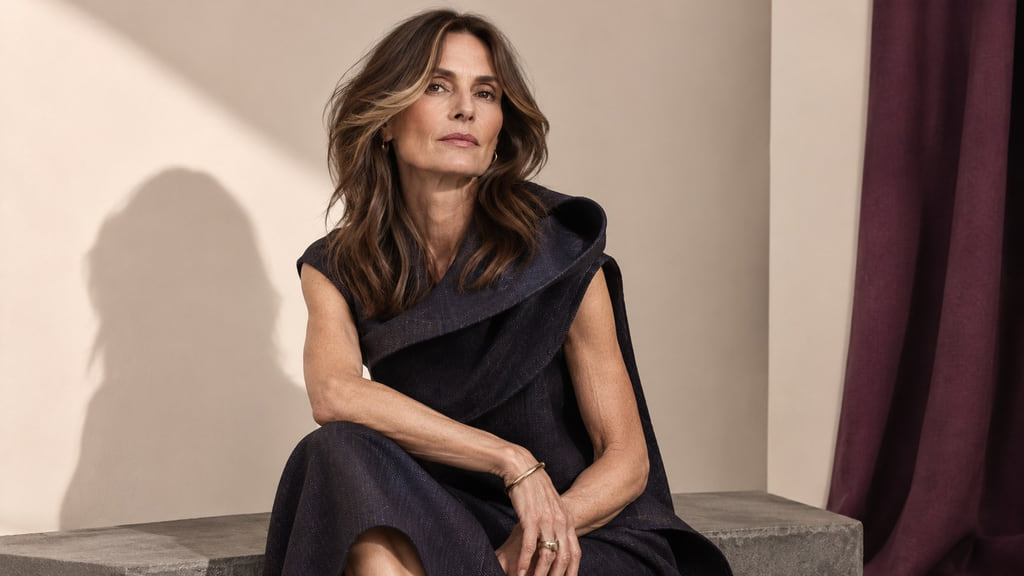
Choose the amount and position of visible contrast between hair and facial features. Compare a low-contrast blend, a moderate face frame, and strong light-dark placement. Use the result as a direction to discuss with a colorist: your starting base and color history affect what is achievable.

Choose how much difference you want to see and where you want to see it. A medium-depth brunette with a restrained face-framing panel, for example, keeps most of the hair close to its starting color while bringing a little more light around the face. Compare that effect with a quieter blend and a stronger light-dark placement before choosing a service.
Read the Color Direction Before Choosing a Look
Depth describes how light or dark hair appears. Reflection describes its visible tonal direction: two brunettes can sit at a similar depth while one looks warmer or more neutral. In Wella’s hair color chart, the number before the stroke indicates depth and the number after it indicates tone. That numbering belongs to Wella’s system; use the terms to discuss a reference, not as a formula for every brand.
Contrast is the visible difference between your hair and nearby features or between sections of hair. You can change that difference through overall depth, a warmer or cooler reflection, or the position of lighter and darker pieces. A low-contrast blend keeps the transition quiet; a moderate face frame gives selected sections more definition. Neither is a ranking of faces. Do not turn a visual contrast comparison into an ethnicity label or a season diagnosis. Start by naming the effect you want to see in ordinary, consistent light.
Compare Low-Contrast Blend, Moderate Face Frame, and Strong Light-Dark Placement
The three directions below are editorial examples, not universal shade assignments. Compare the hair at the same exposure and against the same face. Keep the starting base visible so a difference in depth, reflection, or placement is not mistaken for a change in skin tone or lighting.
| Direction | Visible difference | Depth and reflection | Placement to discuss |
|---|---|---|---|
| Low-contrast blend | Hair and nearby features read as a quieter whole. | Keep hair near the visible depth of surrounding features; compare reflection without changing face exposure. | Soft transitions through the base rather than a distinct light panel. |
| Moderate face frame | Selected lighter sections give definition around the face while the base stays visible. | Keep the brunette base and make the lighter sections readable at the same exposure. | Agree where the sections begin and how wide they appear in your usual part. |
| Strong light-dark placement | Clearly separated light and dark sections become the main visual signal. | A larger local depth gap; reflection can be held steady to isolate that difference. | Choose whether the separation sits at the face, through the lengths, or elsewhere. |
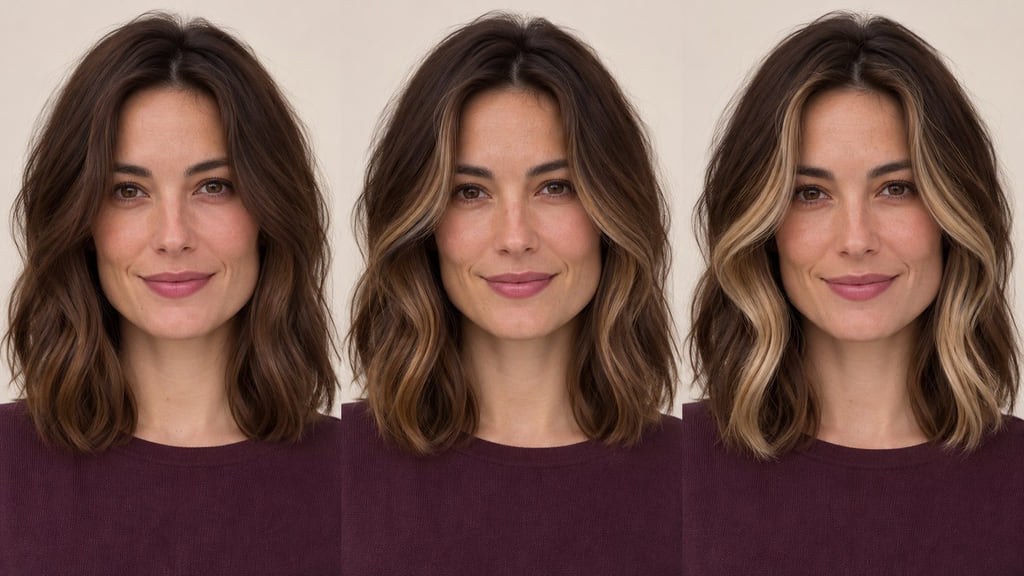
For a filled comparison, put option A, a low-contrast blend, beside option B, a moderate face frame. In A, the brunette remains close to the visible depth of the surrounding features. In B, selected lighter pieces begin beside the face while most of that brunette base remains. Choose which change you actually want to see, then ask how it would work with your hair.
Low-Contrast Blend
Keep the hair near the visible depth of your surrounding features; do not simulate the effect by lightening skin in a photograph. If two references have similar depth, compare their warm, cool, or neutral reflection under the same light. A blend can still have movement through subtle highlights or lowlights. Ask which part of your present color should stay and which part, if any, should shift.
Moderate Face Frame
Show selected lighter sections within the base, with their starting point and contrast readable. Keep the face, exposure, and base unchanged so placement is the variable you compare. The same section may appear different when you change your part or style your natural texture. Ask how much of the base should remain visible and where the lighter pieces should start.
Strong Light-Dark Placement
Use deliberately separated light and dark sections and hold face exposure constant so the contrast comes from the hair. A wide lighter section against a deeper base reads more clearly than fine, blended pieces in this example. Decide whether you want that difference around the face or elsewhere before discussing technique. Ask which sections of your existing hair can support that placement.
Account for Your Starting Base
Look at your natural root, previously colored lengths, and ends separately. A low-contrast blend close to your current brunette depth asks a different question from a large change in lightness. The Wella chart describes depth and tone within its own numbering system; a photograph cannot supply a universal shade code or tell you what your current hair can reach. Bring a clear current photo and tell the colorist about known color services.
If your reference shows a moderate face frame but your hair has a different starting color or a different daily routine, preserve the visual goal rather than demanding the identical process. Ask whether the selected pieces can be placed where you will actually see them and how the result may change against your natural root. If eye color is your next question, see Best Hair Colors for Blue Eyes, Best Hair Colors for Green Eyes to Make Them Pop, or Best Hair Colors for Hazel Eyes.
Plan Regrowth and Color Upkeep
For a low-contrast blend, notice whether the root transition still looks soft and whether the reflection through the lengths still matches the reference you saved. For a moderate face frame, also watch where the lighter pieces sit as the hair grows and whether your usual part still reveals them. These observations tell you when you want to revisit the color; they are more useful than one appointment interval applied to everyone.
| Direction | Daily routine to consider | Change you may notice | Salon support to discuss |
|---|---|---|---|
| Low-contrast blend | Check the depth and reflection in ordinary light. | Root and length colors separate, or the reflection looks different. | Whether a softer transition or tonal adjustment fits your goal. |
| Moderate face frame | Notice whether the lighter pieces show with your usual part and styling. | A face-frame section moves away from its original position or its tone changes. | How to keep the placement visible at the intensity you prefer. |
| Strong light-dark placement | Check whether the separated sections still read as intended. | A clearer root boundary or a change in the light section's reflection. | How much visible change you accept before refreshing the placement. |
Choose the kind of change you can comfortably see between visits: a shifting placement, a visible root boundary, or a softer reflection. Discuss your preference with a colorist before choosing the service.
Build Your Color Reference
Save one unfiltered photograph of your present hair in neutral light, showing roots and ends. Add a front or three-quarter view of your preferred contrast direction, plus a side view that shows where the lighter or darker sections begin. Keep the face, exposure, and styling as comparable as possible. Mark the feature you want to change and the part of your natural base you want to keep.
You can say: “I want to compare low-contrast blend with moderate face frame. My reference is medium-depth brunette with a restrained face-framing panel. Keep the natural density and show me the difference in depth, reflection, and placement before we choose a service.” This is a visual brief, not a color formula or a promise of the same result on different hair.
Choose the amount and position of contrast you prefer, then discuss those references with a colorist. You can also preview a color direction to compare an on-screen look. A preview cannot predict the dye process, diagnose your coloring, or establish what is achievable on your hair.
Frequently Asked Questions
How do I compare these shades at a similar depth?
Use photographs with similar light, exposure, and hair depth. Then compare their visible reflection or the position of lighter sections. Wella separates depth and tone in its own chart; the labels help you describe a difference, while your references show where you want it.
Does my starting color change the achievable result?
Yes. A low-contrast blend near your existing depth and a moderate face frame with lighter pieces make different demands on your starting base. Previous color through the lengths may change the route again. Show your root, lengths, and color history to a colorist and ask what can be achieved from that starting point.
Can a virtual preview predict the dye result?
No. Use it to compare the visual direction of a blend and a face frame in similar light, then discuss the actual hair with a colorist. The screen cannot predict a chemical color result. Contrast is a visual choice, not an ethnicity label or a season diagnosis.