
Hairstyles with Bangs: Shape, Texture, and Upkeep

Choose a fringe family by its line, center opening, section density, and the styling you want to do each day. Curtain, bottleneck, blunt, side-swept, and textured fringe create different front outlines. Compare those visible differences with your natural dry texture and growth direction before choosing a reference to discuss with your stylist.

Read the Cut Outline Before Choosing a Look
Start with the front line you want to see, then notice how it connects to the rest of the haircut. The perimeter is the visible outer edge; layers change where length and visual weight collect. A textured fringe against a full crown, for example, reads differently from the same front pieces against a flat, one-length outline. Sam Villa’s explanation of layering describes how cutting direction changes weight distribution and the visibility of a cutting line. Use that vocabulary to describe a photograph, not as a cutting recipe.
Face shape can be one reference, but it does not assign you a fringe. The useful comparison is between the opening, the shortest dry point, the amount of hair in the front section, and the daily effort each shape asks of you. This is a fringe-family overview; the individual fringe guides own detailed styling instructions. First, choose two outlines that are visibly different.
Compare curtain, bottleneck, blunt
Compare the shapes under similar light and at a similar camera angle. A curtain fringe parts into two front sections that lengthen toward the sides. A bottleneck fringe keeps a narrower, shorter middle before curving into longer side pieces. The distinction is the short center, not simply how much wave is added. A blunt edge, a diagonal side sweep, and separated textured ends offer three other lines to consider.
| Fringe family | Front line and opening | Density and side connection | Ask your stylist |
|---|---|---|---|
| Curtain | Two sections part around the center and lengthen outward. | The opening and side endpoints matter more than added waves. | Where will each side end when dry? |
| Bottleneck | A narrow shorter middle opens into longer curved sides. | Keep the short center distinct without taking more hair than the front can support. | How narrow can the center stay in my texture? |
| Blunt | A comparatively continuous, straight front edge. | A clear line and a dense section are separate choices. | How much hair can form that edge while keeping my side shape? |
| Side-swept | The front section travels diagonally from a part. | Its ends need a visible connection to the side hair. | Will my natural part support this direction? |
| Textured fringe | Separated ends form a broken, piecey line. | Visible strand groups replace a solid edge without inventing extra density. | What will the ends look like after my usual dry routine? |
Put a curtain reference beside a bottleneck reference. Keep the face, exposure, angle, apparent density, and dry texture as similar as possible. In one photograph, look for the opening between two longer front sections; in the other, find the short narrow center and its curved side pieces. That is a more useful salon comparison than a ranking of faces.
Curtain
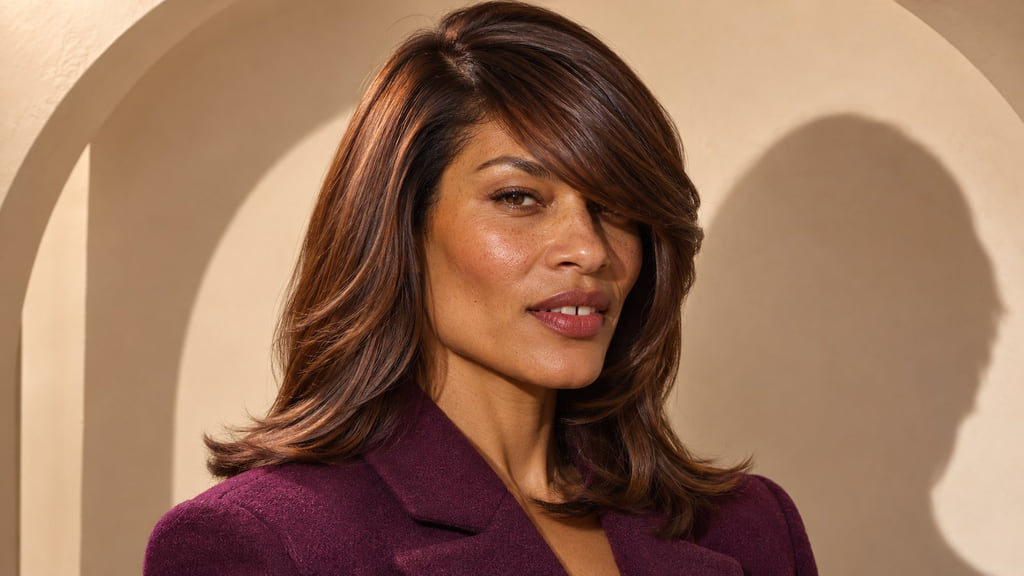
In this editorial example, two front sections part near the center and lengthen toward the sides. Follow the opening to each dry endpoint; loose waves in the longer hair are incidental. Ask whether you want a narrow opening or more visible forehead, and where the front sections should meet the sides.

Bottleneck
Here, a narrow short center falls between longer, curved side pieces. If that center disappears, the reference starts to read like an ordinary open curtain. Point to the center and side transition separately, then ask how much front hair your stylist would use to keep both visible.

Blunt
A blunt fringe makes a comparatively continuous edge. Its visual line can be strong even when the front section is not especially thick; line and density are separate variables. Notice the finished dry edge and the hair retained at the sides before deciding how full you want it.

Side-Swept
A side-swept fringe follows a diagonal from the natural part toward the side hair. The photo makes the direction visible, but it cannot show how your own roots settle after washing. Ask where the ends should join the side section if the part moves during the day.
Textured Fringe
A textured fringe shows separated ends and small strand groups instead of one heavy, uninterrupted edge. Look closely at where the visible pieces stop; blur or a very soft crop can hide that information. If you prefer natural separation, show how your hair dries on an ordinary day rather than only a polished reference.

Account for Texture, Density, and Growth Direction
Check the front of your hair in its usual dry state. Straight strands may show a crisp edge; waves, curls, and coils can place the shortest visible point differently from a stretched section. Density describes how much hair is in the section, while strand diameter describes each strand. Growth direction can open or split a fringe where the photograph stays together. Sam Villa’s fringe technique guide considers desired length, density, and texture together.
For curtain bangs, see where the two sections separate without styling and whether their endpoints remain visible. For bottleneck bangs, check whether a narrow center leaves enough hair for the curved sides. These are questions for a consultation, not universal rules by face category. Sam Villa’s haircut guide treats face shape as one consideration alongside hair behavior. For placement by proportion, see Bangs by Face Shape; for a forehead-specific choice, see Bangs for a Larger Forehead.
Plan Styling and Grow-Out
Picture the fringe after sleep, after washing, and on a day when you skip a careful finish. A curtain opening may need its two sides redirected; a bottleneck shape asks you to notice both the short center and the longer sides. A blunt line makes a changed edge easy to see. Decide which visible change you are willing to live with before planning salon upkeep.
| Fringe | Daily reset to consider | What may change as it grows | Salon support to discuss |
|---|---|---|---|
| Curtain | Redirect two sides around the opening. | The shortest points fall lower and the opening shifts. | Refine the side endpoints you want to keep. |
| Bottleneck | Set the short center and curved sides separately. | The center can blend into the sides. | Preserve the distinction between center and sides. |
| Blunt | Return the front edge to its chosen line. | The continuous edge falls lower or looks uneven. | Maintain the line at your preferred dry landmark. |
| Side-swept | Direct the front section toward one side. | The diagonal and side connection change. | Plan a longer side frame if desired. |
| Textured fringe | Separate the front pieces as you prefer. | Groups can lengthen and lose their broken edge. | Keep the piecey perimeter without adding weight. |
Use the row that fits your tolerance for resetting and for a visibly changing shape. Ask when your preferred line would need attention; a fixed interval would ignore your texture, growth pattern, and desired finish.
Build Your Haircut Reference
Save one front photograph of your own dry hair in neutral light and one three-quarter view that shows the side connection and crown. Add two references framed at a similar angle, ideally curtain and bottleneck if you are deciding between an open center and a short one. Mark the shortest point, the side endpoints, and the density you want to preserve.
You can say: “I want to compare curtain with bottleneck. My reference is one clearly defined textured fringe with a full crown. Keep the natural density and show me the difference in perimeter, front framing, and crown shape before we choose a service.” Add what your front roots do after washing and how much styling you will do. This is a request for a discussion, not a cutting formula.
Choose one fringe direction to bring to that conversation. An optional virtual hairstyle preview can help compare broad outlines, but it cannot establish your exact cutting line, natural density, or growth direction.
Frequently Asked Questions
How will this shape work with my natural texture?
Look at the front section when it is dry and notice where it separates and where its shortest point lands. Texture, density, and growth direction affect that reading; face shape is only one reference. Ask which version of the line your own hair can show with your usual routine.
What changes as the cut grows out?
A curtain opening can fall lower, while the narrow center of a bottleneck fringe can blend into its longer sides. A blunt edge and a textured edge change in different ways. Choose the change you can tolerate and discuss a way to refine or redirect the fringe.
What should I show my stylist?
Bring your dry front and three-quarter photographs plus two clearly different references. Point to the opening, front line, side connection, and crown shape. This overview helps you choose a family; use a named fringe guide when you need detailed styling instructions.