
Bangs for a Larger Forehead: Shape, Texture, and Upkeep

Choose how much forehead you want visible, where the fringe opens, and how much styling you want to do. Compare a curtain opening, bottleneck shape, side-swept line, and full fringe against your own texture, density, and routine. Bangs are an option, not a correction.

Read the Cut Outline Before Choosing a Look
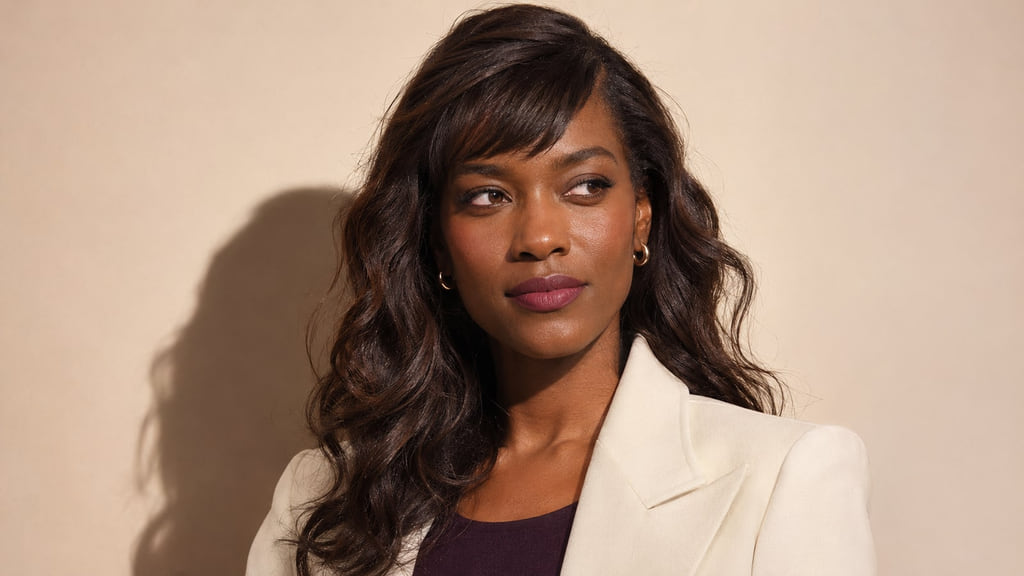
If you want bangs for a larger forehead, begin with the front line you would enjoy seeing each day. A small center opening, like the soft bottleneck shape in the photograph, leaves some skin visible while bringing shorter hair toward the middle. A curtain opening exposes more of the center; a side sweep draws a diagonal; a full fringe makes a more continuous edge. None is a required way to wear your forehead.
Look at the perimeter, the visible outer edge of the haircut, as well as the fringe. Layers change where length and visual weight collect. Sam Villa’s professional guide to sectioning describes differences in weight distribution and cutting-line visibility; use that vocabulary to discuss a reference, not to prescribe a cutting technique. The choice here is how the front section connects to the rest of your hair and how much daily effort that shape asks of you.
Compare Curtain Opening, Bottleneck Shape, Side-Swept Line, and Full Fringe
Compare photographs by the shortest dry point, the opening or direction of the fringe, and the connection into the sides. The examples below illustrate different outlines. They do not rank faces or predict how a cut will behave on another person’s hair.
| Shape | Visible front line | Side connection and weight | Question for your stylist |
|---|---|---|---|
| Curtain opening | An open middle with front sections falling to either side. | Longer pieces lead toward the cheeks; you decide how much center remains visible. | Where will the shortest dry point sit when the two sides separate? |
| Bottleneck shape | A narrow, shorter center that widens toward the sides. | Longer cheek-framing pieces carry the line outward rather than making a simple center part. | Can my front section support that narrow center without taking too much from the sides? |
| Side-swept line | A diagonal crossing part of the forehead from a side part. | Weight moves toward one side while the rest of the perimeter can stay similar. | Does my natural growth direction hold this sweep in my usual routine? |
| Full fringe | A continuous section covers most of the forehead. | The edge appears more solid; its actual weight depends on the hair available at the front. | How much hair can form the edge while preserving the sides? |
For a useful first choice, put a curtain reference beside a bottleneck reference. Keep the camera angle, light, dry texture, and apparent density as similar as you can. In one, the open middle is the feature; in the other, a shorter narrow center and longer cheek-framing sides define the shape. Ask which line you prefer before discussing the cut that could create it on your hair.
Curtain Opening
A curtain opening leaves the middle visible and sends the front sections outward. The degree of opening can be narrow or generous; the useful reference shows both the shortest point and where the longer pieces join the sides. If your part shifts after washing, show your stylist how the two sections fall without a set. Use the photo to locate the opening, then check how your own hair falls around it.

Bottleneck Shape
The bottleneck example keeps a narrower, shorter section at the center while the front line opens into longer pieces near the cheeks. It is distinct from simply parting long hair in the middle. Compare the amount of hair at the center with the hair left at the sides. Ask where that narrow section would end in your own dry texture before you commit to its length.

Side-Swept Line
A side-swept fringe draws a diagonal over the forehead rather than opening at the center. In the photo, the sweep starts at a side part and moves toward the opposite temple. Compare its direction while keeping the outer haircut outline in mind. If your hair naturally parts elsewhere, ask whether a longer or lighter sweep could follow your growth pattern with less daily resetting.
Full Fringe
A full fringe covers most of the forehead with one front section. Its continuous edge is a stronger visual line than an open curtain or a side sweep. Notice where the line lands when the hair is dry, then ask how much hair can move forward without thinning the side sections you want to keep. A photograph cannot supply additional natural density.

Account for Texture, Density, and Growth Direction
Check the front section in its usual dry state. Straight hair can show a precise edge clearly; a wave or curl may move the apparent shortest point; a growth pattern may split the fringe where a reference stays together. Density is the amount of hair in the section, distinct from the diameter of an individual strand. Sam Villa’s fringe technique discussion considers length, density, and texture together. These are consultation variables, not reasons to rule out a shape.
For a curtain opening, notice whether your hair already separates near the middle and how the sides fall after an ordinary wash. For a bottleneck shape, ask whether your center section can stay narrow while the cheek-framing pieces retain enough weight. A stylist can adapt the outline to your real hair rather than copying a photographed section. Sam Villa’s haircut guide considers face shape alongside hair type, texture, and daily routine; no forehead proportion dictates one fringe.
For a broader comparison, see Hairstyles with Bangs. If placement by facial proportions is your separate question, Bangs by Face Shape covers it. Here, the decision stays with coverage, opening, and effort around your forehead.
Plan Styling and Grow-Out
Imagine the fringe after sleep, after washing, and on a day when you do very little styling. A curtain opening may need the two sides redirected; a bottleneck shape may need the center and cheek pieces set separately. A side sweep depends on its diagonal staying where you want it, while a full fringe makes a moved front edge more noticeable. Decide what you are willing to reset before choosing the most polished photograph.
| Shape | Daily action to consider | What may change as it grows | Salon question |
|---|---|---|---|
| Curtain opening | Redirect two front sections. | The shortest point drops and the opening changes. | Which side length keeps the opening I like? |
| Bottleneck shape | Set the narrow center and longer sides. | The center may lose its distinction from the side pieces. | Which part needs refining to preserve the shape? |
| Side-swept line | Return the fringe toward its preferred side. | The diagonal may fall lower or separate at the part. | Can the sweep grow into a side frame? |
| Full fringe | Set the front edge in its natural texture. | The edge may fall lower or look less even. | How precise should that edge remain? |
Use the row that fits your tolerance for styling and visible change. Ask your stylist when your preferred line would need attention rather than relying on a fixed trim schedule.
Build Your Haircut Reference
Save a current front photograph of your hair in neutral light and two references with comparable framing. Add a three-quarter view that shows where the fringe joins the sides and crown. Mark the shortest dry point, the amount of forehead you want visible, and the part you actually wear. Those details make the choice easier to discuss than a style name alone.
You can say: “I want to compare a curtain opening with a bottleneck shape. My reference is a soft bottleneck fringe that leaves a small center opening. Keep my natural density and show me the difference in perimeter, front framing, and crown shape before we choose a service.” Add what your hair does after washing and how much resetting you will do at home. Use this to start the consultation, not as a cutting formula.
Choose one line to discuss with your stylist and take the marked references along. You can also preview a hairstyle to compare a broad outline. A virtual preview cannot establish the exact cutting line, density, growth direction, or result on your real hair.
Frequently Asked Questions
How will this shape work with my natural texture?
Look at the shortest point when your hair is dry and notice where the front section naturally separates. Compare that behavior with the reference and ask which version preserves the opening or line you want. Face proportions are one reference; texture, density, and routine also affect the choice.
What changes as the cut grows out?
A curtain opening can widen or fall lower, while the short center of a bottleneck shape can blend into its longer sides. A side sweep may lose its diagonal and a full fringe may lose the edge you liked. Decide which change you can live with before planning upkeep.
What should I show my stylist?
Bring your current dry hair from the front and side, plus two clearly different fringe references. Point to coverage, the opening or sweep, and the side connection. A larger forehead is a proportion, not a flaw, and choosing no bangs is equally valid.