
Curtain Bangs: Shape, Texture, and Upkeep

Choose curtain fringe length and opening with the natural part and growth direction. Compare a cheekbone endpoint, a longer cheek frame, and a narrower opening in your usual dry texture. The useful reference shows where the front pieces end, how they join the sides, and how much daily shaping you want to do.

Read the Cut Outline Before Choosing a Look
Curtain bangs split into two front sections that open around a natural part and lengthen toward the sides. Start by finding the shortest point and each dry endpoint in a photo. In the hero reference, the opening is relaxed and the front sections travel toward the cheekbones. The rest of the haircut matters too: layers change where length and visual weight collect. Sam Villa’s explanation of layering describes how cutting direction affects weight distribution and the visibility of a line. Use that vocabulary to describe the result you want, not to prescribe a cutting technique.
The center opening and endpoint are separate choices. A cheekbone-length fringe gives the front line a clear stop near the upper cheeks; a longer cheek frame carries that line farther down into the side lengths. A narrower opening changes how much forehead is visible without necessarily shortening the sides. These are editorial descriptions of visible shapes, not rankings of faces. A bottleneck fringe has a distinct short, narrow center; a side-swept fringe travels from a side part on one main diagonal. Curtain bangs keep two readable sections even when the natural part sits a little off center.
Compare cheekbone length, longer cheek frame, narrower center opening
Compare photographs at a similar angle, in similar light, with the front hair dry. Look for the outer edge of each front section, the opening between them, and the connection to the sides. A styled wave can hide the actual cut line; a closely cropped portrait can hide how the fringe joins the rest of the hair.
| Option | Dry front line | Opening and weight | Question for your stylist |
|---|---|---|---|
| Cheekbone length | Both front sections end around the cheekbones and transition into the sides. | A clear center opening makes the two sections easy to trace. | Where will each side end with my usual part? |
| Longer cheek frame | The front pieces continue below the cheekbones into the side lengths. | The opening stays visible, while the front line sits lower. | Can the longer pieces meet my existing layers without a gap? |
| Narrower center opening | Longer side pieces remain; a smaller gap separates the middle. | More hair falls near the center, subject to natural density and growth. | How small can the opening stay when my hair dries naturally? |
For a filled-in comparison, put a cheekbone-length reference beside a longer cheek-frame reference. In the first, mark the ends at the cheekbones and the transition into the sides. In the second, mark the ends below the cheekbones and the lower connection. Keep the camera angle, apparent density, and dry texture as similar as you can. You are comparing two endpoints, not two people.
Cheekbone Length

Here the front sections reach roughly the cheekbones, leaving a clear opening and a visible side transition. Check the endpoint on dry hair, especially if your fringe bends or springs upward. Ask which part of the front line would change in your own haircut and which side lengths would stay intact. The photograph shows one possible outline; it does not establish the result for another density or growth pattern.
Longer Cheek Frame

The front pieces extend below the cheekbones and meet longer hair at the sides, while the forehead opening remains. This is an option if you want a lower front line or prefer pieces you can move away from your face. Ask your stylist to show the side connection on your actual cut; a polished curl in a reference may make a disconnected section look continuous.
Narrower Center Opening
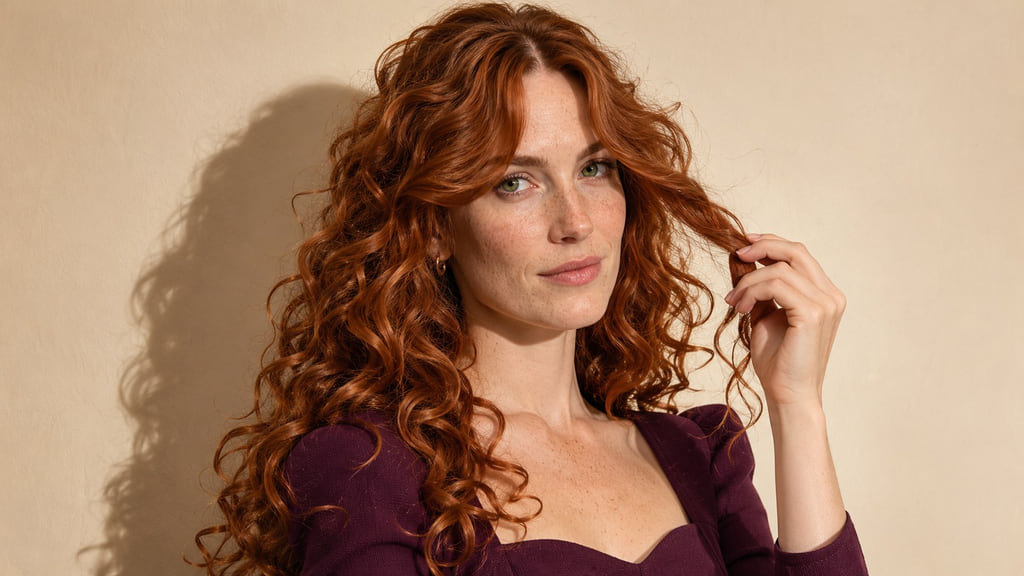
A smaller middle opening brings the two front sections closer while leaving longer pieces at the sides. Look for the gap after the hair has settled, not only immediately after styling. If your part shifts on its own, ask whether the opening can follow that direction. Do not ask for extra apparent fullness that your front section cannot supply; discuss how much hair can enter the fringe without thinning the side shape.
Account for Texture, Density, and Growth Direction
Your dry texture can move an endpoint higher or lower than it looks when the hair is wet or stretched. Density determines how much hair can form the front section without changing the sides. A cowlick or strong growth direction can move the opening away from a drawn center line. These are practical reasons to look at your own hair at rest before choosing how short the fringe should be. Sam Villa’s guide to fringe, perimeter, and layering treats length, density, and texture as distinct cutting considerations.
For a cheekbone reference, show your stylist how your fringe falls after an ordinary wash and dry. Ask them to locate the desired endpoint in that state. If the reference has fuller or straighter hair, keep the goal—an opening and cheekbone frame—but allow the section width or finishing method to change. A longer cheek frame may retain the lower outline with less daily redirection, though your own root pattern decides how it settles. Sam Villa’s discussion of face shape also treats shape as one consideration alongside texture and density. For the wider fringe choices, see Hairstyles with Bangs; for placement examples, see Bangs by Face Shape and Best Bangs for a Larger Forehead.
Plan Styling and Grow-Out
Try a small reset before committing to a cut that depends on a perfect part: dampen the front roots, guide them toward your usual opening, and let the lengths fall before judging the dry line. If you prefer a smooth sweep, ask your stylist to demonstrate it on your hair and note whether you want to repeat that step each morning. Avoid using a tightly rolled reference as evidence of where the unstyled ends will sit.
| Option | Daily attention | What you may notice as it grows | Salon discussion |
|---|---|---|---|
| Cheekbone length | Keep the opening and side sweep visible if that is the look you want. | Front pieces can move below the chosen cheekbone landmark. | Recheck the dry endpoint and the side connection. |
| Longer cheek frame | You may be able to move more of the front section behind the ear. | The front line may blend further into the side lengths. | Decide whether to retain a distinct fringe or let it become a face frame. |
| Narrower opening | Notice whether the middle separates as intended at your natural part. | A small change at the shortest middle point may be conspicuous. | Recheck section width before shortening the center. |
There is no useful universal trim calendar here. Book a shape update when the visible endpoint, opening, or side connection no longer matches the reference you chose. If a shorter center begins to fall into your eyes, that may matter before the longer side pieces change much. Your routine and tolerance for that shift are part of the decision.
Build Your Haircut Reference
Save a front view that clearly shows the opening and both dry endpoints, then add a side view that shows where the front pieces join the rest of the cut. Include a photo of your own hair at its usual part and texture. A single styled portrait can establish a direction, but it cannot show how your roots will settle or how much hair your fringe can use.
“I want to compare cheekbone length with a longer cheek frame. My reference has cheekbone-length curtain bangs with a natural opening. Please keep my natural density in mind and show me the difference in the front line, side connection, and overall outline before we choose a cut.”
Choose the length and opening you want to discuss, then bring both references to your stylist. You can also preview a hairstyle as an optional way to compare the broad silhouette. A virtual preview cannot determine your dry endpoint, root direction, or the result of a real cut.
Frequently Asked Questions
How will this shape work with my natural texture?
Judge the dry endpoint and opening in your usual texture. Waves, curls, and growth direction can change where the front sections rest; density affects how much hair can be used without changing the side shape. Face shape is one reference, not a rule that assigns a fringe. Ask the stylist to check the line after your hair settles.
What changes as the cut grows out?
The shortest pieces move past their original landmark, and the opening or side connection may read differently. A cheekbone-length frame may begin to resemble the longer option; a narrower middle may lose its defined gap. Decide whether you want to restore that line or let it blend into the sides.
What should I show my stylist?
Bring front and side views of the desired curtain fringe, plus a view of your own hair dry at its natural part. Point to the opening, both endpoints, and side connections. If your reference is actually a bottleneck fringe with a short narrow center, or a one-direction side sweep, name that distinction. No face-shape label can replace those visible details.