
Side-Swept Bangs by Face Shape and Hair Texture: Shape, Texture, and Upkeep

Choose the direction and dry length of side-swept bangs with your natural part and growth pattern in mind. Compare a brow-skimming sweep, a cheekbone sweep, and a longer side fringe. The useful choice is the one you can describe and maintain with your actual texture, density, and routine.

Read the Cut Outline Before Choosing a Look
First find where the fringe begins, where it ends when dry, and how it joins the side lengths. In the opening photograph, a visible side part sends the front section diagonally toward the cheekbone. The shorter front line draws the eye across the face; the longer hair behind it preserves the outer perimeter, or edge, of the haircut. These are separate decisions to show your stylist.
Layers are sections cut to different lengths. Their placement changes where a cut carries visible weight. Sam Villa’s explanation of horizontal and vertical layering describes how sectioning changes weight distribution and the visibility of a cutting line. Use the finished outline as a reference, rather than prescribing a technique from a photograph.
A side sweep is not a universal face-slimming rule. A brow-level diagonal covers more forehead than a cheekbone-length piece; neither is automatically better for a particular face shape. Natural parting and front growth direction can also prevent a photographed sweep from holding without styling. Sam Villa’s face-shape guidance considers face shape alongside hair texture and daily routine.
Compare brow-skimming sweep, cheekbone sweep, longer side fringe
Use the endpoint and connection to the side hair as your first comparison. The photographs are editorial examples on different people, so keep your own face, dry texture, and density constant when discussing the options.
| Option | Dry front endpoint | Visible outline | Question for your stylist |
|---|---|---|---|
| Brow-skimming sweep | Across the brow toward the outer eye | Short, clear diagonal; the endpoint remains separate from the side lengths | Will my roots direct this section across the brow in my usual styling routine? |
| Cheekbone sweep | Near the cheekbone | Part of the forehead stays open; the front piece moves into the side hair | Where will this section land when my hair is fully dry? |
| Longer side fringe | Cheek to jaw | The diagonal connects more gradually to longer side lengths | Can I tuck the front piece back when I want it out of my face? |
For example, compare a brow-skimming sweep with a cheekbone sweep at the same natural part. The first gives you a shorter, more visible front line; the second leaves more forehead open and a longer transition at the side. Ask which endpoint your own front section can reach without borrowing more hair than you want from the perimeter.
Brow-Skimming Sweep
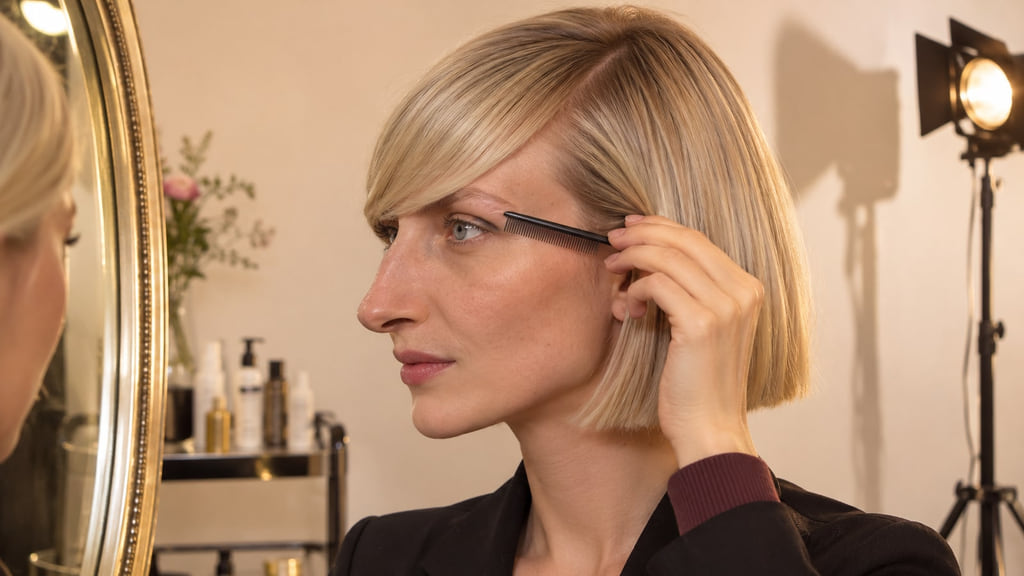
The fringe travels from a visible side part across the brow, with an endpoint instead of a straight full-fringe edge. This shorter line is easy to see in a reference and may need a deliberate daily reset if the roots grow the other way. Ask where the dry endpoint would fall on you and how much of the front section should remain in the sweep.
Cheekbone Sweep
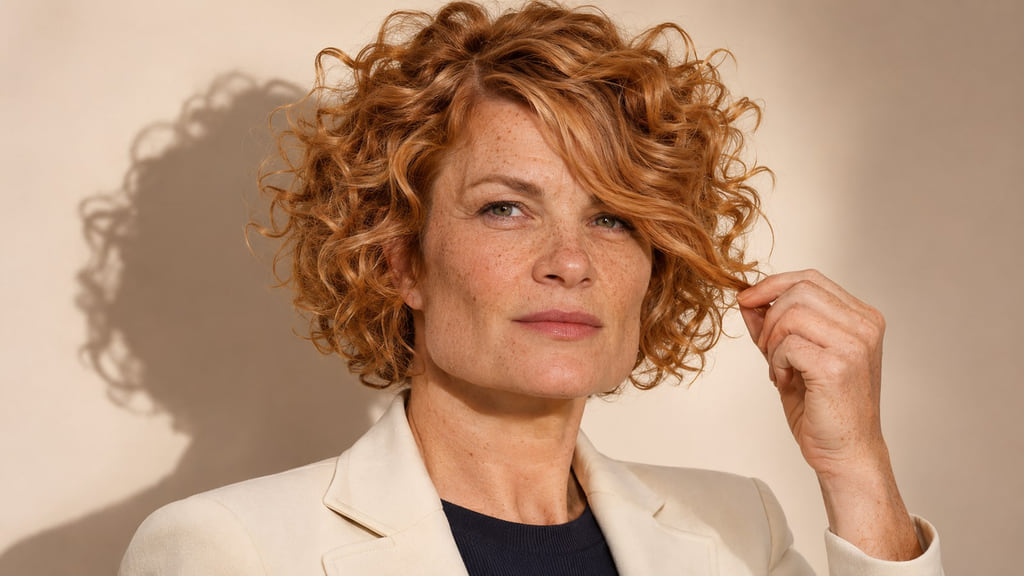
The longer diagonal front section reaches the cheekbone and merges with the side hair. On this curly example, a dry curl changes the apparent endpoint; your own pattern may land elsewhere. Show your stylist the cheekbone goal and ask to assess it on your dry texture rather than copying the photograph’s curl or density.
Longer Side Fringe

Here the diagonal section extends toward the jaw and connects to shoulder-length hair. It gives the front line more room to be tucked or redirected, although the exact behavior depends on the part and texture. Ask whether the longer piece will blend into your current side layers or need a different transition.
Account for Texture, Density, and Growth Direction
Face shape is one reference for where you want the diagonal to sit; hair behavior determines how that line will appear. Texture describes the visible straight, wavy, curly, or coily pattern. Density is how much hair occupies the front section, while strand diameter is the size of individual hairs. Sam Villa’s fringe teaching considers desired fringe length, density, and texture together. Compare the photographs with your hair in its usual dry state, not with extra fullness added to a reference.
Look closely at the roots on the side where you want the sweep to travel. If they naturally grow toward that side, a brow-skimming line may be easier to direct; if they push the opposite way, ask what reset it would take after washing or sleep. A cheekbone-length section may give a curl or wave more room to bend, but its dry endpoint still needs checking. A sweep should not be presented as a shape every growth pattern holds unaided.
For a wider overview of fringe construction, see Hairstyles with Bangs. Compare Bangs by Face Shape if you want to explore where the front line sits relative to your features. If forehead coverage is your main decision, use Best Bangs for a Larger Forehead.
Plan Styling and Grow-Out
Consider what happens after an ordinary wash and on a rushed morning. A brow-skimming sweep keeps its defining line close to the eyes, so a shift in length or parting becomes noticeable there. A cheekbone sweep can move with the side hair, though you may need to guide the roots if they resist the intended direction. A longer side fringe can be tucked back more readily, but it may lose the deliberate diagonal as it grows.
| Option | Daily reset to consider | What changes with growth | Salon discussion |
|---|---|---|---|
| Brow-skimming sweep | Redirect the damp roots and set the short diagonal if needed | The endpoint moves toward the eye | When should the front line be refined for your preferred view? |
| Cheekbone sweep | Check the dry bend and reconnect the side section | The face frame shifts lower | How can the transition stay connected? |
| Longer side fringe | Restore the part or tuck the section back | The front blends farther into the sides | When would the diagonal need reshaping? |
Use that matrix to decide which daily action you are willing to repeat and which change in outline you can live with. There is no single trim interval that fits every texture, growth pattern, or preferred endpoint.
Build Your Haircut Reference
Save one front view with the part and fringe endpoint visible, plus a side view showing how the section joins the longer hair. Add a photograph of your own hair dry and unstyled. Those views let you compare the same landmarks without assuming the model’s density or styling will transfer to you.
You could tell your stylist: “I want to compare a brow-skimming sweep with a cheekbone sweep. My reference is cheekbone-length side-swept fringe with a visible natural side part. Keep my natural density in mind, and show me the difference in the front endpoint, side connection, and crown shape before we choose a cut.” Bring the photographs and your preferred dry endpoint to the appointment. Ask what your roots will do at home and where the shortest piece will land dry.
Frequently Asked Questions
How will this shape work with my natural texture?
Compare where your dry front section ends and whether the roots already travel toward the chosen side. Face shape may guide placement, but texture, density, and routine decide how much work the pictured diagonal would take on your hair.
What changes as the cut grows out?
The brow-skimming endpoint may move into your sightline first; a cheekbone sweep shifts lower along the side; a longer fringe increasingly blends with the rest of the cut. Use the dry endpoint you want as the reason to discuss a trim, rather than following a fixed schedule.
What should I show my stylist?
Bring front and side views of the chosen sweep and a dry photograph of your own natural part. Point to the starting point, endpoint, and connection with side lengths. A side sweep is not a universal face-slimming rule, and some growth patterns need styling to keep the line in place.