
Blunt Bangs: Shape, Texture, and Upkeep

Choose a blunt fringe line, density, and length with your natural growth pattern. Compare a brow-skimming line, a lighter-density blunt fringe, and a shorter graphic fringe. The useful choice is a shape you can describe and maintain with your actual texture, density, and routine.

Read the Cut Outline Before Choosing a Look
Start with the line you want to see when your hair is dry. Straight, brow-skimming blunt bangs form a continuous edge near the eyebrows; a complete view of the crown shows how much hair actually supplies that edge. The fringe can look heavier when more hair is drawn forward or when the cutting line concentrates weight. Sam Villa’s explanation of layering distinguishes cutting patterns by where weight collects and how clearly the line appears. Use that distinction to describe a reference, not to prescribe a technique.
Line and density are separate decisions. A lighter-density blunt fringe can keep a straight edge while using a smaller visible front section. A curved blunt line bends gently toward the sides; it changes the outline without automatically making the fringe lighter. These are editorial descriptions of what to look for in a photograph. Face shape may help you describe the effect you prefer, but it cannot assign or rule out blunt bangs for everyone in a category. Texture, density, and your daily routine also matter.
Compare Brow-Skimming, Lighter-Density, and Shorter Graphic Fringe
Use photographs with the crown, hairline, and dry fringe visible. Compare the edge’s position, the amount of hair in the front section, and where volume sits. A tight crop can make a fringe look fuller than it is.
| Option | Visible perimeter | Front section and volume | Ask your stylist |
|---|---|---|---|
| Brow-skimming line | A continuous edge rests near the brows. | Show the complete crown to judge where the apparent weight comes from. | Where will this edge sit on my dry hair? |
| Lighter-density blunt fringe | The line stays straight and readable. | Less hair enters the front section; side fullness should remain visible. | How much hair can enter the fringe without changing my sides? |
| Shorter graphic fringe | A deliberate edge sits visibly above the brows. | The forehead remains visible; root direction can alter the edge. | How will the short line settle with my growth pattern? |
For a useful two-photo comparison, mark the brow-level edge in option A and the smaller front section in option B. Keep camera angle, lighting, and dry texture as similar as possible. You are deciding whether to change the position of the line, the amount of hair in the fringe, or both.
Brow-Skimming Line

Here the fringe reads as one clear line near the brows. Check the same line with your hair dry and at rest: a bend or root lift may move it. Ask which part of the front edge should change and what should stay in the side shape. The photo illustrates an outline, not a result guaranteed for your hair.
Lighter-Density Blunt Fringe
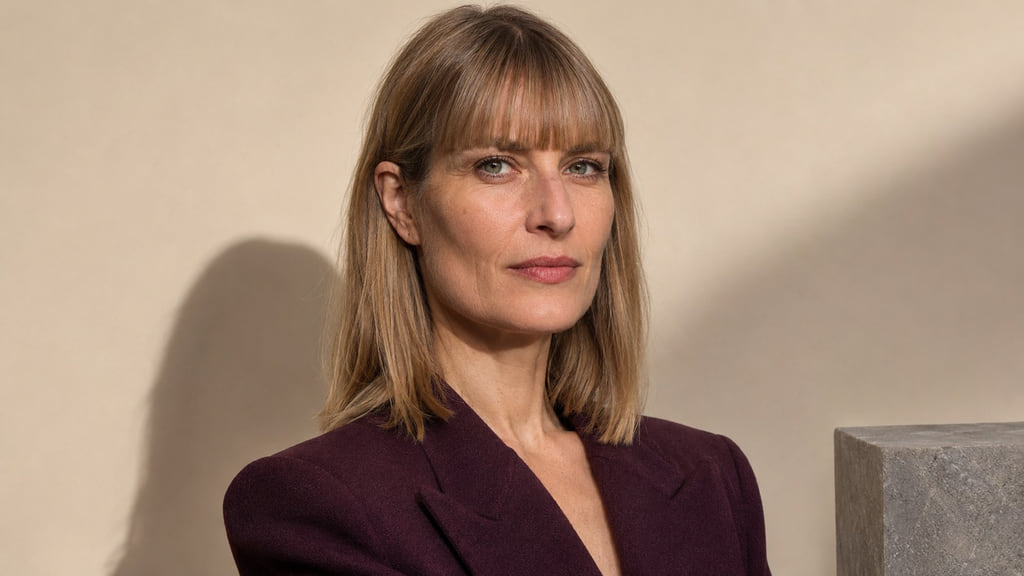
This version keeps the blunt line without borrowing as much apparent weight from the crown. Look at the space between strands and at the fullness left beside the face. If a reference uses naturally denser hair, ask your stylist how a similar line could work with your actual front section. A thinner-looking photo alone cannot tell you how much hair was cut into the fringe.
Shorter Graphic Fringe
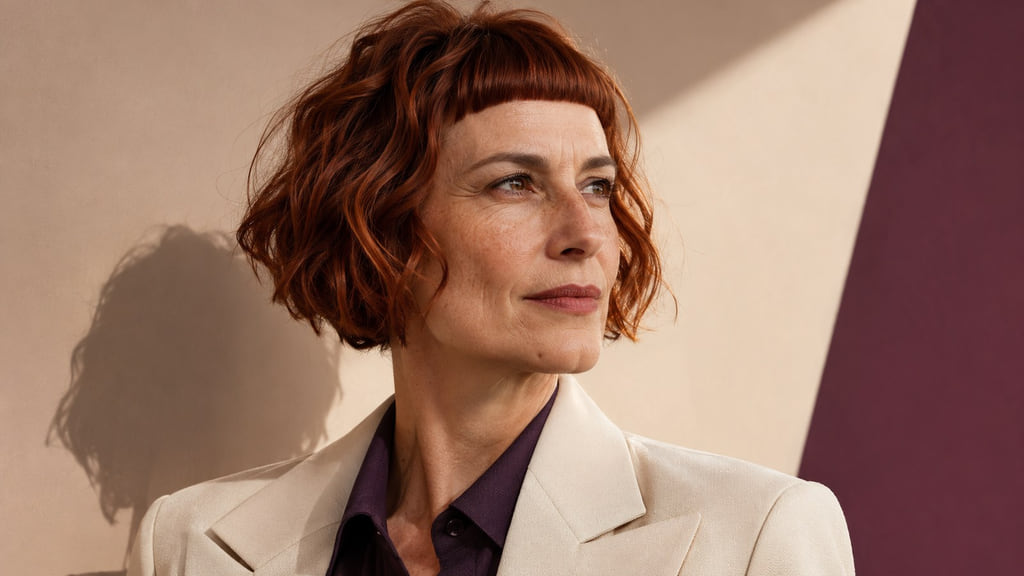
The higher line makes its position especially easy to notice. A straight, sharply placed edge and a softly curved blunt edge are different design choices; neither follows automatically from a face-shape label. Check whether the reference shows natural dry texture or a styled finish, and ask how your own roots will affect that short perimeter.
Account for Texture, Density, and Growth Direction
Look at your fringe after an ordinary wash and dry. Waves or curls may make the visible edge rise; a cowlick can separate a continuous line. Density describes how much hair grows in the section, not the thickness of one strand. Sam Villa’s fringe technique guide treats length, density, and texture as separate considerations. For a brow-skimming reference, point to the intended dry landmark and let your stylist assess where the section can begin on your own head.
If the full fringe in a photo would take more hair than you want to remove from the sides, compare the lighter-density version. Keep the straight-line goal, then discuss section width, your usual part, and the amount of daily shaping you will accept. Sam Villa’s face-shape guide treats face shape as one consideration alongside texture and density. For other fringe structures, see Hairstyles with Bangs; for placement examples, see Bangs by Face Shape and Best Bangs for a Larger Forehead.
Plan Styling and Grow-Out
Ask your stylist to show how the front roots should dry and where the edge rests without a polished finish. At home, notice whether a quick root reset restores the chosen line or whether it depends on a longer styling routine. A brow-skimming edge may start to enter your eyes as it grows; a lighter-density edge may lose its crisp outline without looking as heavy. Neither has a universal trim interval.
| Option | Daily attention | As the fringe grows | Salon support to discuss |
|---|---|---|---|
| Brow-skimming line | Check the dry edge and reset roots if they split. | The line can move below the chosen brow landmark. | Restore the perimeter when that position stops working for you. |
| Lighter-density blunt fringe | Keep the straight edge visible without forcing extra fullness. | The front section may begin to blend into the sides. | Decide whether to preserve a distinct fringe or let it soften. |
| Shorter graphic fringe | Check whether the short edge settles evenly at the roots. | A small change in height may be conspicuous. | Reassess the dry length before restoring the graphic line. |
Choose the amount of daily adjustment and salon upkeep you are willing to repeat. If the line only works with a finish you rarely do, use that fact to refine the reference before the cut.
Build Your Haircut Reference
Save a front view that shows the full crown, hairline, and dry fringe edge. Add a side view to show how the short front section meets the rest of the haircut, plus a photo of your own hair in its usual dry texture. A single styled portrait does not show your growth pattern or available density.
“I want to compare a brow-skimming line with a lighter-density blunt fringe. My reference has straight brow-skimming blunt bangs with a complete crown. Please keep my natural density in mind and show me the difference in the perimeter, front framing, and crown shape before we choose a cut.”
Pick the line, density, and length you want to discuss, then bring both references to your stylist. Ask which details your own dry texture and growth pattern can support before you choose the cut.
Frequently Asked Questions
How will this shape work with my natural texture?
Judge the edge when your hair is dry and worn normally. Texture and root direction can move or separate the line, while density limits how much hair can enter the fringe. Face shape is one reference, not a rule that assigns a cut. Ask your stylist to check the outline on your own hair.
What changes as the cut grows out?
A brow-skimming edge can pass below the brows; a lighter-density edge may become less distinct as it joins the sides. The shorter graphic option changes its position too, but you may notice a smaller shift. Decide which change you can live with and when you would want the line refreshed.
What should I show my stylist?
Bring front and side views of the fringe you want, plus your own dry-hair photo. Point out the edge position, the amount of hair in the section, and the side connection. A face-shape label cannot replace those visible details or guarantee that one blunt fringe suits or excludes a whole category.