
Curly Bob Haircuts: Shape, Texture, and Upkeep

Choose the dry curl outline and perimeter rather than judging length only when stretched. Compare a rounded curly bob, a longer front, and a softer graduated outline. The useful choice is the shape you can describe and maintain with your actual hair texture, density, and routine.

Read the Cut Outline Before Choosing a Look
A jaw-length curly bob can look quite different when its curl groups settle dry than when they are stretched. Trace the complete dry outline first: where does the lower edge end, where is the shortest front curl, and where does the shape look fullest? The perimeter is that visible outer edge. Layers change how length and weight are distributed inside it. Sam Villa’s layering guide explains how different cutting lines distribute weight, while its bob examples show that a bob can include graduation or layers. Neither source predicts how your own curls will settle.
Keep the dry curl pattern and apparent density in view when comparing photos. A rounded outline collects the eye around the sides and lower edge; a longer front puts the endpoint farther forward. Those are different shape choices, not a ranking of who can wear a bob. Check a front and profile view before deciding whether you want to change the perimeter, the front framing, or the placement of fullness.
Compare Rounded Curly Bob, Longer Front, and Softer Graduated Outline
Use the same questions for each editorial example. Where does the dry perimeter end? How does the front connect to the side? Where is the visible weight? A single portrait may show the shape clearly but cannot supply a cutting plan for your texture.
| Shape | Dry perimeter | Front and volume | Ask your stylist |
|---|---|---|---|
| Rounded curly bob | A continuous curved outline made of individual dry curl groups. | The front joins the side curve; check the widest point and the shortest front curl. | Which curl groups set the lower edge in my usual dry finish? |
| Longer front | The front ends visibly lower than the back in the worn dry state. | Front length becomes the main feature; check how it connects behind the ear. | How much front length can stay visible with my curl pattern? |
| Softer graduated outline | A shorter nape builds toward the upper back, with a readable side edge. | Connected transitions soften the back without losing the outer shape. | Can we see the intended nape and side relationship on my dry hair? |
For a filled comparison, set a rounded curly bob beside a longer-front bob with a similar dry length at the sides. Keep camera angle, exposure, natural density, and curl definition as comparable as the references allow. In the first, follow the curved lower outline; in the second, look for a front endpoint that extends below the back. Ask which feature you actually want to keep. The pictures illustrate visible options, not identical outcomes on different hair.
Rounded Curly Bob

The separate curl groups form a rounded outline without becoming a straight, stretched line. Look for the point where the sides are fullest and whether the lower edge still reads as one shape. Ask a stylist which sections could change that outline and which should retain weight. The reference shows a finish, not a universal layer pattern.
Longer Front
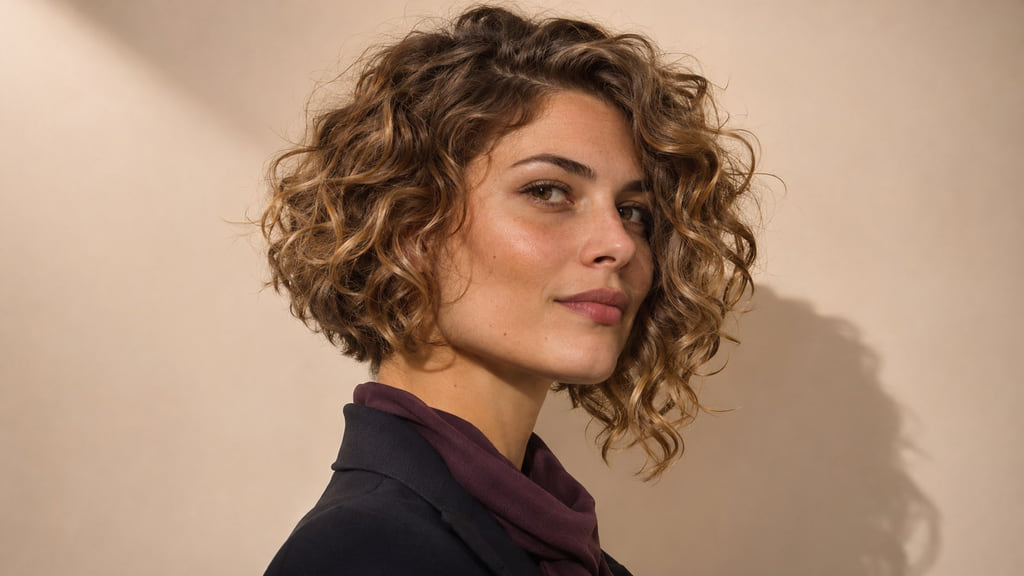
The front curl groups hang lower than the back in this editorial example. Compare dry endpoints rather than pulling a curl straight to measure it. A side photograph helps show the transition, but add a true back view before using the image as a salon reference. Ask how much of the longer front will remain visible after your own hair dries.
Softer Graduated Outline

A shorter nape can build into the upper back while the side perimeter remains legible. Sam Villa’s bob examples describe graduation as one bob construction. This photograph only suggests its visible effect; it does not show the cutting method. Bring a back view and ask how connected you want the transition to look in your usual dry state.
Account for Texture, Density, and Growth Direction
Texture describes your visible curl or coil pattern; density is how many strands occupy an area, separate from the thickness of each strand. Notice your own dry length, how the groups gather, where the part naturally sits, and whether the nape grows in a different direction. A rounded reference with more density can show a fuller perimeter than your hair will produce. Ask where to preserve lower-edge weight and where layers might change the silhouette. Sam Villa’s layering guide explains how sectioning can build weight in a shape, but your stylist must assess your actual hair.
If you like the longer front but your curls settle at different heights, keep the goal clear: a visible front-to-back difference in your ordinary dry finish. Bring your own dry front, side, and back photos and ask how the proposed outline would read with your growth direction and routine. For the broader family, see Bob Haircuts; compare endpoints in Bob Haircut Lengths and proportion placement in Bob Haircuts by Face Shape.
Plan Styling and Grow-Out
Think through the routine that makes each outline visible. A rounded bob may need selected curl groups refreshed after sleep so the side and lower curve still connect. A longer front asks you to watch whether the front groups keep their intended dry endpoint. With a softer graduated back, check whether the nape still reads as shorter than the upper back. None is automatically effortless, and there is no useful universal trim interval.
| Shape | Usual attention | Change to watch | Salon discussion |
|---|---|---|---|
| Rounded | Let curls settle; reset groups that flatten the curve. | The lower edge becomes uneven or the widest point shifts. | Which sections need a shape refresh? |
| Longer front | Check the front endpoint in your ordinary dry finish. | The front-to-back difference becomes less clear. | Restore that difference or keep the added length? |
| Soft graduation | Check the nape and back from the side and rear. | Back fullness loses its connection to the shorter nape. | How much of the nape shape should remain? |
Choose the option whose everyday finish you are willing to repeat. If the feature you chose stops showing clearly as the cut grows, that is a more useful signal for a consultation than a fixed calendar date.
Build Your Haircut Reference
Save a front or three-quarter photo with the whole crown and dry ends visible. Add a side view for the front-to-back line and a back view if the nape matters. Include a photo of your own hair after its usual wash and dry. Mark the dry endpoint, perimeter, shortest front curl, fullness, and any fringe; note your regular part and styling routine.
“I want to compare a rounded curly bob with a longer front. My reference is a jaw-length curly bob with natural shrinkage and full curl definition. Please keep my natural density in mind and show me the difference in perimeter, front framing, and crown shape before we choose a cut.”
Choose the dry outline you want to discuss, then use those photos to ask what your own curls can support. Confirm the front and back endpoints in your ordinary dry finish before deciding on a cut.
Frequently Asked Questions
How will this shape work with my natural texture?
Compare the full dry outline and the shortest front group with your own curls after your normal routine. Layers and weight distribution influence the visible shape, as Sam Villa’s layering explanation illustrates, but the reference cannot determine the right sectioning for you. Face shape is one observation, alongside texture, density, and the outline you prefer.
What changes as the cut grows out?
A rounded bob may lose its curved lower edge; a longer-front bob may lose the contrast between front and back. In a graduated version, the shorter nape can become less distinct. Watch for the feature that made you choose the cut, then decide with your stylist whether to restore it or keep the added length.
What should I show my stylist?
Show the dry front, side, and back of your own hair alongside a reference with a readable perimeter and curl pattern. Say which endpoint and volume placement you want to preserve. Wet or stretched length cannot supply one universal dry-length prediction, and a denser reference cannot promise the same fullness on your hair.