
Bob Haircuts: Shape, Texture, and Upkeep

Choose a bob silhouette after separating length, perimeter, graduation and texture. Compare blunt bob, softly layered bob, graduated bob, and curly bob. The useful choice is the shape you can describe and maintain with your actual hair texture, density, and routine.

Read the Cut Outline Before Choosing a Look
A chin-length blunt bob shows its strongest line at the dry ends. Before choosing a bob haircut, separate that perimeter (the visible outer edge) from length, internal layers, and graduation at the nape. A compact bob can have a clear edge and still distribute weight differently above it. Sam Villa’s bob examples include both graduation and layering; the name alone does not specify either one.
Compare a continuous blunt edge with a softly layered outline at the same dry landmark. Layers are sections cut to different lengths; they can change where fullness collects and how visible the cutting line appears. Sam Villa’s explanation of horizontal and vertical layering describes that difference in weight distribution. The comparison below uses those terms to describe visible editorial examples, not to prescribe one cutting technique for your hair.
Compare Blunt Bob, Softly Layered Bob, and Graduated Bob
Look at a level front or three-quarter view with the entire crown and dry ends visible. Add a side and back view when the nape or front length is part of the decision. Compare the perimeter, the shortest front section, and where fullness sits before comparing styling finishes.
| Bob shape | Dry perimeter | Layers, front, and volume | Ask your stylist |
|---|---|---|---|
| Blunt bob | A continuous, clearly visible edge near the chosen chin or jaw landmark. | Little visible layering; check whether the front meets the side edge and where the line concentrates fullness. | Can we keep this edge readable in my usual dry finish? |
| Softly layered bob | The lower edge stays visible but reads less solid. | Shorter internal sections connect gently to the edge; check where movement replaces the strongest weight line. | Which sections would you shorten while keeping the outer shape? |
| Graduated bob | A readable side outline with a shorter nape. | Length builds from the nape toward the upper back; compare the side and back, not just the front. | How much nape build-up will show on my hair? |
| Curly bob | The complete dry curl outline, with natural shrinkage visible. | Individual curl groups shape the edge; check side volume and the shortest dry front pieces. | Where will the curl groups settle after drying? |
For a filled comparison, put a chin-length blunt bob in photo A and a softly layered bob at a similar dry endpoint in photo B. Keep camera height, exposure, natural density, and dry texture as consistent as you can. In A, trace the continuous lower line; in B, locate the shorter internal sections and the softer transition to the edge. Ask whether you want to change the line, the distribution of weight, or both. These are appearance choices, not a ranking of faces.
Blunt Bob

This editorial example keeps a distinct chin-area line. The seated pose does not show the full nape, so request a back view before using it as a cutting reference. Point to the edge you want to keep and ask what would need to change on your own dry hair for it to remain clear.
Softly Layered Bob
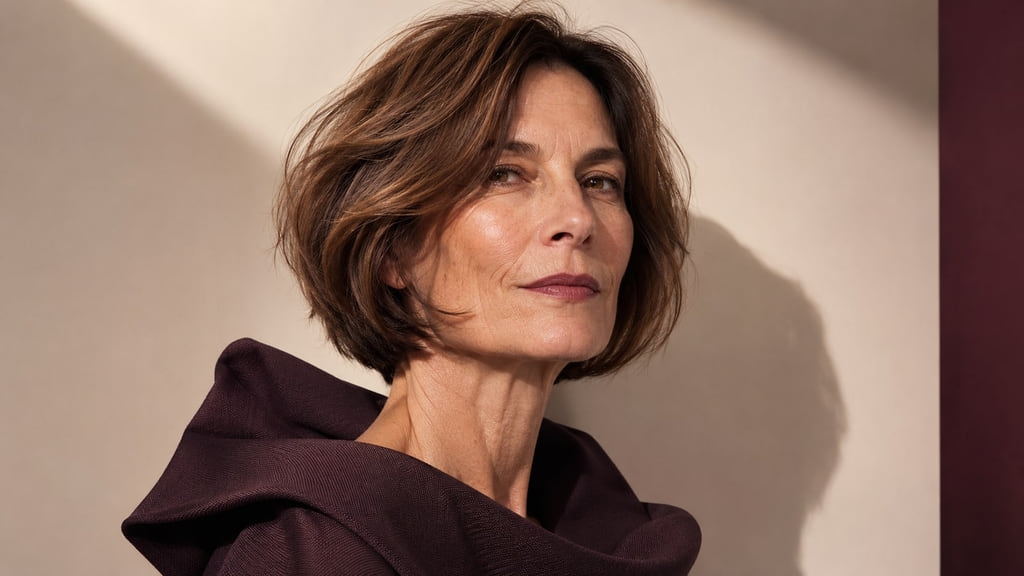
The shorter sections give this reference movement without turning every end into a separate piece. Compare its lower edge with the blunt example at a similar dry length. Ask which part of the outline should soften and which part should stay defined; a photograph cannot show how much hair your stylist would need to remove.
Graduated Bob
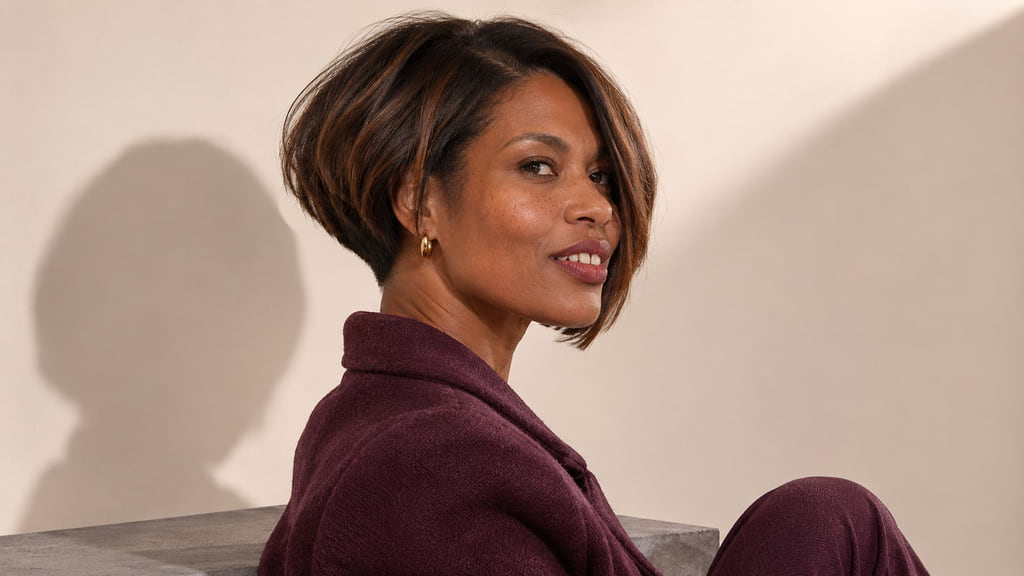
Here the side and back carry different lengths. The shorter nape creates a visible build-up behind the ear, while the front remains longer. Sam Villa’s bob examples show graduation as one possible construction. Bring a back reference if this is the feature you want; the front view alone cannot specify it.
Curly Bob

The dry curls create an outline rather than a single straight cutting line. Notice where the shortest front curl settles and how much side volume remains. Keep the natural shrinkage in the reference; a stretched curl would suggest a different finished length. This image is a shape example, not a promise that another curl pattern will settle in the same place. Compare the rounded, longer-front, and graduated options in Curly Bob Haircuts.
Account for Texture, Density, and Growth Direction
Check your hair in its ordinary dry state before choosing among these silhouettes. Texture describes whether it settles straight, wavy, curly, or coily; density is how much hair grows in a section, while strand thickness is separate. Growth direction at the nape and around a fringe can change the outline even if the reference has your preferred length. A blunt line photographed on denser hair may need a different construction to stay readable on yours. Sam Villa’s face-shape guidance also treats face shape as only one consideration alongside texture and density.
If a softly layered photo has more fullness than your hair, preserve the part you actually want: perhaps the soft movement, perhaps the visible lower edge. Discuss how much weight to leave at the perimeter and how your usual drying routine affects the finish. Sam Villa’s layering guide explains how sectioning can build weight into a shape, but your stylist should choose the method after seeing your hair. For the separate endpoint decision, use Bob Haircut Lengths. Compare proportion placement in Bob Haircuts by Face Shape and longer outlines in Lob Haircuts.
Plan Styling and Grow-Out
A blunt bob makes a changing lower line easy to notice. After washing, check whether your dry ends still form the edge you chose and whether the front remains connected. A softly layered bob may keep movement as it grows but lose the particular transition you liked. A graduated nape can become less distinct, while a curly bob may change its apparent endpoint as curl groups settle differently. Discuss a refresh when the feature you chose stops being visible; there is no fixed interval for everyone.
| Shape | Daily attention | Change to watch | Salon discussion |
|---|---|---|---|
| Blunt | Let the hair dry as usual; check the lower line and front connection. | The edge passes the chosen landmark or bends away from the reference. | Restore the perimeter, or keep the added length? |
| Softly layered | Check whether the shorter sections still move into the lower outline. | The transitions become less distinct. | Refresh selected layers without losing the edge? |
| Graduated | Check the back after your normal finish. | Nape build-up softens as the lower sections grow. | How much of the nape shape matters to you? |
| Curly | Check the finished dry curl groups and side volume. | The outline changes as curls and ends grow. | Which dry curl group sets the target edge? |
Choose the routine you are willing to repeat. A polished reference may rely on more shaping than you usually do, so bring a photograph of your everyday finish as well.
Build Your Haircut Reference
Save front, side, and back views that show the full crown and dry ends. Mark the intended perimeter, shortest front piece, and any nape graduation. Add a photo of your own hair after an ordinary wash and dry, and note whether you want fringe. A fringe changes the front outline, but its density and growth direction need their own discussion.
“I want to compare a blunt bob with a softly layered bob. My reference shows a precisely cut chin-length blunt bob. Please keep my natural density in mind and show me the difference in perimeter, front framing, and crown shape before we choose a cut.”
Choose the outline you want to discuss, then bring both references to your stylist. Ask which details your own dry texture, density, and growth direction can support before choosing the cut.
Frequently Asked Questions
How will this shape work with my natural texture?
Check the finished outline on your own dry hair. Waves and curls can move the visible perimeter, while density and growth direction affect how much weight remains at the edge. Face shape is one reference, not a rule that assigns a bob; your stylist can compare your texture and routine with the photo before selecting a construction.
What changes as the cut grows out?
A blunt bob’s continuous edge can pass the landmark you chose. A softly layered bob may lose some of its connected movement, and a graduated nape can become less distinct. Watch the feature that matters to you and decide with your stylist when to restore it.
What should I show my stylist?
Bring front, side, and back references with the dry perimeter and any shorter sections visible, plus a photo of your own usual finish. Mark whether you prefer the blunt line or the softly layered transition. For precise endpoints or face-proportion placement, use the dedicated guides linked above rather than trying to infer everything from one portrait.