
Lob Haircuts: Shape, Texture, and Upkeep

Choose the long-bob perimeter and amount of movement around collarbone length. Compare a blunt lob, a soft layered lob, and a wavy lob by their dry outline, front framing, and everyday upkeep. The useful choice is a shape you can describe and maintain with your actual texture, density, and routine.

Read the Cut Outline Before Choosing a Look
A lob haircut keeps a deliberate long-bob outline near the shoulders or collarbone. Start with the dry perimeter: where do the ends meet your shoulders, and does the edge read as one continuous line or as softer, connected sections? In the hero example, the low edge and slight natural bend make that choice visible. Layers change how weight is distributed and how clearly a cutting line reads, as Sam Villa’s layering explanation describes. That professional terminology helps you name an effect; it does not prescribe a method for your hair.
A blunt lob concentrates visual weight at a clear lower edge. A soft layered lob keeps a recognizable perimeter while shorter internal sections add movement. Fringe is a separate front section: decide whether it should frame your forehead or connect into the sides instead of treating it as part of the bottom line. These are editorial descriptions of visible shapes, not a ranking of who should wear them. Keep this long-bob silhouette decision separate from the full bob-length measurement guide. Save a reference only when you can see the dry ends and the front framing.
Compare a Blunt Lob, Soft Layered Lob, and Wavy Lob
Look at each option with the hair dry. First compare the perimeter against the collarbone, then check the shortest front section and where fullness sits. A photo taken from a different angle or with much more styled volume can make two similar cuts look unrelated.
| Option | Dry perimeter | Layers and front framing | What to ask |
|---|---|---|---|
| Blunt lob | A continuous, clear edge around the collarbone zone. | Little visible internal layering; the front can stay near the main line. | How much of this lower edge can stay intact with my natural density? |
| Soft layered lob | A readable lower edge with softer, connected transitions. | Shorter internal sections show movement; front pieces can frame the face without disconnecting from the sides. | Where should the shortest section begin, and where will weight remain? |
| Wavy lob | A lower outline visible beneath separated, naturally bending wave groups. | Wave shape changes where fullness appears; front framing should be judged dry. | Where will the longest and shortest wave groups finish in my usual dry state? |
For a filled comparison, take a collarbone-skimming blunt lob with a natural slight bend as option A and a soft layered lob at the same dry landmark as option B. Keep the desired length and natural density constant. In A, trace one strong lower line; in B, locate the shorter connected sections and note whether fullness moves above the edge. That is a useful salon decision, not a promise that either reference will reproduce exactly. Sam Villa’s bob examples show that a bob family can include graduation or layering; the visible choices below are our editorial examples. Choose the row whose edge and movement you want to discuss first.
Blunt Lob
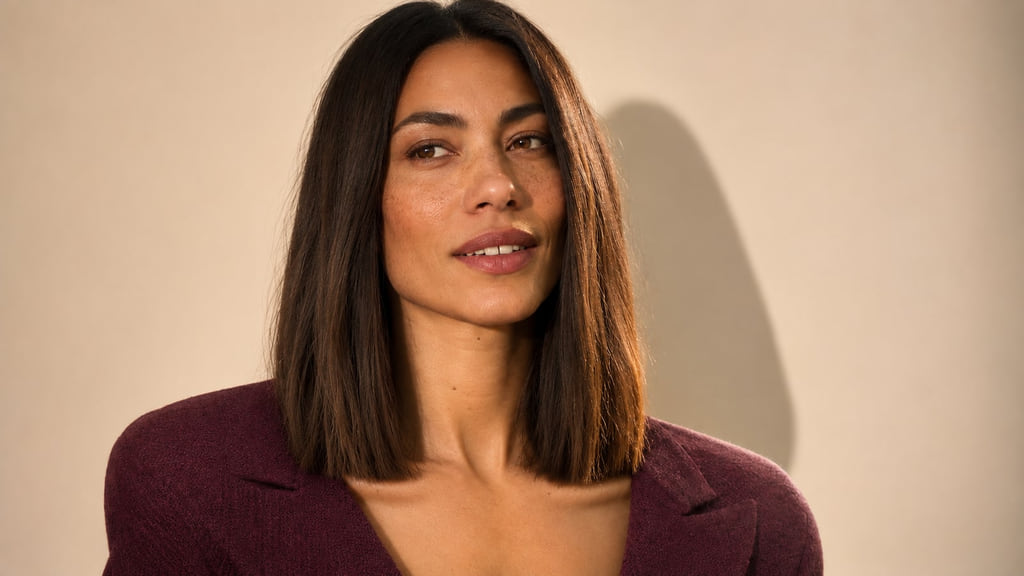
This editorial example keeps a clear dry edge and little visible layering. The photograph shows the line from one angle; add a side view to learn whether the front sits longer, shorter, or level with the back. When judging a second reference, prefer similar lighting, angle, and dry texture, and account for the person’s actual density. Ask your stylist which part of the perimeter you want to change and which part must stay strong.
Soft Layered Lob

Here the shorter internal sections are easier to see, but they still lead into the lower outline. Compare the same dry landmark with the blunt example before deciding whether the change is in the layers or simply in the styling. Ask where the shortest section will begin on your hair and whether you want the lower edge to remain visibly full.
Wavy Lob

This example shows how separate wave groups change the apparent edge and side volume. A styled bend can look different after a normal wash and dry, so compare it with a photo of your own usual texture. Ask which groups will reach the intended dry landmark and whether the front pieces need to stay longer to preserve your chosen frame.
Account for Texture, Density, and Growth Direction
The haircut is a combination of length, perimeter, layers, and how your hair behaves. Texture describes the visible straight, wavy, curly, or coily pattern; density describes how many strands occupy an area, rather than the diameter of one strand. A natural part or growth direction can shift fringe and crown fullness. Compare references with your hair dry, in your normal part, and without assuming a model’s density can be copied. On a blunt lob, a strong edge may make individual bends easier to notice; discuss where you want that edge to land with your stylist.
If the soft layered lob appeals to you but your usual routine creates less movement than the photograph, keep the goal and adjust the plan. Show your stylist the dry perimeter you want, identify the shortest visible section, and explain whether you air-dry, diffuse, or style with heat. Sam Villa’s discussion of layering direction explains how a technique can place weight in a shape, but your consultation should settle the method for your hair. For broader shapes, see Bob Haircuts; for exact bob length landmarks, use Bob Haircut Lengths. Bob Haircuts by Face Shape is a separate comparison if you want to explore framing preferences. Bring one photo of your own natural dry outline to the appointment.
Plan Styling and Grow-Out
A crisp blunt edge may need a quick check after washing: do the ends bend at the shoulder, and does the front still meet the intended line? A soft layered lob asks a different question: do the shorter sections connect to the lower edge after your usual styling, or has volume shifted somewhere you do not want it? A wavy lob can change shape as the wave groups settle. None of these names guarantees a styling-free result or one trim schedule for everyone.
| Option | Usual routine to consider | Change you may notice | Salon support to discuss |
|---|---|---|---|
| Blunt lob | Check the dry line and any shoulder bend; decide whether you will reset the front. | A once-clear edge looks less even or lands at a less useful point. | Preserving the perimeter and front length. |
| Soft layered lob | Check whether the shorter sections settle into the sides with your normal drying method. | Weight gathers lower down or the front stops connecting smoothly. | Refreshing movement while retaining the chosen edge. |
| Wavy lob | Let the usual wave groups dry, then check the side and lower outline. | Volume shifts or the longest groups no longer show the intended shape. | Rechecking dry length and the placement of fuller sections. |
Choose the routine you can repeat, then use a change in the visible shape—not a fixed number of weeks—as the reason to revisit the cut.
Build Your Haircut Reference
Save a photograph that shows the entire crown, front framing, and dry ends. Add a side or back view of the same cut if the first image hides the perimeter. If your favorite reference is highly styled, include a photo of your own hair after your normal dry routine. Reference photos communicate a direction, not an exact promise.
You can bring this filled salon brief: “I want to compare a blunt lob with a soft layered lob. My reference is a collarbone-skimming blunt lob with a natural slight bend. Keep my natural density and show me the difference in perimeter, front framing, and crown shape before we choose a service. I usually wear my hair dry with my natural part, and I want to see where the ends will sit in that state.”
Decide on the long-bob edge and amount of movement you prefer, then review that reference with your stylist. If you want to test the broad silhouette first, preview a hairstyle as an optional visual comparison; a preview cannot confirm your finished cut or the behavior of your own hair.
Frequently Asked Questions
How will this shape work with my natural texture?
Compare the dry edge and volume placement in a reference with your own usual texture. A blunt lob exposes a clearer line, while a soft layered lob shows more connected movement; a wavy lob can shift its visible edge as the waves settle. Your part, density, and growth direction matter as much as the name of the cut. Ask your stylist to assess your hair in its normal dry state.
What changes as the cut grows out?
Watch the feature you chose: the strong lower line of a blunt lob, the connection between shorter sections and the edge of a soft layered lob, or the volume pattern of a wavy lob. The front frame may also reach a different point. Choose when to refresh the shape by those visible changes and your tolerance for them, rather than a universal calendar.
What should I show my stylist?
Bring a full-outline front reference, a side or back view, and a photo of your own dry hair. Mark the collarbone landmark, lower perimeter, shortest front piece, and where you want fullness. If your question is the complete range of bob lengths rather than this long-bob silhouette, compare the dedicated Bob Haircut Lengths guide.