
Pixie Haircuts: Shape, Texture, and Upkeep
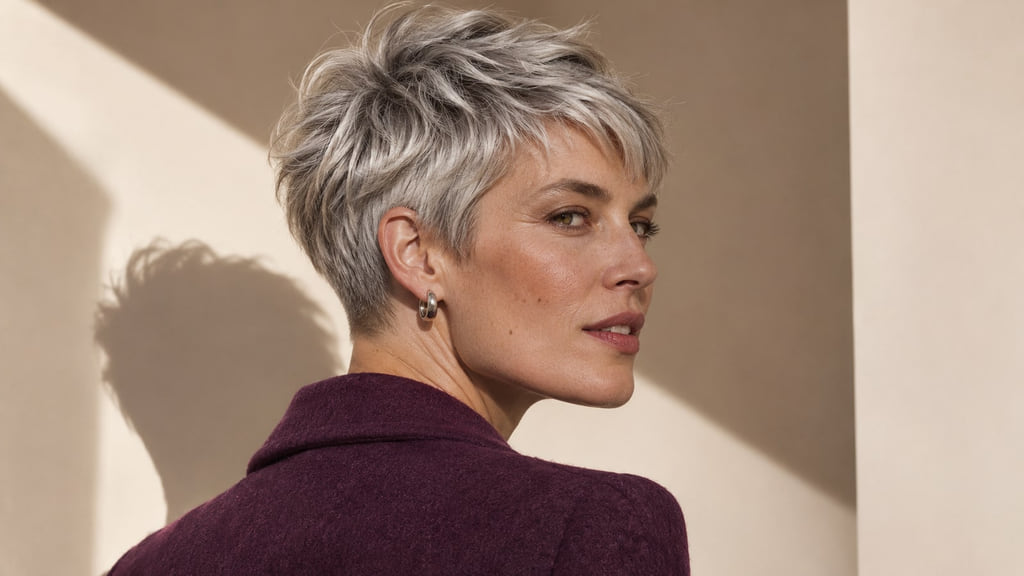
Choose the balance between nape, sides, crown, and fringe in a pixie. Compare a tapered pixie, longer fringe pixie, textured crop, and soft grown-out pixie. The useful choice is a shape you can describe and maintain with your own texture, density, and routine.

Read the Cut Outline Before Choosing a Look
The silver tapered pixie above keeps a feathered crown over short sides and a clean, visible nape. To choose a pixie haircut, first decide where you want the shortest edge, where the crown should carry fullness, and how much front hair should remain. Perimeter means the outer edge of the cut; layers are sections cut to different lengths. Sam Villa’s layering guide explains how sectioning changes weight distribution and the visibility of a cutting line. Those terms help you describe a shape, while the exact technique belongs in your consultation.
A tapered pixie and a longer fringe pixie can share a short nape yet feel different around the face. The first makes the side-to-nape transition more visible; the second preserves a longer front. Face shape can inform that placement, but Sam Villa’s haircut guidance considers texture and density as well. Neither style name dictates one clipper setting, cutting method, or trim schedule.
Compare Tapered Pixie, Longer Fringe Pixie, and Textured Crop
Compare the ear and nape outline, front length, and distribution of fullness in each shape. Look for the detail you want to preserve in your own cut.
| Shape | Ear and nape outline | Front and crown | Question for your stylist |
|---|---|---|---|
| Tapered pixie | Sides and nape shorten gradually beneath the crown; the ear and nape stay readable. | A short, clear front with feathered fullness above. | How visible can the taper stay in my usual dry finish? |
| Longer fringe pixie | Short sides and nape remain distinct from the crown. | Longer front ends cross toward the face while the crown stays connected. | Where will the longest front piece land when dry? |
| Textured crop | Short sides and nape frame a compact outline. | Separated strand groups and ends make the surface texture visible. | Which sections can separate without exposing more scalp than I want? |
| Soft grown-out pixie | The short nape and sides remain visible, with softer transitions. | Front and crown connect with fewer sharply separated ends. | Which connection should stay soft as the cut grows? |
For a useful two-photo comparison, place a tapered pixie beside a longer fringe pixie at a similar camera angle and exposure. Trace the gradual side-to-nape shortening in the first and the retained front ends in the second. Keep your actual density and dry texture in mind: a photograph cannot tell your stylist how much weight your hair can hold. You are choosing which line to emphasize, not ranking faces.
Tapered Pixie
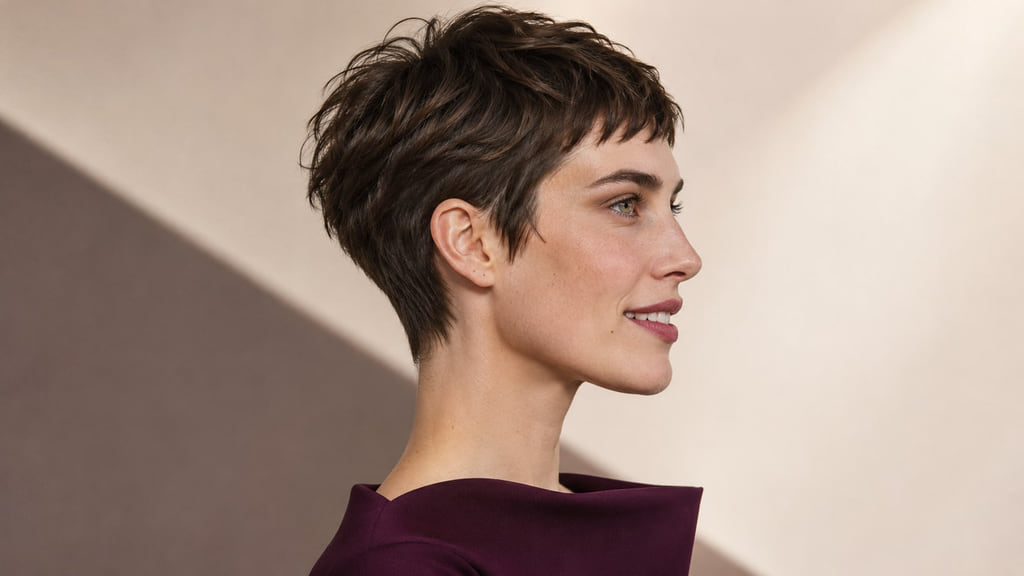
Here the short nape and sides remain distinct from the fuller crown, and the ear outline is easy to read. Save a side and back view if that taper is the feature you want. Ask how much of it will remain visible when your own hair settles dry, especially if growth direction changes at the nape.
Longer Fringe Pixie
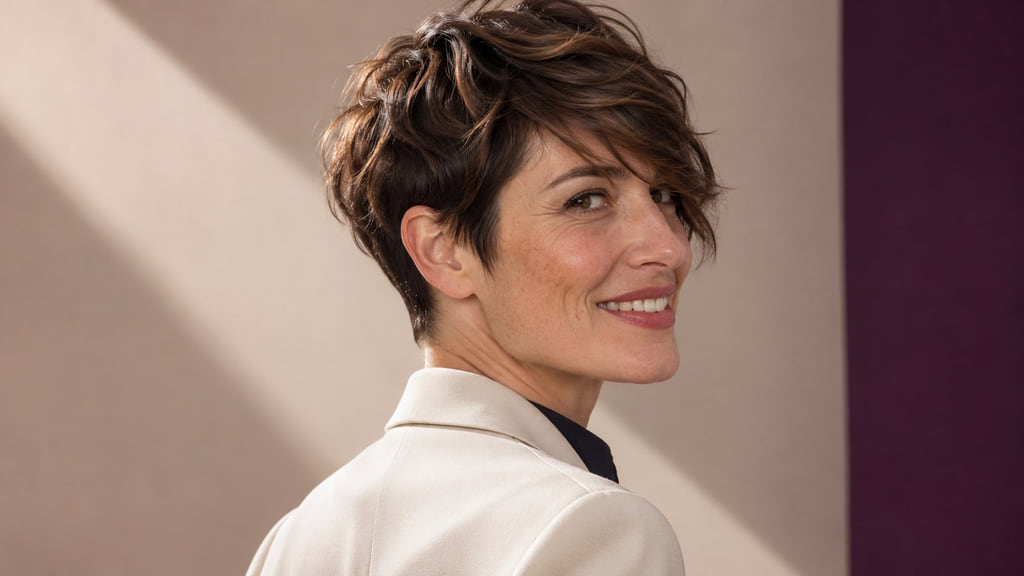
This reference leaves a longer front section over short sides and nape. Compare where its front ends stop against the tapered example, then ask for that endpoint on your own dry hair. The photo cannot show whether those pieces will fall forward, sweep aside, or separate along your natural growth pattern.
Textured Crop
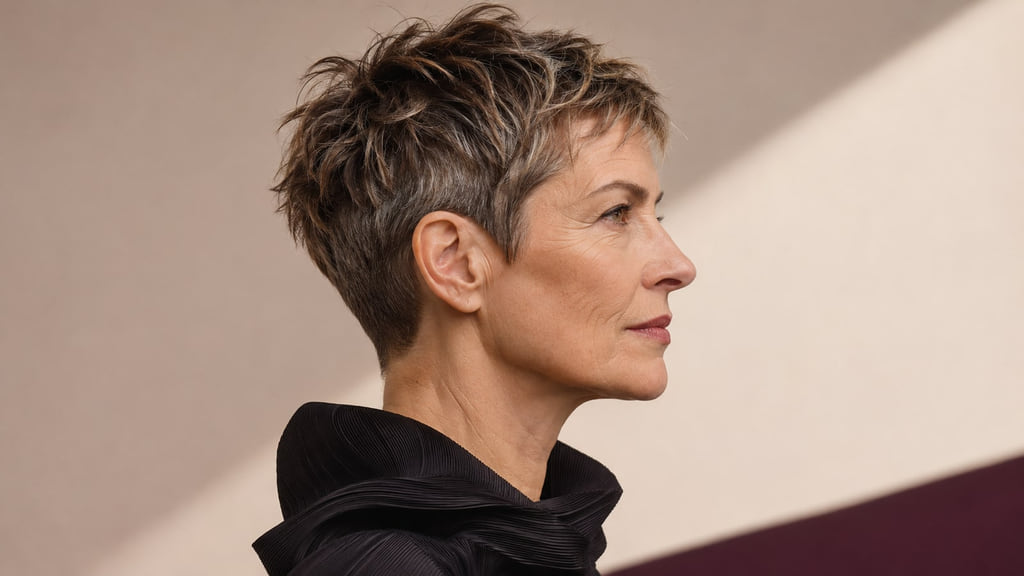
The short front and separated crown ends make texture the defining feature here. Notice how the outline still shows an ear and nape rather than dissolving into an indistinct finish. Ask which sections could separate in your hair without requiring a daily result you do not want to maintain.
Soft Grown-Out Pixie
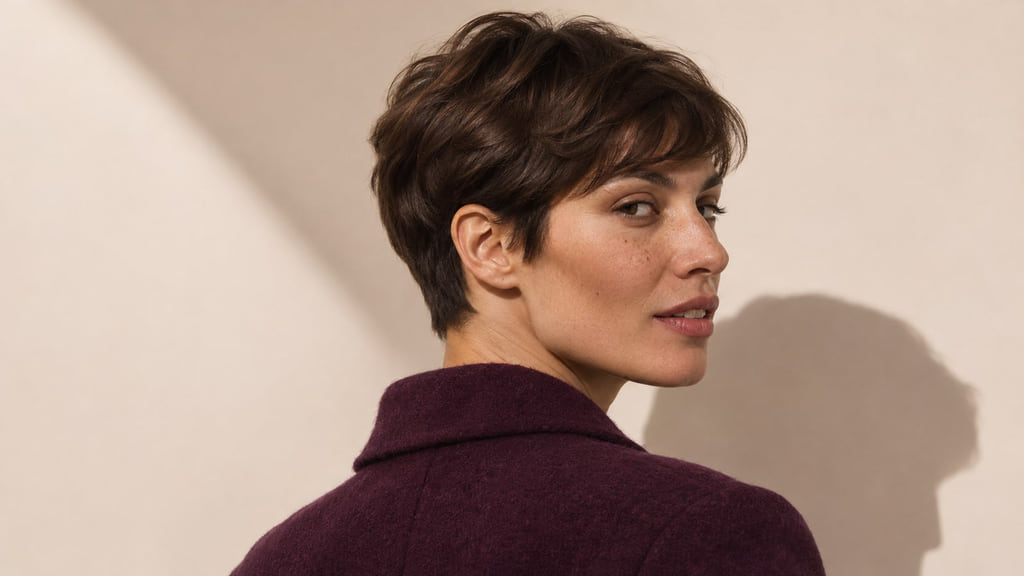
This version keeps the nape short but connects the upper sections more softly than the crop. Use it to discuss what should still read as a pixie while you let the front or crown lengthen. Ask your stylist which transition would change first on your own hair, rather than assuming the photo predicts your grow-out.
Account for Texture, Density, and Growth Direction
Look at your hair dry, in its usual part, before choosing a taper or fringe. Texture describes its straight, wavy, curly, or coily behavior; density describes how many strands occupy an area, while strand thickness is a separate feature. A crown that looks full in a reference may show a different amount of scalp on you. Growth direction near the nape or front can also change where a short line sits. Face shape is one visual reference, not a rule that overrides those observations. Sam Villa’s haircut guidance likewise considers texture and density alongside facial proportions.
If you prefer the longer fringe but your front hair falls differently from the photo, keep the goal clear: a retained front against shorter sides and nape. Ask where its dry endpoint should land and how it will sit without a polished set. If you prefer the taper, ask where weight can remain above the short side. Sam Villa’s layering explanation shows that section direction can change visible weight, but your stylist should choose the technique after seeing your hair. For a neighboring outline with a longer perimeter, compare Bob Haircuts.
Plan Styling and Grow-Out
A tapered pixie asks you to notice the outline around the ear and nape after your usual wash and dry. If that gradual transition stops reading clearly, discuss whether to refresh just the perimeter or change the crown length as well. A longer fringe may need a different daily reset: notice when the front moves past your chosen dry landmark or starts falling in a new direction. Neither shape promises a styling-free morning or one universal time between appointments.
| Shape | Daily attention | Change to watch | Salon discussion |
|---|---|---|---|
| Tapered pixie | Set the crown and check the side-to-nape line. | The taper loses definition or fullness shifts toward the sides. | Which edge matters most to refresh? |
| Longer fringe pixie | Place the front where you want it in your normal finish. | The front passes its dry landmark or changes direction. | Can the front be adjusted without shortening the nape? |
| Textured crop | Separate only the sections you want to show. | Strand groups merge or the crown loses its intended shape. | How much separation suits my density and routine? |
| Soft grown-out pixie | Let the connected sections settle and check the whole outline. | The nape and front no longer relate as intended. | Which connection should be kept while I grow it? |
Choose the amount of salon upkeep you are comfortable with by identifying the feature you would miss first. Someone who wants a crisp nape may book a refresh when that edge changes; someone growing the front may tolerate a softer outline longer. Bring photos of the cut after an ordinary wash, not only on salon day.
Build Your Haircut Reference
Save one front or three-quarter photo and one side or back photo that show the entire dry outline. Pair them with a picture of your own hair in its usual finish. A concise salon brief can be:
I want to compare a tapered pixie with a longer fringe pixie. My reference is a silver tapered pixie with a feathered crown and a clean, visible nape. Keep my natural density in view and show me the difference in perimeter, front framing, and crown shape before we choose the cut.
Point to what should change and what should stay. If the two shapes still feel close, ask your stylist to show where each front section would land on your dry hair and how the nape would be maintained.
Frequently Asked Questions
How will this shape work with my natural texture?
Compare the reference with your dry hair and ask where the front, crown, and nape will settle. Texture, density, and growth direction can change how visible a taper or separated crop looks. Face shape can help you discuss placement, but it does not settle the cutting plan on its own.
What changes as the cut grows out?
A tapered pixie may lose its distinct side-to-nape transition; a longer fringe pixie may move the front past the dry landmark you chose. A textured crop can lose separation, while a softer pixie may keep its connected outline longer. Watch the feature you chose, then plan a refresh around that change rather than a fixed interval.
What should I show my stylist?
Bring a front view and a side or back view of the same desired shape, plus a photo of your hair in its ordinary dry state. Mark the nape, side, crown, and fringe details you want to keep. Ask what will require styling or salon upkeep on your hair; a pixie label alone specifies neither a clipper setting nor a trim schedule.