
Layered Haircuts by Length and Hair Texture: Shape, Texture, and Upkeep

Choose the amount and placement of layers while preserving the desired perimeter. Compare face-framing layers, long internal layers, shorter crown layers, and restrained layers. The useful choice is the shape you can describe and maintain with your actual hair texture, density, and routine.

Read the Cut Outline Before Choosing a Look
Start with the dry outer edge of your hair—the perimeter—and decide how much of it you want to keep. In the portrait above, shorter pieces frame the face while the long ends remain intact. Trace where those front pieces stop, then follow the lower edge around the back. That gives you two visible lines to compare with another reference.
Layers place different sections at different lengths; they do not add actual density. Sam Villa’s explanation of horizontal and vertical layering describes how cutting patterns distribute weight and change the visibility of a line. Use that vocabulary to discuss the effect you want, without prescribing a cutting method. A face frame changes the front; long internal layers change movement within the length. Either may still need styling to show clearly.
Compare Face-Framing Layers, Long Internal Layers, and Shorter Crown Layers
These four outlines are editorial examples. Compare the same features in each photo: shortest visible section, retained perimeter, where volume appears, and how much of the shape relies on a set finish.
| Layer choice | Shortest visible section | Retained perimeter | What to check |
|---|---|---|---|
| Face-framing layers | Shorter pieces around the face | Length remains behind the front | Can you see the front endpoint and full ends together? |
| Long internal layers | Longer changes inside the shape | Outer long edge stays substantial | Is there movement without a thin bottom edge? |
| Shorter crown layers | Near the top of the head | Longer lower edge remains | Is the crown-to-end separation visible? |
| Restrained layers | Few, longer sections | Mostly continuous outer edge | Does the shape still move in your usual finish? |
For a concrete choice, put a face-framing reference beside a long internal-layer reference. In the first, point to the short front endpoint and the length behind it. In the second, look for movement inside the shape while the lower edge remains full. The difference is placement, not which model looks better. Ask for a side and back view if either photo hides the ends.
Face-Framing Layers
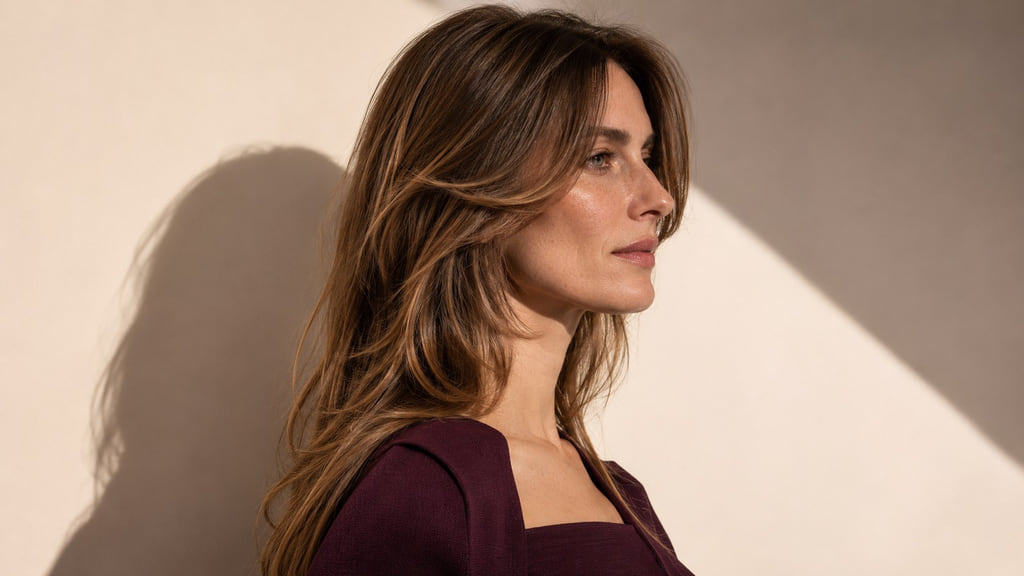
The front endpoint is the decision here. Ask where it will fall when your hair is dry and whether it can still be tucked back or tied up if that matters to you. This portrait shows one styled result; your natural bend and growth direction may move the pieces differently.
Long Internal Layers
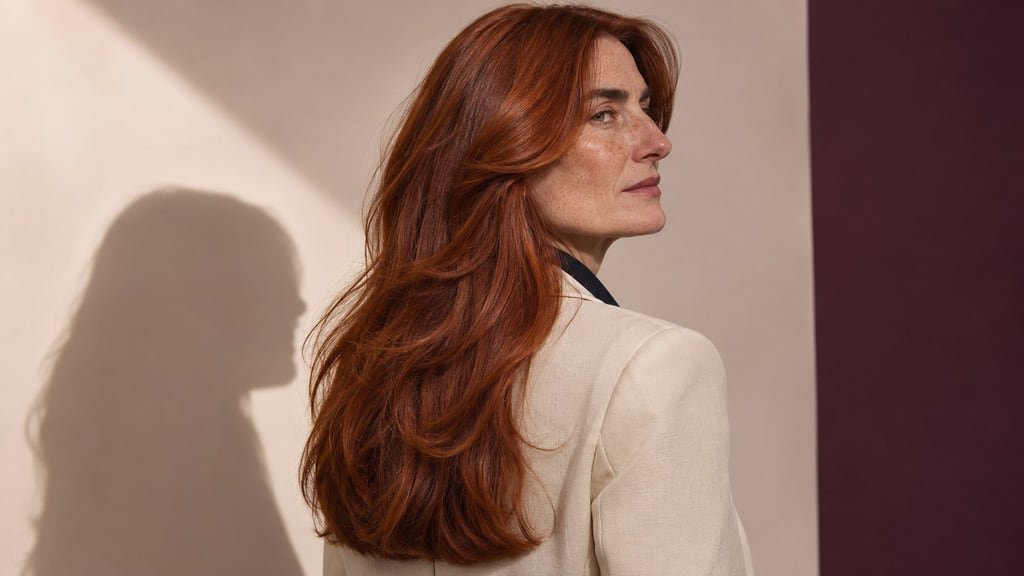
Look through the lengths rather than only at the face. The outer edge remains long and full, with softer movement above it. If your current ends already look sparse, ask your stylist how much hair would remain at that edge before adding interior layers.
Shorter Crown Layers

The separated crown makes this the most visibly tiered example. Check the profile from the top of the head to the lower ends. Ask what the crown does after your normal wash and dry; a set finish can make that separation look stronger than it will at home.
Restrained Layers

Choose this reference when a continuous perimeter matters more to you than a strongly separated crown. Point out the modest movement through the length and ask which sections could stay longest. A gentle layer pattern can still look different when the hair is worn straight, waved, or air-dried.
Account for Texture, Density, and Growth Direction
Compare references with your own hair in its usual dry state. Straight hair can make a cutting line easier to see; waves and curls can shift the apparent endpoint as they settle. Density is how much hair occupies the shape, while strand diameter describes an individual strand. Neither is a verdict on which cut you may wear. Sam Villa’s face-shape guide treats face shape as one consideration alongside texture and density.
Show your stylist where your part naturally falls and where the front grows forward or away from your face. If a short face frame would leave less fullness than you want, compare a longer first layer or a restrained version. If you prefer internal movement, ask how much of your current perimeter can remain. Judge the proposed endpoints on dry hair rather than assuming the reference photo will transfer unchanged.
For the broader haircut decision, compare haircuts for women by overall outline first. This page narrows that choice to the amount and placement of layers within the length you want to keep.
Plan Styling and Grow-Out
A face frame may need a separate daily reset to keep the shortest pieces where you want them. Internal layers can be quieter without styling, but a polished reference may still rely on a blowout or wave. As either shape grows, watch the front endpoint, where weight gathers, and whether the lower edge still reads as the perimeter you chose. There is no useful universal trim interval.
| Choice | Everyday check | Notice as it grows | Salon question |
|---|---|---|---|
| Face-framing layers | Will you reset the front? | Front pieces may stop framing at your chosen point. | Which dry endpoint should remain? |
| Long internal layers | Does movement show in your usual finish? | Interior movement may become less obvious. | How much lower-edge fullness should stay? |
| Shorter crown layers | Will you style the upper section? | Volume may settle lower as the crown grows. | How distinct should the upper level be? |
| Restrained layers | Is a quieter outline enough? | Small length differences may blend together. | When would you want the movement refreshed? |
Choose the version whose routine and changing outline you can accept. Ask what it looks like after your ordinary wash, not only after a salon set.
Build Your Haircut Reference
Save one photo that shows the front endpoint, one side view that includes the crown, and a back view with the full ends in frame. Add a photo of your own hair after its usual dry routine. Similar angles and lighting make the two layer choices easier to compare.
You could say: “I want to compare face-framing layers with long internal layers. My reference is long layered hair with visible face-framing and intact ends. Keep the natural density and show me the difference in perimeter, front framing, and crown shape before we choose a service.” Then identify which line matters most to you and ask what your own texture will do at that length.
Take the two clearest references to your stylist and choose the amount and placement of layers together. Point to the front endpoint, crown shape, and lower edge you want to preserve in your own dry hair.
Frequently Asked Questions
How will this shape work with my natural texture?
Look at the proposed shortest layer and outer edge on hair with a similar dry pattern to yours. Face shape is only one reference; texture, density, and the volume placement you prefer also matter. Ask your stylist where those lines will fall in your usual finish.
What changes as the cut grows out?
Face-framing pieces may move away from the point you chose, while longer internal layers may lose some visible movement. Watch those changes and the lower edge instead of following a fixed appointment interval.
What should I show my stylist?
Bring front, side, and back views that reveal the shortest layer and complete perimeter, plus a photo of your own dry hair. Say whether you want a distinct front frame or quieter movement inside the length. Layers do not automatically add density or remove every styling task.