
Haircuts for Curly Hair by Length and Shape: Shape, Texture, and Upkeep

Choose a dry curl silhouette by length, volume placement, and routine. Compare a curly crop, curly bob, shoulder layers, and longer rounded layers. The useful choice is a shape you can describe and maintain with your actual texture and density.

Read the Cut Outline Before Choosing a Look
Look at your curls dry, in the finish you usually wear, before deciding on a length. Find the lower edge, the shortest front section, and the area where the shape looks fullest. A shoulder-length layered cut, for example, can keep a clear lower outline while shorter sections move some visible fullness toward the crown. Sam Villa’s guide to horizontal and vertical layering explains how cutting lines distribute weight; the photograph and your own dry hair show how that idea reads in a particular shape.
Two cuts with similar names may settle at different dry lengths. A curly crop exposes the nape; a curly bob keeps a fuller lower edge near the jaw. Neither label predicts identical shrinkage or styling effort across curl patterns. Compare the perimeter and the way the front joins it, then ask which feature matters most to you.
Compare Curly Crop, Curly Bob, and Shoulder Layers
Use the same visible criteria for each option. The examples below are shape references, not promises that one cut will behave the same way on every head of curls.
| Cut | Dry perimeter | Front and volume | Routine question |
|---|---|---|---|
| Curly crop | Short, complete outline with the nape visible. | Short front curls and a compact crown make the shape easy to read. | Will I reset the front and nape as often as this outline needs? |
| Curly bob | Distinct curl groups form a lower edge near the jaw. | The front may join the side curve or end at a different dry point. | How does the lower edge settle after my usual wash routine? |
| Shoulder layers | The longest dry curls meet the shoulders. | Shorter internal sections change where fullness sits above that contact point. | Can I keep the shoulder landmark visible in my usual finish? |
| Longer rounded layers | A longer, rounded outline falls below the shoulders. | Shorter sections inside the shape keep the upper outline from reading as one heavy line. | Am I comfortable caring for the longer perimeter and its changing weight? |
If you are choosing between a crop and a bob, hold two dry references side by side. In the crop, find the exposed nape and the short front. In the bob, trace the lower line through the individual curl groups. That comparison gives a stylist a more useful starting point than asking for the “best length for curly hair.”
Curly Crop
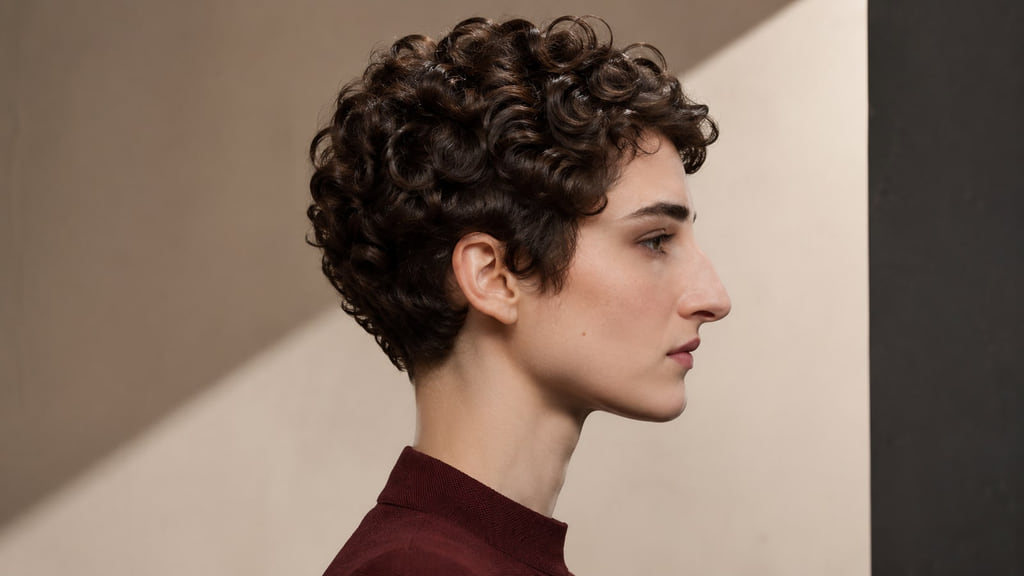
The crop makes the nape, crown, and shortest front curl prominent. Decide whether you want a close outline all around or more curl length toward the front. Show your stylist where the lower edge should finish on your own dry hair; the reference does not specify a universal cutting length.
Curly Bob

The bob keeps a visible perimeter below the crop. Check the shortest front curl and the curve at the back rather than judging a stretched strand against a ruler. If you want to explore bob-specific outlines, Curly Bob Haircuts compares those variations in more detail.
Shoulder Layers

The useful landmark is where the longest curls touch the shoulder when dry. Shorter internal layers can change how weight is distributed without moving that lower endpoint. Ask which section creates the upper outline and whether the shortest pieces still work with your usual part and styling method.
Longer Rounded Layers

This option keeps length while giving the dry shape a rounded edge. Look at where the shortest layers begin and whether they connect visually to the longer curls. A photo can show the intended outline; your stylist can determine how to adapt the layers to the density and behavior of your hair.
Account for Texture, Density, and Growth Direction
Texture describes how the strands bend or coil; density describes how many strands occupy an area. Both influence what you see at the perimeter, along with growth direction and your usual dry finish. A face-shape label alone cannot settle the choice: Sam Villa’s face-shape consultation guide treats face shape as one consideration alongside texture and density.
For a crop, show your stylist the curls at the nape and front in their usual dry state. For a bob, show how the lower curl groups settle after your normal routine. If your reference has a different density or curl behavior, identify the outline you like and ask what version your own hair can hold.
Plan Styling and Grow-Out
Think about wash-day styling, the next-day reset, and the shape you are willing to maintain between appointments. A crop may make changes at the nape and front obvious sooner to you; a longer layered outline may let the lower edge move while still keeping its overall shape. Neither is automatically effortless.
| Cut | Daily attention to discuss | Change to watch as it grows |
|---|---|---|
| Curly crop | How the short front and nape settle after sleep | A softer nape edge or front curl dropping into a new position |
| Curly bob | Whether the lower curl groups need resetting | The perimeter moving down or the side becoming fuller |
| Shoulder layers | How the shorter sections blend with shoulder-length ends | Fullness shifting as layers lengthen |
| Longer rounded layers | How you handle the longer ends on wash and reset days | The lower outline losing its rounded relationship to the shorter layers |
Take a dry front, side, and back photograph after your normal styling routine. Bring those views to the next appointment and point to the first area that stopped behaving as you wanted. That is more useful than assuming everyone needs the same trim interval.
Build Your Haircut Reference
Save one photo that clearly shows the dry perimeter and another that shows the front or side. Add a photo of your own hair in its usual dry state. A salon request could be: “I want to compare a curly crop with a curly bob. I like this readable dry outline, but I want to keep my natural density. Can we compare the nape, front framing, and crown shape on my hair before choosing the cut?”
Frequently Asked Questions
What is the best length for curly hair?
There is no single dry length that works for every curl pattern or routine. Choose the landmark you want to see—nape, jaw, shoulder, or below shoulder—then compare how your curls settle there and where you want volume.
Should curly hair have layers?
Layers are one way to distribute length and visible weight. The useful question is where the shortest layer begins and how it connects to your chosen perimeter. Ask to see that relationship in a dry reference similar to your own texture.
Should I choose a curly crop or a curly bob?
Choose by the outline you want to live with. A crop exposes the nape and makes the short front prominent; a bob retains a lower edge formed by curl groups. Compare those areas in your usual dry finish and discuss the daily reset each needs.