
Haircuts for Women Over 50: Shape, Texture, and Upkeep
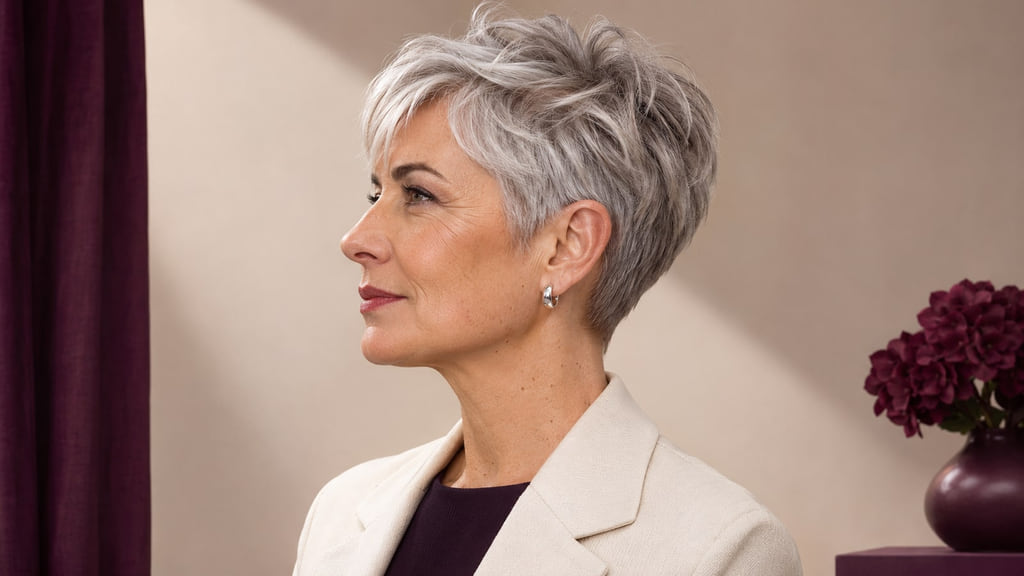
Choose by your actual texture, density, preference, and upkeep rather than an age rule. Compare a silver pixie, jaw bob, shoulder layers, and longer natural movement by their dry outline and the work each shape asks of you.

Read the Cut Outline Before Choosing a Look
Choose by your actual texture, density, preference, and upkeep rather than an age rule. On the silver pixie above, the short nape and sides leave the ear outline visible while a longer crown and front section carry the shape. Trace those lines first. They tell you more about the cut you would live with than the model’s age or a polished finish does.
The perimeter is the outer edge; layers place different lengths inside it. Layer placement changes where visual weight gathers. Sam Villa’s professional guide to horizontal and vertical layering explains that sectioning patterns can distribute weight differently and make a cutting line more or less visible. That is useful vocabulary for a consultation, not a cutting formula for every head of hair. A jaw bob concentrates attention at a lower edge; the pixie puts more of it at the crown and front. Neither shape is required after 50, and gray hair does not need to be concealed.
Compare Silver Pixie, Jaw Bob, and Shoulder Layers
These are editorial examples of different outlines, not a ranking of the people wearing them. Compare the finished dry perimeter, the shortest front section, and where the volume sits. The longer option shows that keeping length is also a complete decision. Use the table to shortlist two neighboring shapes, then compare their photos at similar angles.
| Shape | Dry perimeter | Front and volume | Question for your stylist |
|---|---|---|---|
| Silver pixie | Short around ear and nape | Longer front and crown; silver variation remains visible | Which short boundary will change first as it grows? |
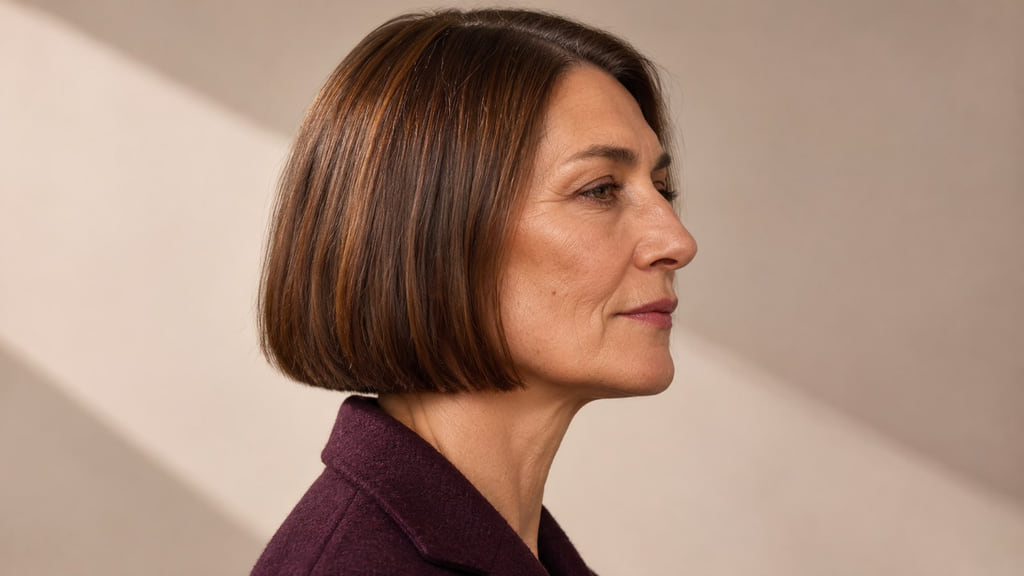
| Jaw bob | Clear edge near the jaw | Restrained layers keep weight near the lower line | Where will this edge land on my dry hair? |
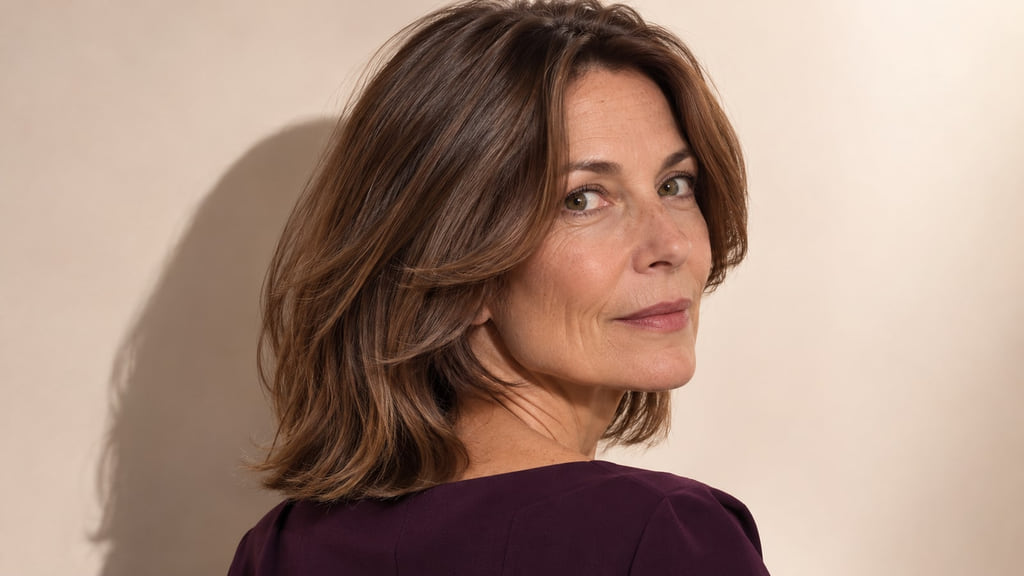
| Shoulder layers | Ends meet the shoulder | Shorter internal sections release movement above the edge | Will the shortest layer work with my usual finish? |
| Longer natural movement | Longer than the shoulders | Dry waves or curls remain visible along the length | How much length and lower weight do I want to keep? |
For example, compare the silver pixie with the jaw bob while holding your own texture and density in mind. The pixie exposes the ear and nape and lets the front and crown define the silhouette. The bob retains a compact lower edge at the jaw. Ask which of those lines you want to see every day, then save the two photos that best show it.
Silver Pixie
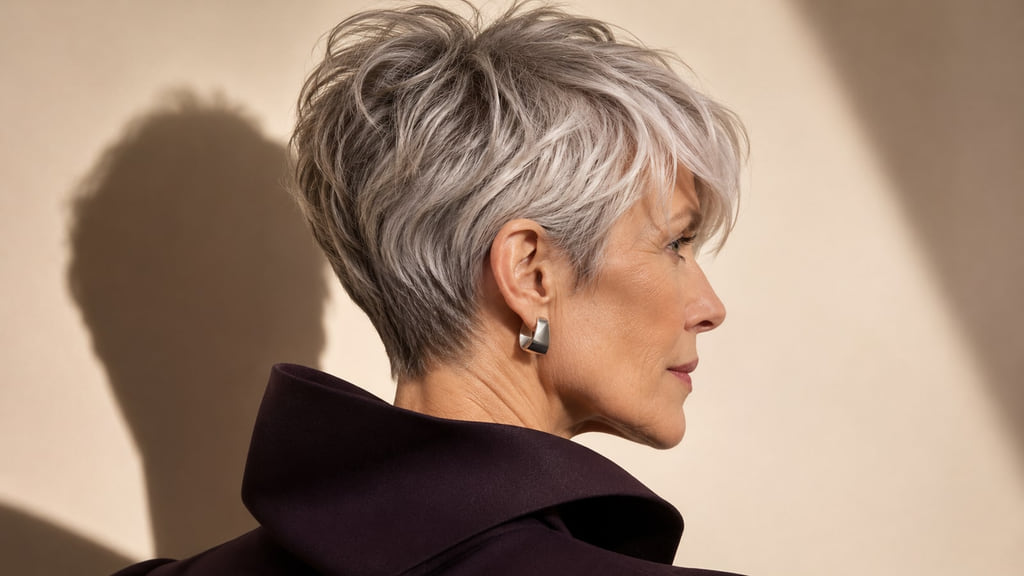
Here the nape and sides stay short relative to the crown. The front section is distinct, and separate silver strands remain visible rather than becoming a flat block of color. If this is your direction, ask which part of the front you would style and how much crown length you want to keep. The answer depends on your growth direction and ordinary dry texture.
Jaw Bob
The bob puts a readable dry edge near the jaw with limited visible layering. Point to that landmark in the reference instead of asking only for “a bob.” If your hair bends or expands as it dries, discuss where the edge should finish on you and how much lower weight to retain.
Shoulder Layers
The ends meet the shoulder while shorter sections add movement above them. Find both the contact point and the shortest visible layer in the photo. A shoulder-length label alone cannot tell a stylist where you want the weight or how much of the front should remain long enough to tuck back.
Longer Natural Movement
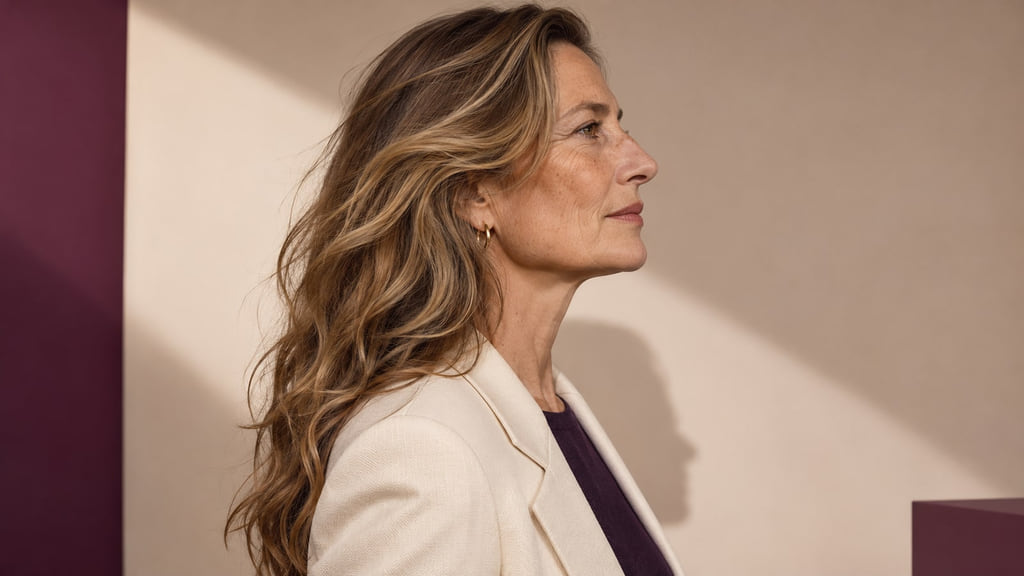
Length past the shoulders can preserve a familiar outline while letting natural wave groups show. Keep the actual dry perimeter and the lower fullness in view; a cropped photo can make long hair look easier to maintain than it is. Decide where you want the shortest layer and whether the front needs to tie back.
Account for Texture, Density, and Growth Direction
Look at your hair after it dries in the way you usually wear it. Texture describes whether it falls straight, wavy, curly, or coily; density describes how many strands occupy an area, while strand diameter describes one strand. Growth direction can change a part or push a short fringe upward. None of these can be read from age alone. Sam Villa’s face-shape guidance treats face shape as one consideration alongside texture and density.
For a silver pixie, show where your front and crown naturally lift and ask whether the ear and nape outline can stay close without asking for a daily reset you dislike. For a jaw bob, compare your dry bend and lower density with the photo’s edge; ask how layering could change that weight. The Haircuts for Women gallery compares broader cut families; Best Hair Colors for Gray Hair covers the separate color decision. Keep a current dry photo beside any inspiration image.
Plan Styling and Grow-Out
Picture each cut on an ordinary morning. The pixie may put attention on its front section, crown, and newly softened nape. The jaw bob may need its lower edge redirected after drying. Shoulder layers can move differently once the ends touch clothing. Longer natural movement may need more wash-day handling even when the daily shape feels familiar. Choose the work you are willing to repeat, without assuming one cut is low maintenance for everyone.
| Shape | Daily check | Grow-out sign | Salon decision |
|---|---|---|---|
| Silver pixie | Does the front settle with your normal routine? | Ear or nape boundary softens; crown falls differently | How precise should the short outline remain? |
| Jaw bob | Does the lower edge sit where you want it? | The line passes your chosen jaw landmark | How much edge weight should stay? |
| Shoulder layers | Do the short pieces and ends move together? | Layers drop and the widest point shifts | Where should the shortest layer finish? |
| Longer natural movement | Do dry wave groups and ends still suit you? | The perimeter or front no longer reads as intended | Which length and lower fullness must remain? |
There is no universal trim interval. Notice when the specific line or volume placement you chose stops reading clearly, then decide whether to maintain it or let it change.
Build Your Haircut Reference
Save a view that shows the full crown-to-end outline, then add a front and side view if possible. Include a current photo of your own hair in its usual dry state. A profile reveals the perimeter; the front reveals the part and fringe; the back shows lower weight. Reference photos communicate a direction, not an exact promise.
I want to compare a silver pixie with a jaw bob. My pixie reference shows a woman in her late fifties with a silver tapered cut and natural skin texture. Please keep my actual density visible and show me how the perimeter, front framing, and crown shape would differ on my dry hair before we choose a cut. I usually style my hair this way: ___. The length or weight I want to keep is: ___.
Circle one dry landmark and one must-keep feature in your saved photos. Bring the photos and the filled brief to a stylist to settle the shape against your real texture, density, preference, and routine.
Frequently Asked Questions
How will this shape work with my natural texture?
Compare where your dry hair bends, separates, and gathers with the reference’s edge and layers. Face shape is one possible placement cue; texture, density, and growth direction also affect the visible outline. Ask your stylist which detail of the reference can stay and which needs adapting.
What changes as the cut grows out?
On a silver pixie, the ear and nape outline may soften while the front changes direction. A jaw bob’s lower line can move below the landmark you chose. Decide which change you would notice first and whether you want to maintain that line or let it grow.
What should I show my stylist?
Bring a full-outline reference, another view of its front or side, and a current photo of your own dry hair. Point to the perimeter, shortest layer, and volume placement you want, plus the daily styling you will actually do. Age does not require short hair or concealed gray, and a reference does not promise a younger appearance.