
Shoulder-Length Haircuts for Women: Shape, Texture, and Upkeep

Choose the perimeter and layer plan where hair meets the shoulders. Compare a blunt shoulder edge, soft shoulder layers, and a wavy shoulder outline. The useful choice is the shape you can describe and maintain with your natural texture, density, and routine.

The shoulder is the landmark here. Decide whether your dry ends should form one strong line at that point or whether shorter sections should move above it. Then compare how that shape looks in the texture you actually wear. The photographs below are editorial examples of different outlines, not a promise that the same cut will settle identically on your hair.
Read the Cut Outline Before Choosing a Look
Start with the dry outer edge, or perimeter. In the opening photograph, the lower ends meet the shoulders while shorter layers move above them. Layers are sections cut to different lengths; their placement changes where the haircut carries visible weight. Sam Villa’s explanation of layering describes differences in weight distribution and cutting-line visibility, including how horizontal sectioning can build weight into a shape. Use that language to describe a reference, not to prescribe a cutting technique.
Shoulder length describes where the finished dry outline lands, not a single haircut. A blunt edge keeps the lower line comparatively continuous; soft shoulder layers preserve that landmark while making movement visible higher up. Fringe is a separate front section, and it can change the face frame without moving the lower perimeter. This guide stays with the physical shoulder contact point and the way hair moves there. For a wider length range, use Medium-Length Haircuts for Women.
Before choosing a look, locate the lower edge, the shortest visible front section, and the point where fullness gathers. Save only photographs that show the shoulders and full ends.
Compare blunt shoulder edge, soft shoulder layers, wavy shoulder outline
These three editorial examples keep the dry shoulder landmark while changing the edge and internal movement. Compare the shape in front and side views at a similar angle; lighting, pose, and styling can change how full the same line appears.
| Outline | Dry perimeter | Shorter sections and volume | Question for your stylist |
|---|---|---|---|
| Blunt shoulder edge | Comparatively continuous edge where the ends meet the shoulders. | Little visible internal layering; more weight reads at the lower line. | How much of that bottom line can stay intact with my hair? |
| Soft shoulder layers | The perimeter stays near the shoulder but looks less graphic. | Connected shorter sections create movement above the edge. | Where should the shortest layer begin while retaining the shoulder landmark? |
| Wavy shoulder outline | Dry wave groups meet and turn at the shoulders. | Natural bends interrupt the line; fullness depends on the wave pattern. | Where will my own dry wave groups end and collect? |
For a first choice, place the blunt edge beside the soft layers. Trace the continuous lower line in the first image, then find the higher movement in the second. Keep the desired dry endpoint and your real density in mind; the difference to discuss is where weight should remain, rather than judging the people wearing the cuts.
Blunt Shoulder Edge
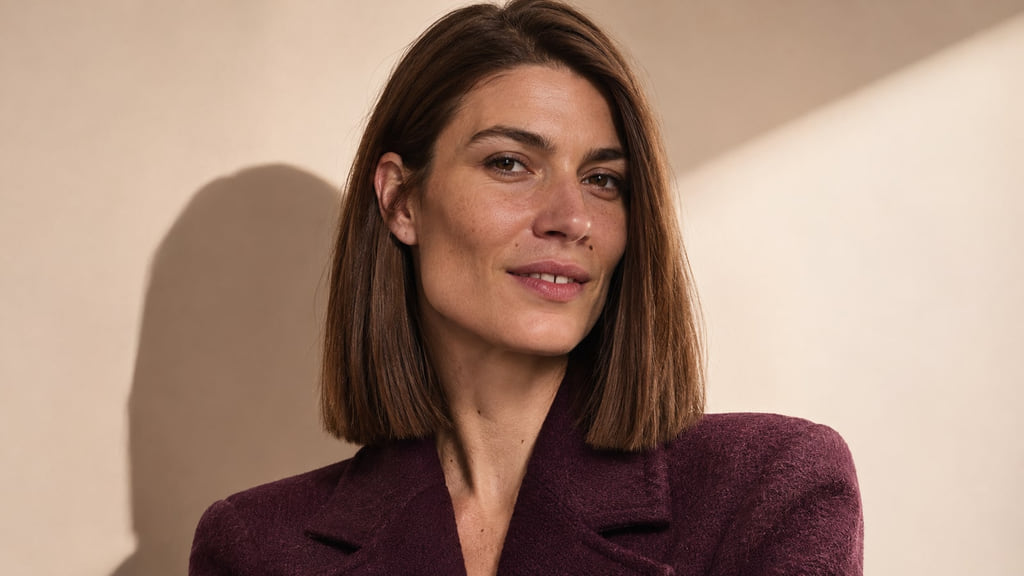
The ends form a relatively continuous band near the jacket’s shoulder line. The strong perimeter is easy to identify, although a different dry texture could bend or separate it. Ask how much bottom weight your stylist would preserve and where the shortest front piece should land.
Soft Shoulder Layers

This example retains an identifiable lower outline, but the shorter sections create movement around the face and sides. Compare the same two points in your own hair: where the bottom ends land dry and where a shorter layer would begin. Ask which sections can move without thinning the perimeter you want to keep.
Wavy Shoulder Outline

Here the wave groups, rather than a uniformly straight edge, show where the shape meets the shoulders. Look for the longest dry group and the shorter bends around it. Ask whether your own wave pattern would keep a similar lower outline or place more fullness at one side.
Account for Texture, Density, and Growth Direction
Texture describes whether hair falls straight, wavy, curly, or coily; density describes how much hair occupies the cut. Strand diameter and growth direction are separate observations. A strong blunt line may look different when natural waves turn against the shoulders. Lower density at the ends can also make a heavily layered version look less continuous than the reference. Compare your hair dry and at its usual parting before deciding how much lower weight to keep.
If the soft layers in the photograph move more than your hair normally does, keep the goal of a shoulder-level perimeter and discuss a different layer plan. Show your stylist where your hair expands, bends, or separates around the crown and front. A reference with more density or a polished blowout cannot establish the outcome for you. For the wider family of lengths, see Medium-Length Haircuts for Women; for a bob-derived perimeter, compare Lob Haircuts.
Plan Styling and Grow-Out
Think about the cut after an ordinary wash. A blunt edge may need its shoulder bends reset if you want a smooth line; soft layers may need the front or crown arranged to show their movement. Dry waves can turn differently against a collar, even without a change to the cut. The useful maintenance question is which visible feature you are willing to recreate.
| Outline | Everyday routine to consider | Change to watch as it grows | Salon conversation |
|---|---|---|---|
| Blunt shoulder edge | Will you smooth or accept the bend where the ends meet clothing? | The strongest line drops past the chosen shoulder point or separates. | Keep or soften the lower edge deliberately. |
| Soft shoulder layers | Will the shorter sections move in your normal dry finish? | Fullness collects lower down and the front stops connecting. | Refresh movement without automatically losing the endpoint. |
| Wavy shoulder outline | How will you arrange or refresh the dry wave groups? | Longer groups turn at a different point or the outline feels heavier. | Review the cut in your ordinary wave pattern. |
Return for upkeep when the line, front section, or volume no longer makes the shape you chose. There is no useful universal trim interval for these different textures and routines.
Build Your Haircut Reference
Save one front photograph showing the face frame and full ends, then add a side or back view that reveals the shoulder contact point. Include a photo of your own hair dry in its usual style. Similar camera angles make the references easier to compare; reference photos communicate a direction, not an exact promise.
Use this filled request as a starting point: “I want to compare a blunt shoulder edge with soft shoulder layers. My reference has a shoulder-length layered cut with the contact point visible. Keep my natural density and show me the difference in perimeter, front framing, and crown shape before we choose a service. I normally air-dry, and I want the ends to meet my shoulders without losing too much weight at the bottom.”
Mark the one feature you want changed and the one you want protected. Bring that marked reference and your own dry-hair photographs to the consultation, then ask how the chosen perimeter and layers would sit with your usual routine.
Frequently Asked Questions
How will this shape work with my natural texture?
Start with the finished dry outline in your own hair. Natural bend, density, strand diameter, and growth direction can change how a blunt line or soft layer appears. Face shape may be one preference, but it does not assign you a required cut. Ask your stylist where the shoulder line and volume would land with your usual drying routine.
What changes as the cut grows out?
The lower edge moves away from the shoulder landmark, while shorter front or internal sections may connect differently to the ends. A blunt edge can lose its strong line; soft layers can look heavier lower down. Watch those visible changes, then decide which feature matters enough to refresh.
What should I show my stylist?
Bring a front view, a side or back view with the full shoulder line, and a photograph of your own hair dry. Point to the desired perimeter, shortest front piece, and placement of fullness. This exact shoulder-contact decision is narrower than the broad medium-length overview; use the reference to explain the physical landmark and movement you want.