
Blonde Balayage Ideas by Undertone, Base, and Contrast: A Practical Comparison
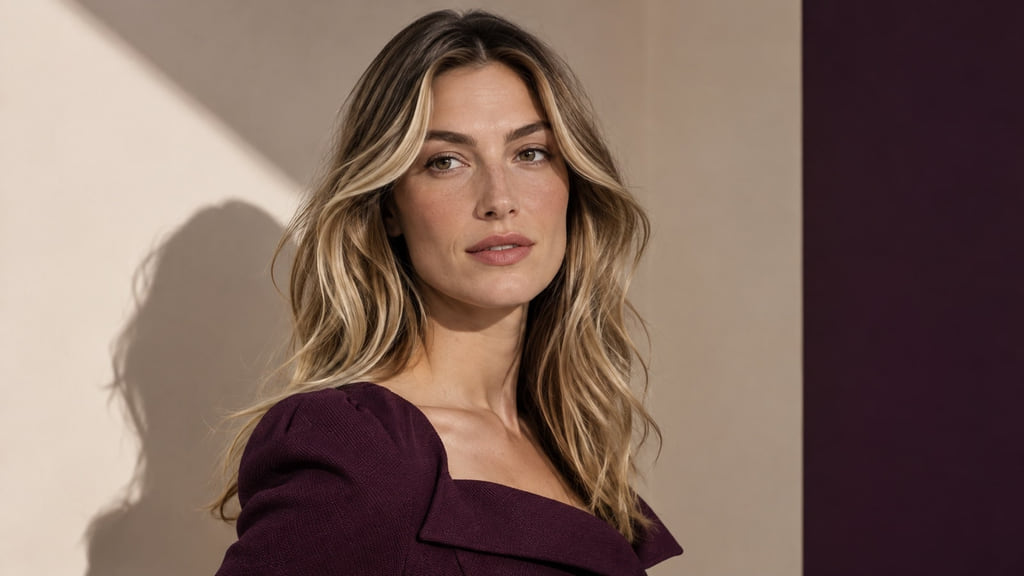
Choose blonde placement and root contrast on the actual starting base. Compare soft beige balayage, a brighter face frame, and deeper rooted blonde. Treat the result as a direction to discuss with a colorist; your starting base and color history affect what is achievable.

Read the Color Direction Before Choosing a Look
Start with what you want to change in your hair. Beige blonde ribbons over a darker root can add visible lightness while leaving the starting base easy to recognize. Decide whether the main change is the blonde reflection, the position of the lighter pieces, or the difference between roots and lengths. Bring that distinction to your colorist instead of asking for “blonde balayage” as though it were one fixed result.
Depth describes how light or dark the hair appears; tone names its color direction. In Wella’s hair color chart, the number before the stroke identifies depth and the number after it identifies tone. That numbering belongs to Wella’s system. It helps separate a softer beige reflection from a lighter blonde depth, but it does not tell you what your hair can reach. A brighter face frame is a placement choice: it makes selected front sections more visible even if the rest of the blonde remains restrained.
Compare references in similar neutral light, with a similar root depth in view. Choose the change you want to notice first; then ask how your own base and color history affect the route to it.
Compare Soft Beige Balayage, a Brighter Face Frame, and Deeper Rooted Blonde
These are editorial visual directions, not formulas or promises of individual suitability. Use the table to compare three different decisions: reflection, front placement, and the amount of root depth you keep. A photo with a lighter exposure can make any direction seem brighter, so compare like with like.
| Direction | Starting base to show | Visible difference | Placement and root contrast |
|---|---|---|---|
| Soft beige balayage | Keep the darker root visible | Balanced beige reflection with restrained saturation | Separated light ribbons through the lengths, with a soft transition |
| Brighter face frame | Show the same base and overall depth | More visible lightness at the front | Name where the front section begins and how strongly it contrasts with the root |
| Deeper rooted blonde | Retain a clear deeper root | Lighter-looking blonde lengths without losing dark strand detail | Read the root-to-length transition rather than treating the ends alone as the goal |
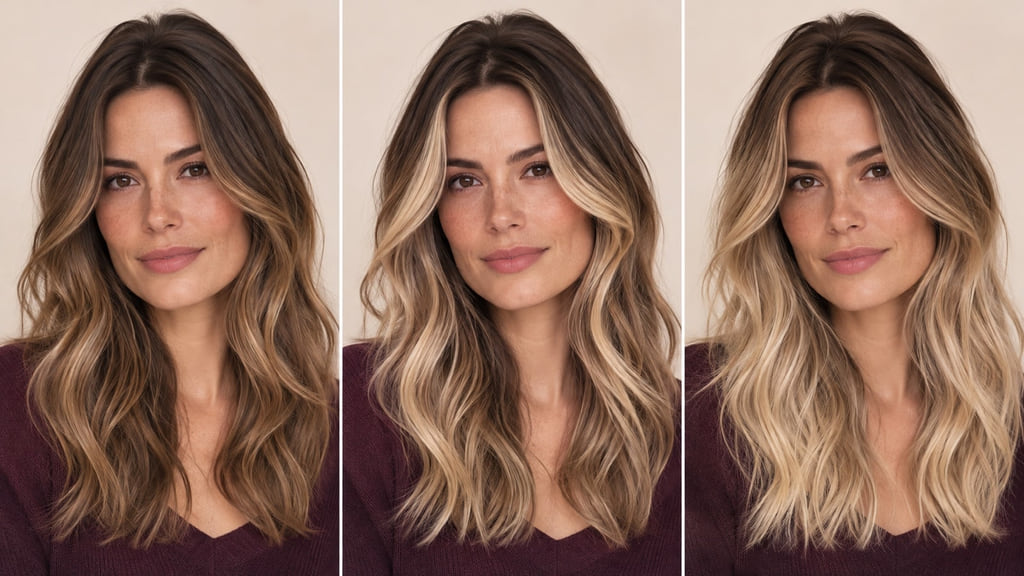
For a filled-in choice, put the first and second views side by side. In the soft beige example, the restrained reflection runs through separated ribbons. In the brighter face-frame example, the front section begins higher and reads more clearly against the same dark base. If the front brightness is what you want, point to its starting place; if you prefer the quieter spread of light, point to the first view. Ask your colorist which part of either reference fits your hair.
Soft Beige Balayage
Here, beige describes the reflection, while the dark root and gaps between light sections keep the base legible. Look at the first panel: the effect comes from measured ribbons, not from making the entire head paler. If this is your direction, ask which sections can change while your current root depth remains visible. Compare it with another reference at similar depth and exposure before deciding how beige you want the reflection to appear.
Brighter Face Frame
The middle panel changes the emphasis at the front. The first lighter section and its contrast with the root are readable; the base, face, and lighting remain comparable with the other panels. Decide whether you want that front section to stand apart or blend gradually into the rest of the hair. Show your colorist the point where the brightness should begin, and ask how it would look with your usual part.
Deeper Rooted Blonde
The last panel gives more of the lengths a lighter blonde appearance while keeping a deeper root and a visible transition. Compare the space between lighter and darker strands instead of judging the ends in isolation. If you like the blonde lengths but want your natural-looking root to remain, ask how much of that depth can be kept and where the transition would sit on your hair. The picture is a visual goal, not a shade guarantee.
Account for Your Starting Base
Bring a photo of your hair in neutral light that shows roots, midlengths, and ends. Add your previous color history: untouched hair, older lightened areas, and darker artificial color are different starting points. The Wella color chart and starting-point guidance describe depth, tone, and underlying pigment within its own system. Use those terms to ask your colorist what is possible from your current base. A beige reference with dark roots does not promise that any dark base can reach its blonde lengths in one visit.
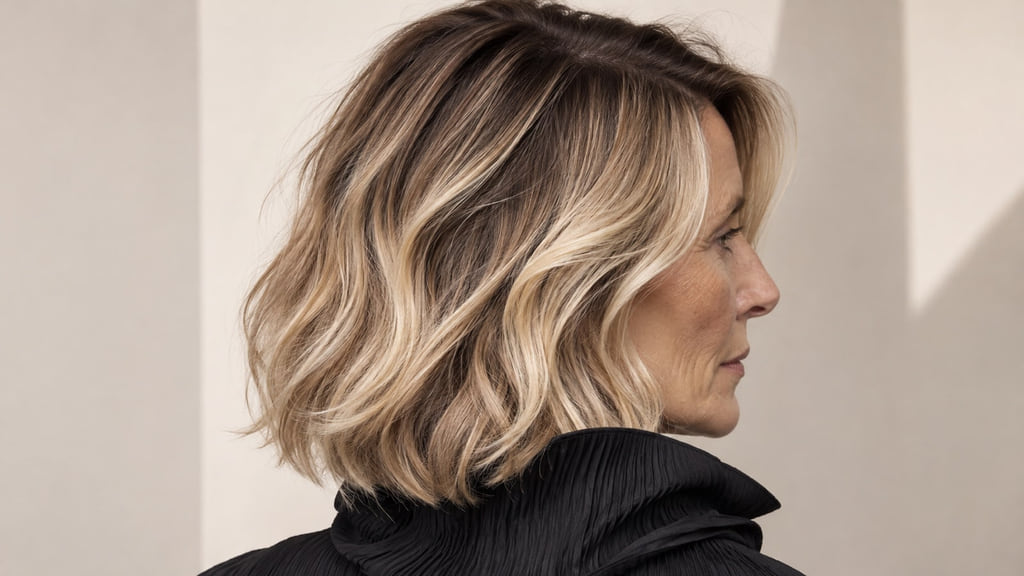
If a brighter face frame appeals to you but your front sections have previous color, keep the placement as your goal and ask what brightness is realistic. The colorist may suggest a different depth or a staged route. If you are deciding how the lighter pieces should be placed, compare Balayage vs. Highlights. For a broader skin-tone comparison, see Balayage by Skin Tone, Starting Base, and Contrast.
Plan Regrowth and Color Upkeep
Watch two separate changes: where the lighter sections begin as your roots grow, and whether their reflection still reads as the blonde you chose. Soft beige ribbons with a diffused start may keep the root line quiet in your usual hairstyle. A bright front piece can show a sharper change near your part. If the beige reflection shifts or the front section no longer sits where you want it, take a current photo and ask whether tone, placement, or both need attention. There is no single appointment interval implied by the shade name.
| Direction | Daily check | Change to watch | Salon question |
|---|---|---|---|
| Soft beige balayage | Do the beige ribbons still separate from the base in your usual style? | Reflection changes or the ribbons become less distinct | Does the reflection need refreshing while placement stays? |
| Brighter face frame | Does the front section still start where you want it? | More visible root contrast near the part | Would you refresh the front placement or soften its contrast? |
| Deeper rooted blonde | Can you still see a gradual transition from root to blonde lengths? | The transition or blonde reflection changes | Which part of the rooted pattern should remain at the next visit? |
Choose the option whose visible changes you are comfortable monitoring. Tell your colorist how often you are willing to return and whether keeping the deeper root is part of the look you want to preserve.
Build Your Color Reference
Save one full view that includes roots and ends, plus a close view of the exact front or root-to-length transition. Add a photo of your own hair in similar light. That gives the colorist a visible comparison of starting depth, blonde reflection, and placement instead of a cropped picture of light ends alone.
Here is a salon brief you can adapt: “I want to compare soft beige balayage with a brighter face frame. My reference shows beige blonde balayage over a realistic darker root. Keep my natural density in view, and show me the difference in depth, reflection, and placement before we choose a service. My current color history is [your history]. I want the lighter sections to begin [your preferred area], and I would like to keep [your preferred root depth].” Ask which parts of the picture are achievable on your starting hair.
Choose the placement and root contrast you want to discuss, then bring your two references and your color history to the consultation. Ask which features of each reference can be adapted to your starting base and which would need a different approach.
Frequently Asked Questions
How do I compare these shades at a similar depth?
Use photos with similar root depth, exposure, and white balance. Then compare the beige reflection rather than letting a brighter photograph stand in for a lighter shade. Wella’s depth and tone numbers describe separate coordinates within its system; you do not need to match a number across brands to make a useful visual comparison.
Does my starting color change the achievable result?
Yes. A soft beige reference and a brighter face frame can require different changes even when they begin on similar-looking dark hair. Bring your current root and ends, plus any previous color history, to a colorist. Ask which part of the target can be matched and whether the first result might be different from the reference.
How much root contrast should I keep?
Compare a soft transition with a clearly deeper root in similar light. If you want the root to remain a visible part of the look, mark where the lighter sections should begin in your reference. Ask your colorist how that contrast would appear with your current depth and usual part.