
Hair Colors for Brown Eyes: Depth, Reflection, and Choice
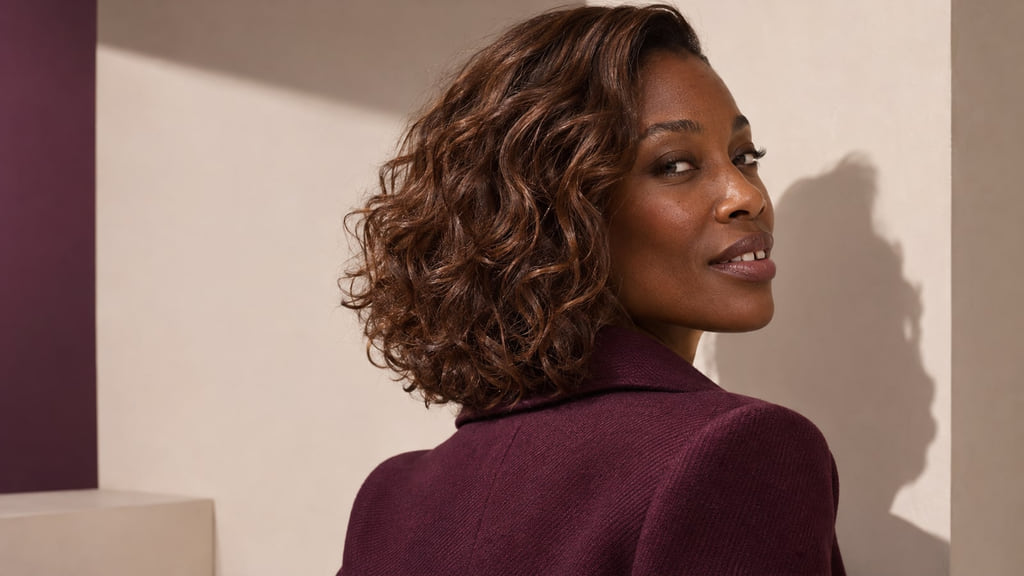
Compare hair depth and reflection around the whole face rather than one eye color. Look at warm brunette, caramel dimension, neutral blonde, and auburn under the same light, then ask a colorist what your starting base and color history can support.

Read the Color Direction Before Choosing a Look
Imagine neutral chestnut hair with naturally brown eyes. You could keep a similar brown depth and shift its warm reflection, place lighter caramel pieces through the hair, or change the overall depth toward blonde. Each choice changes the frame around your face differently. Brown eyes do not determine a single undertone or an exclusive hair palette.
Depth describes how light or dark the hair looks. Reflection is the visible tonal direction within a depth, such as brown-gold or red-brown. In Wella’s hair color chart, the number before the stroke indicates depth and the number after it indicates tone. That notation belongs to Wella’s system; use the two ideas to describe your reference, not to assume every brand uses the same numbers.
Warm brunette and caramel dimension are different decisions. The first can keep a continuous brown field while changing its reflection. The second places lighter brown-gold sections against a visible base. Judge either alongside your skin, brows, eyes, and starting hair rather than ranking colors by eye color alone.
Compare Warm Brunette, Caramel Dimension, Neutral Blonde, and Auburn
Use these four directions to compare visible differences. Keep lighting, white balance, face, and cut consistent where possible. When you compare reflection, hold depth roughly steady; when you compare depth, notice that contrast changes too.
| Direction | Depth and reflection | Placement to compare | Question for your colorist |
|---|---|---|---|
| Warm brunette | Brown base with a warm reflection at a similar depth | A continuous brown field through roots and lengths | Can the reflection change while I keep this depth? |
| Caramel dimension | Brown base with lighter brown-gold sections | Selected sections against a visible base | Where would the lighter pieces sit around my face? |
| Neutral blonde | Lighter blonde depth with a restrained neutral reflection | Overall lightness or pieces connected to a deeper root | How much of my starting depth can remain visible? |
| Auburn | Brown depth with a red-brown reflection | A whole color field or selected warm sections | How visible should the red-brown reflection be? |
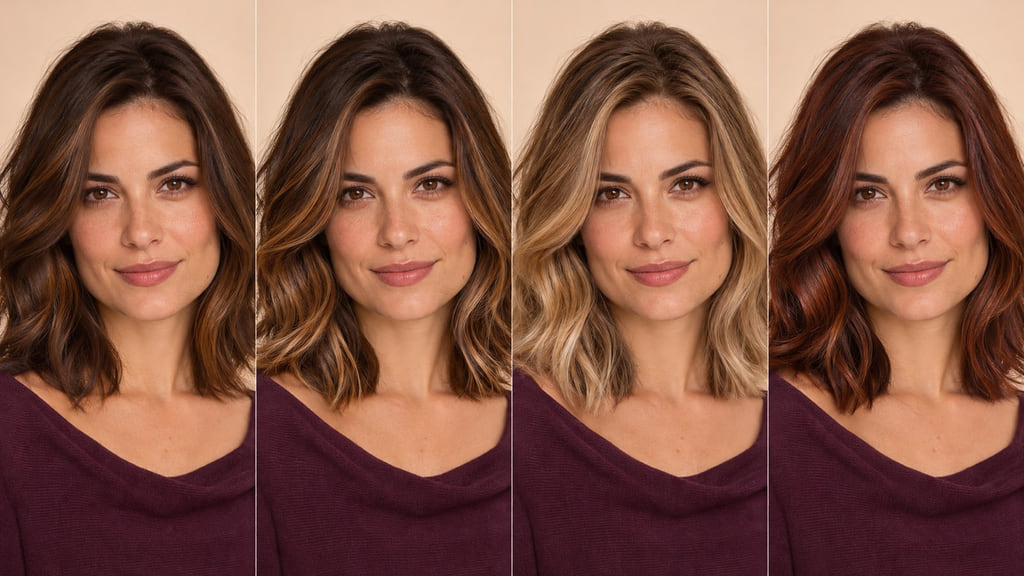
Put warm brunette beside caramel dimension first. The former keeps the brown field more continuous; the latter places lighter brown-gold sections within it. If you prefer the second image, decide whether you like the warmer reflection, the lighter sections, or their location. That distinction gives your consultation a useful question.
Warm Brunette
Here, a brown base carries a warm reflection. Compare it with a neutral brown at similar depth and fixed white balance so the reflection is the main variable. Ask what part of your current color could change while the depth you like stays visible.
Caramel Dimension
Here, brown-gold caramel appears in selected sections while a brown base remains visible. Compare the same amount of lightness placed near the face and farther back: placement changes what you see from the front. Ask where the lighter sections would begin on your current hair, and how much of the base would remain.
Neutral Blonde
Neutral blonde changes the overall depth more than the two brunette examples. Compare it with another blonde at a similar lightness before deciding whether its reflection is what you prefer. Include roots and ends in the reference, and ask how your starting color affects the route to that lighter look.
Auburn
Auburn keeps a brown component while adding a visible red-brown reflection. Compare it with warm brunette at a similar depth and in the same light; otherwise a brighter photograph can make the red seem stronger than it is. Ask whether you want that reflection throughout the hair or in selected sections.
Account for Your Starting Base
Your natural roots, previously colored lengths, and ends may differ. A reference shows the visual direction, not what your hair can reach or how it will be colored. Bring a current photograph showing roots and ends, and tell your colorist about previous color. Use depth and reflection as separate words when explaining what you want to preserve or change.
If warm brunette is close to your current depth, the main question may be reflection. If caramel dimension is your preference but your starting hair or routine differs from the reference, describe the visible brown base and lighter placement you want. Let the colorist assess the service needed. For other eye-color comparisons, see the guides for blue eyes, green eyes, and hazel eyes.
Plan Regrowth and Color Upkeep
Notice what you would want to maintain in ordinary light. With warm brunette, is the warm reflection still distinct from your base? With caramel dimension, do you still like where the lighter sections begin as roots grow? These observations are more useful than assigning everyone the same appointment interval.
| Direction | Daily routine to consider | Change you may notice | Salon discussion |
|---|---|---|---|
| Warm brunette | Check its reflection in your usual light | Warmth no longer reads as you intended | Whether to refresh tone or keep the current base |
| Caramel dimension | Check how the lighter sections look with your usual styling | Root growth changes their placement | Where brightness should begin and how much base remains |
| Neutral blonde | Compare the lighter field in ordinary light | A root boundary or tonal change becomes noticeable to you | Whether a deeper root suits your upkeep preference |
| Auburn | Check whether the red-brown reflection still suits your goal | The reflection changes from your reference | How much warmth and salon support you want |
Choose according to the daily attention and salon visits you are willing to give, then discuss the likely upkeep for your particular starting hair. No photograph can promise the same regrowth pattern or color change for everyone.
Build Your Color Reference
Save one unfiltered photograph of your current hair in neutral light, showing roots and ends. Add a front or three-quarter image of the shade direction you prefer and a second view showing where its lighter or warmer sections sit. Keep the lighting similar so a camera cast does not become your color criterion.
You can say: “I want to compare warm brunette with caramel dimension. My reference is neutral chestnut hair with naturally brown eyes. Keep the natural density and show me the difference in depth, reflection, and placement before we choose a service.” This is a visual question for a consultation, not a color formula.
Choose the closer direction and discuss both references with a colorist. Ask which parts of your current depth can remain and where the reflection or lighter sections would appear.
Frequently Asked Questions
How do I compare these shades at a similar depth?
Use photographs with similar light, exposure, and hair depth. Then compare warm brunette with auburn for a change in reflection, or compare two brunettes with different placements. Wella’s chart separates depth and tone within its own notation; a colorist can help translate the visual difference for your hair.
Does my starting color change the achievable result?
Yes. Warm brunette may be closer to your current depth than caramel dimension with lighter sections. Show your roots, colored lengths, and ends, plus your color history, before choosing a target. A reference describes the look you want to discuss, not a guaranteed result.
Do brown eyes always need a warm hair color?
No. Brown eyes do not determine a single undertone or an exclusive hair palette. Compare warm brunette and auburn with neutral options in similar light, then choose the depth and reflection you prefer around your whole face.