
Hair Colors for Deep Winter: A Practical Comparison
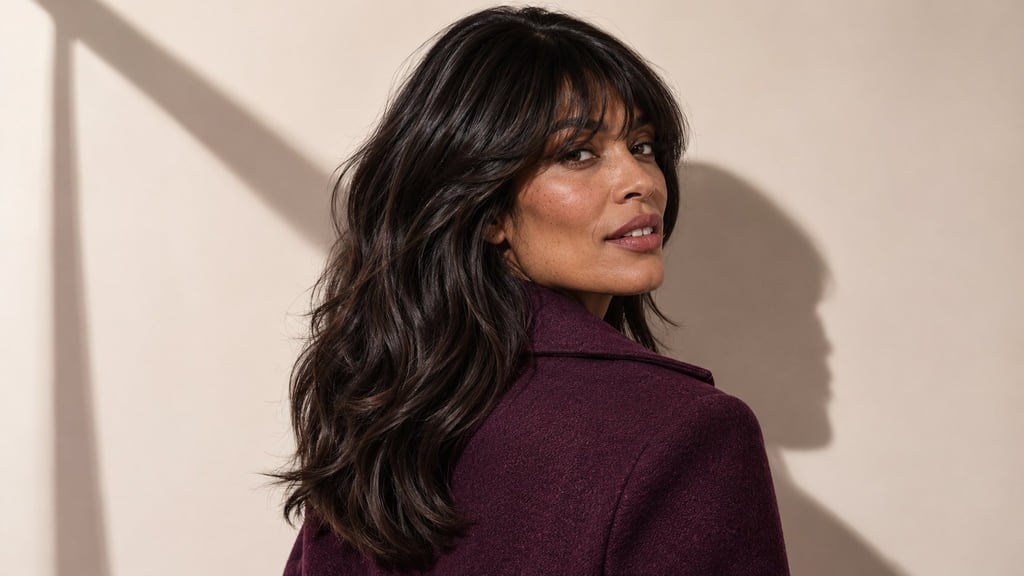
Compare dark cool-to-neutral shade directions and deliberate contrast. Deep espresso, neutral black, and dark red-violet give you different ways to keep a deep base. Treat these as directions to discuss with a colorist; your starting base and color history affect what is achievable.

Read the Color Direction Before Choosing a Look
Think of neutral deep espresso hair with clear, believable strand highlights. The color reads dark without becoming a solid block. Compare that effect with a near-black version before deciding whether you want more depth or a different reflection. Depth describes how light or dark hair appears; reflection is the color you see within it.
The Concept Wardrobe’s twelve-season framework describes Dark, or Deep, Winter as dark and cool. That is a styling direction for this comparison, not a diagnosis or a rule for your natural hair. Separate depth from brightness: a dark base can still show light catching individual strands. Deep Winter does not require everyone to dye their hair black.
Compare Deep Espresso, Neutral Black, and Dark Red-Violet
Wella’s hair-color chart guide uses the number before the stroke for depth and the number after it for tone. That is Wella’s notation, not a universal numbering system. The editorial examples below compare visible depth, reflection, and placement without assigning anyone a formula.
| Direction | Depth and reflection | Placement to compare | Question for your colorist |
|---|---|---|---|
| Deep espresso | Deep brown with a quiet cool-to-neutral reflection | Brown depth throughout, with strand detail in the darker areas | How much brown should stay visible? |
| Neutral black | Near-black depth without a strong blue cast | A continuous dark field that still shows separate strands | Would this depth preserve the detail I like? |
| Dark red-violet | Deep base with a visible red-violet reflection | Reflection throughout or in selected sections | Where should the red-violet be visible? |
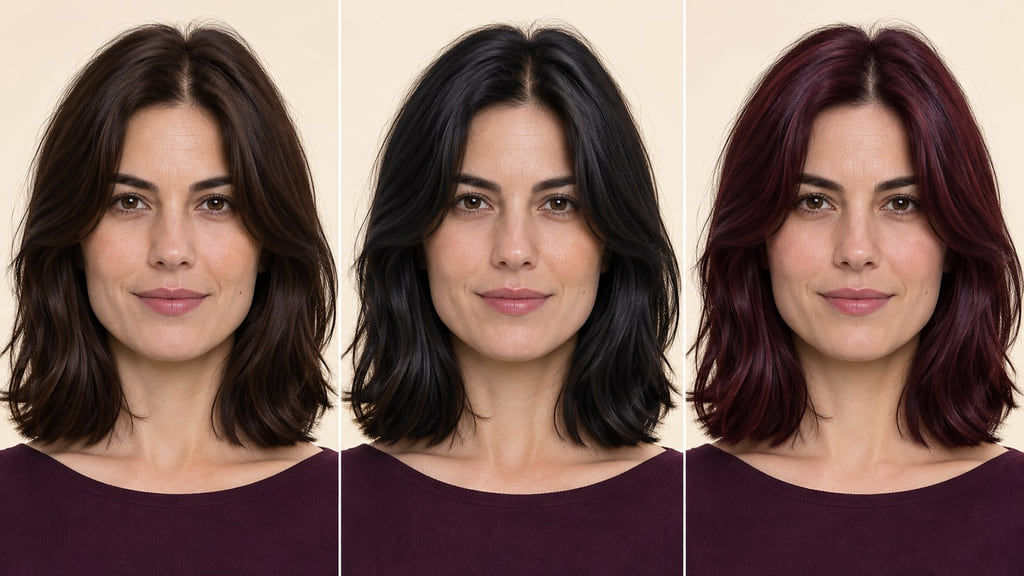
For a first choice, compare deep espresso with neutral black. Espresso leaves more brown visible, while neutral black brings the overall depth closer to black. Both can retain strand detail. If you prefer a visible colored reflection, compare dark red-violet at a similar apparent depth rather than judging a brighter image against a darker one.
Deep Espresso
In this example, deep espresso keeps a deep brown base and visible strands through the darker areas. Notice whether that brown remains readable in ordinary indoor light and in a neutral-light photograph. To compare reflection alone, keep the apparent depth and exposure close. Ask your colorist which parts of your current brown can stay and where a change would be visible.
Neutral Black
Neutral black looks almost black across the hair, with separated strands rather than one opaque shape. Compare it with espresso in the same light: does the extra depth give you the outline you want, or does it hide the detail you prefer? Ask what would need to change from your current base and how you would feel about a more noticeable root transition.
Dark Red-Violet
Dark red-violet keeps a deep base but adds a visible red-violet reflection. In the comparison, the colored reflection is the main change; the face, cut, and light stay similar. Decide whether you want to notice that color across the whole outline or mainly in selected sections. A photograph of the reflection in neutral light gives your colorist a clearer reference than the shade name alone.
Account for Your Starting Base
Photograph your natural roots, colored lengths, and ends in similar neutral light. Tell your colorist about previous color, the length you want to keep, and how much change you are comfortable seeing. A deep espresso reference may show a quiet brown reflection, but your current hair determines what service could reach it. A number on a shade chart is meaningful only within the manufacturer’s system that defines it.
If neutral black appeals to you but your natural base is lighter, discuss how visible you want the roots to become. If you already have very dark hair, you may prefer a change in reflection or placement without changing the overall depth.
Plan Regrowth and Color Upkeep
Check your chosen reference in the light you normally see. With deep espresso, watch whether the brown reflection and strand detail remain visible. With neutral black, watch the root transition and whether the interior still has definition. With dark red-violet, note whether the colored reflection remains as visible as you want. Bring a current photograph to a follow-up conversation instead of assuming a fixed refresh schedule.
| Direction | Daily check | Change to watch | Salon conversation |
|---|---|---|---|
| Deep espresso | Can you still see brown depth and separate strands? | Reflection softens or roots become distinct | Preserve depth or adjust the reflection? |
| Neutral black | Does the dark outline retain detail? | Root contrast or a flatter-looking interior | Keep this depth or allow more visible brown? |
| Dark red-violet | Is the red-violet visible where you want it? | Reflection changes or roots draw attention | Refresh the reflection throughout or in selected areas? |
The best fit is the direction whose visible changes and salon support suit your routine. Ask what maintenance the proposed service would require on your actual starting hair.
Build Your Color Reference
Save one neutral-light photograph of your current hair, a reference showing the full outline, and a closer view of the roots and ends. Add the matched comparison above if it helps you point to a specific difference. Keep exposure similar so a shadow is not mistaken for greater depth.
You can say: “I want to compare deep espresso with neutral black. My reference is neutral deep espresso hair with clear but believable strand highlights. Keep the natural density and show me the difference in depth, reflection, and placement before we choose a service.” This is a useful consultation brief, not a dye recipe or a promise of identical results.
Choose the direction you prefer and discuss it with those references. You can also preview a color direction as an optional visual step. A screen preview cannot diagnose a season or predict a chemical color result.
Frequently Asked Questions
Is this a diagnosis or a styling framework?
It is a styling framework. The cited twelve-season model describes Dark Winter as dark and cool; it does not establish a diagnosis or determine an individual’s best hair color. Use the label to compare visible depth and reflection.
Do I need to dye my hair to fit a palette?
No. Your natural hair may already provide the depth and contrast you like. Deep espresso and neutral black are two editorial directions to compare if you want a change, not requirements for belonging to a palette.
How can I compare depth and reflection?
Use the same light, framing, and exposure. To compare reflection, hold the apparent depth close and look for brown, neutral, or red-violet color within it. To compare depth, hold the reflection close and see whether the darker version still shows strands. Brightness in a photograph is not the same as hair-color depth, and Deep Winter does not require everyone to dye their hair black.