
Deep Autumn Hair Colors: A Practical Comparison

Compare rich warm-leaning depth without letting darkness erase dimension. Deep chestnut, warm espresso, and dark auburn offer distinct reflections within a dark base. Use these examples as directions to discuss with a colorist; your starting base and color history affect what is achievable.

Read the Color Direction Before Choosing a Look
Picture shoulder-length deep chestnut hair with a subtle auburn reflection. The brown still looks deep, but individual strands and a little warmth remain visible. That is the useful goal here: compare rich warm-leaning depth without letting darkness erase dimension. Depth is how light or dark the hair appears; reflection is the color you notice within that depth.
The Concept Wardrobe’s twelve-season model calls this direction Dark Autumn and describes it as dark and warm. Deep Autumn is a common name for the same direction in this article. The model distinguishes it from cooler Dark Winter; its Soft Autumn description describes a more muted, lighter neighboring direction. Use these labels as styling vocabulary. Deep chestnut and warm espresso are two sample directions for comparing reflection and depth; your preference and current color lead the choice.
Compare Deep Chestnut, Warm Espresso, and Dark Auburn
In Wella’s hair-color chart guide, the number before the stroke indicates depth and the number after it indicates tone. That notation belongs to Wella’s system; another brand may name or number a shade differently. In the examples below, look at the apparent depth, the warm reflection, and where the color is visible.
| Direction | Depth and reflection | Placement to compare | Question for your colorist |
|---|---|---|---|
| Deep chestnut | Deep brown with restrained red-gold reflection | Warmth across the brown field or through selected lengths | Where can the warmth show without losing the brown base? |
| Warm espresso | Deep brown with a quieter warm reflection | Broad dark field with small areas of visible dimension | How can we keep strand detail in the deepest areas? |
| Dark auburn | Deep red-brown with a clearer auburn reflection | Auburn throughout or concentrated in selected sections | How much red-brown reflection do I want to see? |
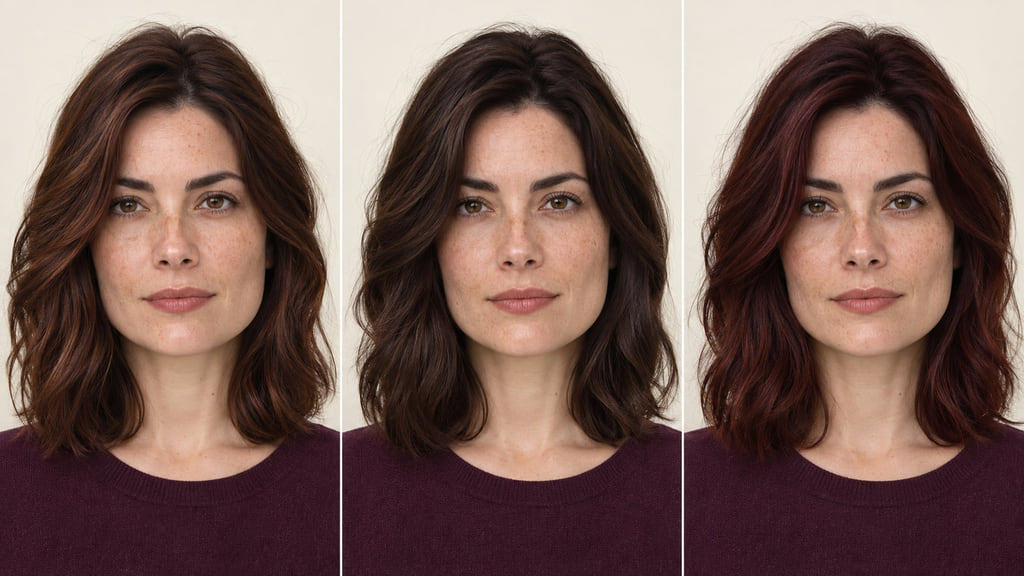
Start with deep chestnut beside warm espresso. In this comparison, chestnut carries a restrained red-gold glint, while espresso reads as a deeper brown with quieter warmth. Compare photographs in similar light before deciding whether you want a stronger reflection or more apparent depth. Your starting color and color history shape what a colorist can achieve.
Deep Chestnut
This example keeps a brown base and lets a restrained red-gold reflection appear as the hair moves. Look for strand detail through the darker areas rather than judging the shade by a bright highlight alone. When you bring a reference to a consultation, ask which part of the brown field could change and which part you want to preserve. Keep the exposure and apparent depth similar when comparing another reflection.
Warm Espresso
Warm espresso keeps the brown deeper and the warm reflection quieter. In a reference photo, check whether the ends and interior still show separate strands; an underexposed image can make any dark color look flat. Ask whether you want the same depth throughout or a small difference through the lengths. Compare it with chestnut under similar light so darkness alone does not decide for you.
Dark Auburn
Dark auburn makes the red-brown reflection more visible while retaining a deep base. If you compare it with chestnut, keep the apparent depth and lighting close enough to see the change in reflection. Decide whether you want that auburn direction throughout the hair or in selected areas, then ask what can stay unchanged in your current color. This is a visual choice, not a universal seasonal rule.
Account for Your Starting Base
Take a neutral-light photograph of your natural roots, previously colored lengths, and ends. A deep chestnut reference may show the reflection you want but not the starting color beneath it. Tell your colorist about previous color and the length you want to keep, then ask which change in depth or reflection is realistic for your hair. Shade numbers are useful only within the manufacturer’s system that defines them.
If warm espresso seems closer but your current ends are lighter or your routine favors a softer grow-out, ask whether placement can preserve more of your starting color. Compare the goal—rich warm-leaning depth with visible dimension—before choosing a service. For a neighboring muted direction, see Best Hair Colors for Soft Autumn.
Plan Regrowth and Color Upkeep
Check deep chestnut in the light you usually see: is the red-gold reflection still visible, and does the root transition look intentional? With warm espresso, watch whether the deeper field still has visible strand detail and whether your natural roots create a contrast you like. Dark auburn gives you another reflection to monitor as the color changes. Bring a current photograph to your next conversation instead of assuming one refresh schedule fits every base.
| Direction | Daily check | Change to watch | Salon conversation |
|---|---|---|---|
| Deep chestnut | Can you still see brown depth and restrained warmth? | Reflection softens or the root becomes more visible | Refresh the warmth or change its placement? |
| Warm espresso | Is there detail within the deep brown? | Root contrast or a flatter-looking interior | Keep the depth or introduce subtle variation? |
| Dark auburn | Does the red-brown reflection remain at the level you want? | Reflection changes or roots become more distinct | Maintain auburn throughout or in selected areas? |
Choose the option whose visible changes and salon support fit your routine. Your colorist can assess the current color and discuss maintenance for the actual service.
Build Your Color Reference
Save a neutral-light photograph of your current hair, one full-outline reference, and a closer view that shows the roots and ends. Mark where you want warmth to appear and where you want to retain depth. Use images with similar exposure so a dark shadow does not stand in for a deeper shade.
You can say: “I want to compare deep chestnut with warm espresso. My reference is deep chestnut shoulder-length hair with subtle auburn reflection. Keep the natural density and show me the difference in depth, reflection, and placement before we choose a service.” That is a comparison brief, not a dye recipe or a promise of an identical result.
Choose the warm-leaning direction you prefer and discuss it with these references. You can also preview a color direction as an optional visual step. A screen preview cannot diagnose a season or predict a chemical color result.
Frequently Asked Questions
Is this a diagnosis or a styling framework?
It is a styling framework. The cited twelve-season model describes Dark Autumn as dark and warm; it does not establish a medical diagnosis or tell you what an individual color result will be. Compare depth and reflection in your own references.
Do I need to dye my hair to fit a palette?
No. A palette can help you describe a visual preference without changing your natural color. If you do want a change, deep chestnut offers a more visible red-gold reflection in this comparison, while warm espresso keeps it quieter. Your starting hair and preference decide the conversation.
How can I compare depth and reflection?
Use photographs with similar lighting and exposure. To compare reflection, keep apparent depth close and look at the brown, gold, or auburn you see. To compare depth, choose references with similar warm reflection and notice whether the darker one still shows dimension. Deep Winter and Soft Autumn are neighboring directions in the cited framework, not automatic exclusions.