
Hair Colors for Fair and Pale Skin by Undertone: Depth, Reflection, and Choice

Choose a hair color by your undertone hypothesis, natural base, and desired contrast on fair skin. Compare beige blonde, neutral brown, soft copper, and a deeper frame in similar light. Treat the result as a direction to discuss with a colorist; your starting base and color history affect what is achievable.

Read the Color Direction Before Choosing a Look
Picture a neutral light-brown bob beside naturally fair skin. You can change the visible hair frame by making it lighter, shifting its reflection, or deepening the hair beside the face. Depth is how light or dark the hair appears; tone describes its color direction. Wella’s color-chart guide places depth before the stroke and tone after it in its own numbering system. Other brands may label shades differently.
Fair and pale describe skin depth, not a cool undertone. Use warm, cool, or neutral undertone as a working hypothesis, then compare the hair options in similar light. Beige blonde and neutral brown can both be useful references, but they make different choices about depth and reflection. Keep any effect of brightness placed near the face separate from the broader question of which palette you prefer.
Compare Beige Blonde, Neutral Brown, and Soft Copper
These four directions show different choices for the same fair-skinned reference. In a photograph, keep the face, exposure, white balance, and cut consistent. Compare reflection at a similar apparent depth, or hold the reflection steady when comparing depth.
| Direction | Depth and reflection | Placement to compare | Question for your colorist |
|---|---|---|---|
| Beige blonde | Lighter blonde depth with a balanced beige reflection | Brightness around the face versus throughout the bob | How much lightness can my current base reach? |
| Neutral brown | Brown base with a restrained neutral reflection | Even brown depth versus a slightly lighter face frame | Which parts of my brown can stay? |
| Soft copper | Visible orange-red reflection with restrained saturation | Copper throughout versus selected visible sections | Where should the copper show most clearly? |
| Deeper contrast | A visibly deeper brown hair frame | Depth beside the face while skin remains visible | How dark should the frame appear in ordinary light? |
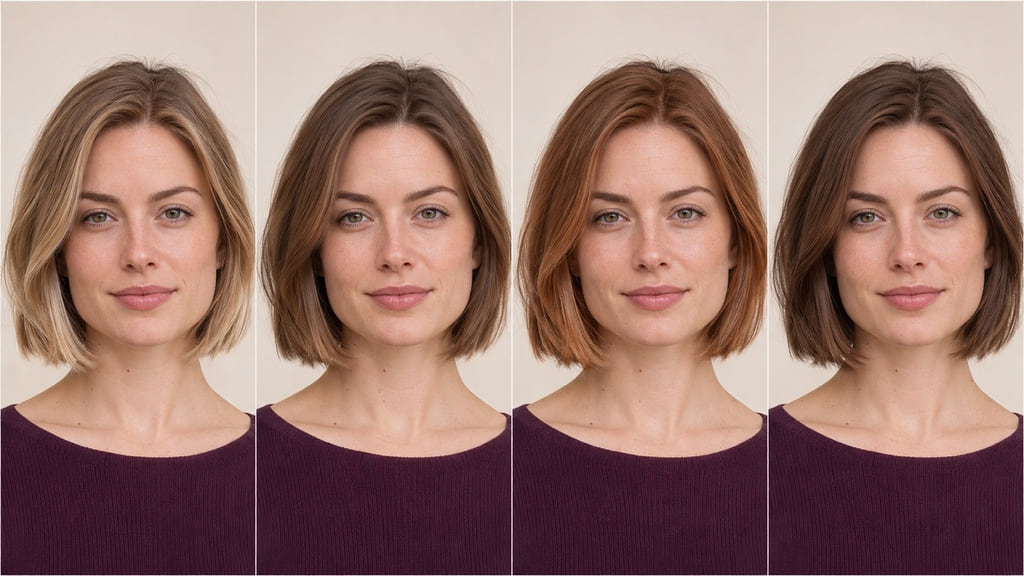
For a first decision, compare beige blonde with neutral brown. The first makes the bob lighter and shows a balanced beige reflection; the second keeps a brown base. If the brown feels right but you want more color, compare a restrained copper reflection at a similar depth. If you want a stronger outline, deepen the frame without changing the face or lighting in the reference.
Beige Blonde
Beige blonde shows a lighter depth and a balanced beige reflection. If you are comparing beige with another blonde, keep the apparent depth and white balance close; if you are comparing lightness, keep the reflection close. Ask which part of your current bob would need to become lighter and which parts you want to preserve.
Neutral Brown
Neutral brown keeps a readable brown base without a strongly gold or ash reflection. Compare it with beige blonde under the same light to see whether your preference is really for a lighter frame. Ask where your current brown can remain and whether a small change around the face would be enough.
Soft Copper
Soft copper adds an orange-red reflection while keeping saturation restrained. It is a choice about visible warmth, not a conclusion drawn from freckles or fair skin alone. Compare it with a neutral brown at a similar apparent depth, then ask whether you want the copper across the whole bob or only where light catches it.
Deeper Contrast
A deeper brown beside the face creates a stronger hair outline while leaving the fair skin visible. Keep the same expression and exposure when comparing it with neutral brown; a dark studio shadow can otherwise exaggerate the difference. Ask how much depth you want near the face and whether visible brown detail matters to you.
Account for Your Starting Base
Bring a photograph of your natural roots, colored lengths, and ends in neutral light. Tell your colorist about previous color, the length you want to keep, and how much change you want. A beige blonde reference describes an appearance; it cannot specify the service your starting hair needs. A shade number is meaningful only within the manufacturer system that defines it.
If your natural hair is already light brown, neutral brown may be a smaller visible change than beige blonde. If your lengths have older color, ask how that history affects either reference before choosing a service. The brown-skin guide addresses a different starting complexion and contrast decision.
Plan Regrowth and Color Upkeep
Look at the reference under the light you normally see. For beige blonde, notice when the root contrast or beige reflection no longer looks as you intended. For neutral brown, watch whether the root transition or visible reflection changes. For copper, check whether the color remains visible where you wanted it; for a deeper frame, watch how the natural roots meet the darker lengths. Ask about the proposed service’s upkeep on your own hair rather than assuming a fixed refresh interval.
| Direction | Daily observation | Change to watch | Salon conversation |
|---|---|---|---|
| Beige blonde | Does the light outline still show strand detail? | Root contrast or reflection shifts | Preserve the beige, adjust placement, or return closer to the base? |
| Neutral brown | Does the brown still read as intended in ordinary light? | Roots or ends differ from the reference | Keep the base or refine the reflection? |
| Soft copper | Is the copper visible where you want it? | Reflection softens or roots draw attention | Refresh color throughout or only in selected areas? |
| Deeper contrast | Does the frame still show brown detail? | Natural roots become distinct | Keep this depth or soften the transition? |
Build Your Color Reference
Save one neutral-light photograph of your current hair and a reference that shows the full bob outline. Add a close view of roots and ends. A matched image of beige blonde and neutral brown helps you point to the specific difference you want; avoid treating a shadowed photograph as proof of greater hair-color depth.
You can say: “I want to compare beige blonde with neutral brown. My reference is a neutral light-brown bob beside naturally fair skin. Keep the natural density and show me the difference in depth, reflection, and placement before we choose a service.” This is a consultation brief, not a dye formula or a promise that your hair will match the image.
Choose the direction you prefer, then discuss it with your colorist and those references. Ask which parts of the reference suit your starting base and which would require a different service.
Frequently Asked Questions
How do I compare these shades at a similar depth?
Keep light, exposure, and framing consistent, then compare the visible beige, brown, or copper reflection. Depth means how light or dark the hair appears; Wella’s chart separates that from tone within its own system. A brighter photograph alone does not prove a lighter shade.
Does my starting color change the achievable result?
Yes. Your natural base and previous color affect what a colorist can plan. Beige blonde and neutral brown are visual references, but the route to either one depends on your actual hair. Bring photographs of your roots and lengths rather than assuming the same service will produce the same result.
Does fair skin always have a cool undertone?
No. Fair describes skin depth, while warm, cool, and neutral describe possible undertone directions. Compare hair reflections in the same light, and judge brightness placed near the face separately from your broader palette choice.