
Hair Colors for Medium Skin Tones: Depth, Reflection, and Choice

Compare neutral chocolate, caramel, auburn, and beige dimension at a similar hair depth before choosing a direction. Medium skin depth alone cannot tell you whether your undertone is warm, cool, olive, or neutral. Your starting hair and color history shape what a colorist can achieve.

Read the Color Direction Before Choosing a Look
Picture medium neutral-brown waves with a few subtle caramel sections. The brown base still gives the hair its overall depth; the lighter sections change where you see warmth and movement. For medium skin tones, compare that shift with a continuous neutral chocolate brown before deciding whether you want a different reflection, more lightness, or both.
Depth is how light or dark the hair appears. Reflection is the color direction you see within it. In Wella’s hair color chart, the number before the stroke identifies depth and the number after it identifies tone. That is Wella’s numbering system, not a code shared by every brand or a formula for your hair. Medium skin depth does not identify a warm, cool, olive, or neutral undertone; use these shade names as visual comparisons, not skin-matching rules.
Compare Neutral Chocolate, Caramel, and Auburn
Keep light, exposure, and white balance steady when comparing photographs. First compare reflections at a similar apparent depth. Then make a separate comparison if you want to change how light the whole head appears. These four directions are editorial examples, not predictions of how a color will look on you.
| Direction | Depth and reflection | Placement to compare | Question for your colorist |
|---|---|---|---|
| Neutral chocolate | Medium-to-deep brown with a restrained, balanced reflection | Brown across most of the hair, with the same depth visible from roots to ends | Can I keep my current depth and change only the reflection? |
| Caramel | Brown base with brown-gold light in selected sections | Compare narrow ribbons with broader areas of brightness while keeping the base visible | Where would the lighter sections start on my hair? |
| Auburn | Brown base with a red-brown reflection at a comparable depth | Compare an all-over reflection with red-brown limited to selected sections | How much of my existing brown can remain? |
| Beige dimension | Brown base with balanced beige light, rather than an all-over blonde | Keep the roots and interior brown; compare the amount of beige in selected sections | Can the light areas stay subtle against my base? |
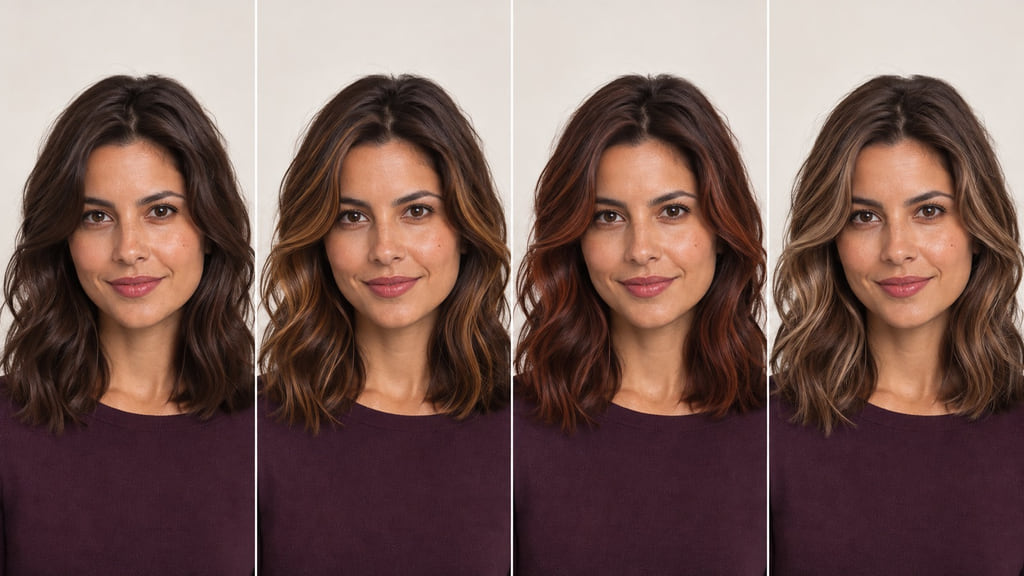
For example, compare neutral chocolate with caramel on a medium-to-deep brown base. Chocolate keeps the brown field continuous. Caramel adds brown-gold light to selected strands, so the first thing you notice may be placement rather than a change to every strand. Save both references and point to the difference you actually want.
Neutral Chocolate
In this example, the hair stays medium-to-deep brown with a balanced reflection. Look at the roots, interior, and ends under the same light: do you want the brown depth to remain continuous, or do you want a few lighter areas? Ask which part of your current color can stay and which reflection would change. A name alone cannot settle that choice.
Caramel
Here the brown base remains visible, while selected sections carry a brown-gold reflection. Compare it with neutral chocolate at a similar apparent base depth and fixed white balance so the light placement is the clear difference. Ask whether you want brightness near the face, through the lengths, or only near the ends. Your starting base affects which version is achievable.
Auburn
This example shifts the reflection toward red-brown without assuming that the hair must become lighter. Compare it with chocolate under the same exposure so a darker photograph does not make the red look more subtle than it is. Ask whether the red-brown should cover most of the hair or appear only in selected sections, and what you want to see as it changes between appointments.
Beige Dimension
Beige dimension puts balanced, lighter reflection into selected sections while keeping the brown base visible. Look closely at the root and interior: a photograph with a bright face frame can suggest an all-over light result when most of the hair is still brown. Ask how much of your current depth can remain and where the beige areas should begin.
Account for Your Starting Base
Bring a neutral-light photograph of your natural roots, colored lengths, and ends. Tell your colorist about previous color or lightening and the length you want to keep. Wella’s guide identifies hair history and starting pigment as parts of planning a color result. A neutral chocolate reference might be close to your roots but unlike your ends; ask which areas could follow it and which need a different plan. A manufacturer’s shade number helps only within that manufacturer’s chart.
If your goal is caramel, show both the brown base and the lighter placement in your reference. On hair with old color, the question may be where light can be added and how the transition would look, rather than whether a photo’s shade name matches yours. Discuss the visible goal and your tolerance for upkeep before choosing a service. For a wider depth comparison, see Best Hair Colors for Fair and Pale Skin by Undertone and Hair Colors for Brown Skin; those are separate starting points, not rules for medium skin.
Plan Regrowth and Color Upkeep
Look at neutral chocolate in the light you usually see: do the roots still connect to the lengths, and does the brown reflection remain as you intended? With caramel, watch whether the lighter sections become more prominent than you want or whether the root-to-length transition starts to bother you. Auburn and beige can also change in visible reflection. Use those cues to discuss refreshing color or adjusting placement; no single appointment interval fits every starting base or preference.
| Direction | Daily routine question | Change to watch | Salon support to discuss |
|---|---|---|---|
| Neutral chocolate | Do you like a mostly continuous brown field in your usual light? | Root-to-length contrast or a shift in brown reflection | Refresh reflection or soften the transition |
| Caramel | Are you comfortable with brighter sections near your face or ends? | Lighter pieces become more dominant as the hair grows | Adjust the placement or amount of brightness |
| Auburn | Do you still like the red-brown direction in ordinary light? | Red reflection becomes less visible or shifts away from your reference | Revisit the desired reflection |
| Beige dimension | Does the brown base still anchor the lighter areas? | Beige sections look brighter or warmer than intended | Reassess tone and the size of light areas |
Choose the direction whose likely changes you are willing to notice and discuss. Your colorist can assess your hair and recommend the actual maintenance plan.
Build Your Color Reference
Save one photograph that shows the entire hair outline and another that shows the roots, middle lengths, and ends in neutral light. Add a photograph of your own hair taken in similar light. Mark the areas where you want to keep depth and natural density, and the sections where you are open to a change in reflection or brightness.
You could say: “I want to compare neutral chocolate with caramel. My reference is medium neutral-brown wavy hair with subtle caramel placement. Keep the natural density and show me the difference in depth, reflection, and placement before we choose a service.” This is a clear visual request, not a dye formula or a claim that another person’s result can be copied.
Pick one direction to discuss with your colorist and bring both references. You can also preview a color direction as an optional visual step. A screen preview cannot determine your undertone or predict a chemical color result.
Frequently Asked Questions
How do I compare these shades at a similar depth?
Use photographs with similar exposure, lighting, and white balance. Hold the apparent brown depth steady while you compare chocolate’s restrained reflection with caramel’s brown-gold sections. Then compare overall lightness separately. Wella’s depth and tone distinction helps name those two questions; its shade codes are specific to its own system.
Does my starting color change the achievable result?
Yes. A neutral chocolate reference may involve a smaller visible change if your hair is already brown, while caramel placement may call for a different plan. Previous color, natural roots, and the condition of the lengths matter. Bring that history to a colorist rather than treating the reference photograph as a service instruction.
Can a virtual preview predict the dye result?
No. It can help you compare the visible direction of chocolate and caramel, but it cannot predict how your hair will respond to color. Medium skin depth also cannot identify a warm, cool, olive, or neutral undertone. Use the preview to clarify what you want to see, then discuss your starting hair and the achievable result with a colorist.