
Hair Colors for Gray Eyes: Depth, Reflection, and Choice

Use gray eyes as one visual reference while comparing shade depth and reflection. Compare soft ash blonde, neutral brunette, and restrained auburn. Treat the result as a direction to discuss with a colorist; your starting base and color history affect what is achievable.

Use your natural gray eyes as one reference, then compare what happens when you change hair depth, reflection, or placement. Soft ash blonde lightens the frame, neutral brunette keeps a brown base, and restrained auburn adds a muted red-brown reflection. None is a universal match. The useful choice is the effect you want to discuss in relation to your current hair.
Read the Color Direction Before Choosing a Look
Imagine a neutral taupe-brown bob beside natural gray eyes. Its brown depth and quiet reflection make a practical starting reference: you can compare a lighter ash direction with a brown one without changing the eye color. In a color reference, depth means how light or dark the hair appears; tone describes its visible color direction. Wella’s color-chart guide identifies depth with the number before the stroke and tone with the number after it in its own numbering system. Other brands may use different codes.
Keep your iris, face, exposure, and white balance constant as you compare. An ash blonde and a neutral brunette answer different visual questions: the first changes overall lightness and cool reflection, while the second lets you inspect subtle variation within brown. Gray eyes do not diagnose a color season or skin undertone. If you compare photographs, choose ones with similar light before deciding which difference belongs to the hair.
Compare Soft Ash Blonde, Neutral Brunette, and Restrained Auburn
Start with the three directions below. This is an editorial comparison of visible effects, not a ranking of people or a prediction of a dye result. Note the starting base in each reference so a brighter photograph does not hide the change needed to reach it.
| Direction | Depth and reflection | Placement to compare | Consultation question |
|---|---|---|---|
| Soft ash blonde | Lighter blonde depth with subdued cool ash reflection | Overall lightness or lighter sections joined to a natural root | Where can brightness begin while keeping the transition I want? |
| Neutral brunette | Brown base with a quiet neutral reflection | Even brown or subtle variation through the lengths | Can the reflection change while the brown depth stays similar? |
| Restrained auburn | Brown depth with a muted red-brown reflection | All-over warmth or a smaller warm section near the face | How much warmth will be visible, and where? |
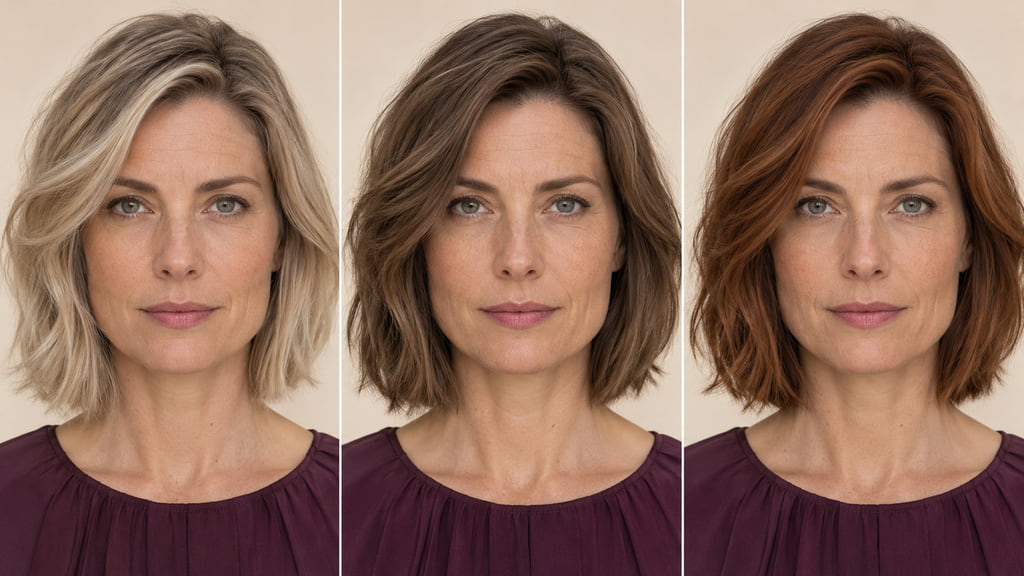
For an initial choice, compare soft ash blonde with neutral brunette. The blonde makes the frame lighter and cooler without relying on high saturation. The brunette retains a brown field, so reflection becomes the finer distinction. Next, compare neutral brunette with restrained auburn at a similar depth to see what the red-brown reflection changes. The Wella chart separates depth from tone; it does not establish which direction suits an individual.
Soft Ash Blonde
In this editorial example, ash blonde shows a lighter depth and subdued cool reflection. Keep the saturation restrained rather than treating any lighter photograph as an equivalent. Save a view that includes roots and ends. When comparing two blonde references, hold depth steady to judge reflection, or hold reflection steady to judge lightness. Ask a colorist which part of your current hair would change and which part you want to preserve.
Neutral Brunette
Neutral brunette retains a brown base. Compare it with another brown at a similar depth, under fixed white balance, so the reflection remains the visible difference. A taupe-brown bob is one possible reference, not a prescription for every gray-eyed person. Ask whether you want a change through the entire length, around the face, or mainly in the surface reflection.
Restrained Auburn
Restrained auburn adds a muted red-brown reflection without simply making the hair lighter. Compare it with neutral brunette at similar depth and light to isolate the warmer direction. A narrow warm placement and an all-over auburn field will frame the face differently. Ask which section should carry the warmth and how much of the brown base should remain visible.
Account for Your Starting Base
Your natural roots, previously colored lengths, and ends may be different starting points. Wella’s color guide tells colorists to consider hair history and underlying pigment when assessing a target shade. A soft ash blonde reference shows the appearance you want to compare; it cannot say how your hair will get there. Bring a current photo that includes roots and lengths, and describe prior color rather than choosing a formula from a screen.
If your hair is already near neutral brunette, a change in reflection or placement may be closer to your goal than a large change in depth. If it is much darker, lighter, or previously colored, ask which part of the reference is achievable and which should be adapted. Hair length and the amount of color you wish to maintain matter too. Gray eyes remain one visual reference throughout, without deciding the service for you.
For separate eye-color comparisons, see Best Hair Colors for Blue Eyes, Best Hair Colors for Green Eyes to Make Them Pop, and Best Hair Colors for Hazel Eyes. Keep those neighboring decisions separate from your gray-eye reference.
Plan Regrowth and Color Upkeep
Decide how visible you want the transition at the roots to be. With soft ash blonde, notice both the boundary between new growth and lightened hair and whether the cool reflection still looks as intended. With neutral brunette, watch whether its quieter reflection remains distinct from your starting color. With restrained auburn, watch how much warm reflection you want to keep as the color changes. These are personal check points, not appointment intervals.
| Direction | Daily routine to consider | Visible change to notice | Salon support to discuss |
|---|---|---|---|
| Soft ash blonde | Whether lighter hair still reads as softly ash in ordinary light | A root boundary or a reflection you no longer prefer | How close lightness should begin to the root |
| Neutral brunette | Whether the brown still has the dimension you chose | Neutral reflection becoming less distinct | Whether to refresh tone or adjust placement |
| Restrained auburn | Whether the warm reflection remains at your preferred intensity | Warmth changing or a stronger root boundary | Whether a smaller warm placement fits your routine |
Tell your colorist how much daily attention and salon upkeep you are willing to give the color. The practical route depends on your starting base and chosen placement; no single schedule fits these three directions for everyone.
Build Your Color Reference
Save a clear image of your current hair in neutral light, with roots and ends visible. Add a front or three-quarter view that shows your preferred reflection and another view that shows where the color sits. Keep the same exposure when comparing shades. Circle the part of the reference you want to keep—depth, reflection, or placement—and the part you want to change.
For example, tell a colorist: “I want to compare soft ash blonde with neutral brunette. My reference is a neutral taupe-brown bob with natural gray eyes. Keep the natural density and show me the difference in depth, reflection, and placement before we choose a service.” This is a visual request, not a color formula or a promise that the reference can be reproduced on your hair.
Choose the closer direction and take both references to a consultation. You can also preview a color direction as an optional visual comparison. An on-screen preview cannot predict the chemical result or establish what your starting hair can reach.
Frequently Asked Questions
How do I compare these shades at a similar depth?
Use photographs with consistent light, exposure, cut, and approximate hair depth. Then compare the cool ash, neutral brown, and red-brown reflections without a lightness change obscuring them. The reference is about the visible difference, not a universal shade code.
Does my starting color change the achievable result?
Yes. Soft ash blonde and neutral brunette can involve different changes from your natural roots and previously colored lengths. Bring a current photograph and your color history to a colorist. The screen image describes a direction to discuss, not an achievable-result guarantee.
Can a virtual preview predict the dye result?
No. A preview compares visible color directions, but it cannot assess your hair history or predict a dye service. Keep the gray irises unchanged between comparisons: eye color does not diagnose a season or determine one required shade.