
Money Piece Hair Color Ideas: A Practical Comparison

Choose the strength and width of a face-framing color statement. Compare a soft money piece, a narrow bright panel, and a high-contrast front section. Treat the result as a direction to discuss with a colorist; your starting base and color history affect what is achievable.

Start with what you want the front section to do. A money piece can be a narrow accent with a soft edge or a more graphic panel against the surrounding hair. Compare its width at the part, the difference in depth and reflection, and where the color begins. Those visible choices matter more than the name of a shade alone.
Read the Color Direction Before Choosing a Look
Imagine brunette hair with a clearly visible but controlled brighter front panel. First decide how much lighter the panel looks than the base; then decide whether its reflection reads golden, beige, or cooler in neutral light. Depth describes how light or dark hair appears. In Wella’s hair color chart, the number before the stroke indicates depth and the number after it indicates tone. That is Wella’s numbering system, not a universal code or a formula for your hair.
Keep the front-panel statement as the decision here. A soft money piece still has a section you can trace from its starting point through the lengths. A narrow bright panel keeps a similar width but increases the difference against the brunette base. If you want many subtle ribbons around the whole face instead, compare Face-Framing Highlights separately. Save references with similar light and base depth so you can judge the panel rather than a change in exposure.
Compare Soft Money Piece, Narrow Bright Panel, and High-Contrast Front Section
These are editorial examples of three visible directions, not predictions for every starting color. Use the same questions for each: How wide is the front section? Where does its lighter area begin? Is the contrast mainly a change in depth, in reflection, or in both?
| Direction | Width and placement | Depth and reflection | Question for your base |
|---|---|---|---|
| Soft money piece | Narrow, separated front section with a soft start | Modest depth difference; reflection can create a quiet accent | Will this section stay distinct beside my current color? |
| Narrow bright panel | Narrow section with a clear first visible point | Brighter than the retained base; compare warmth at similar brightness | What brightness is realistic for my front section? |
| High-contrast front section | Broader or more sharply separated area at the hairline | Clear light-dark difference against a deeper base | How could this contrast change as my roots return? |
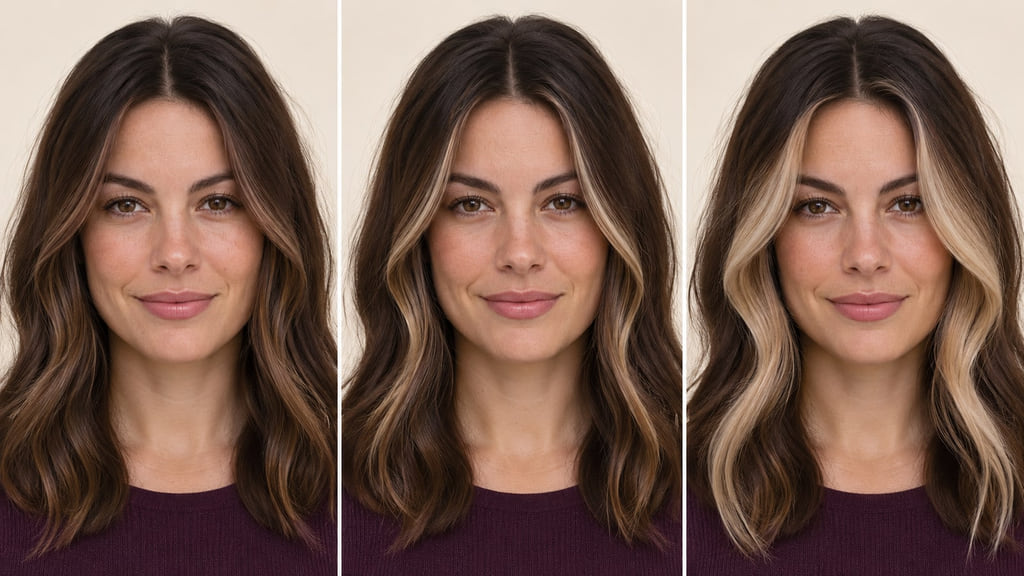
For a useful first comparison, put the soft money piece beside the narrow bright panel. Both keep the front area controlled, but the brighter panel draws a clearer line against brunette hair. If you want the front section to become the main color statement, use the high-contrast example as a third reference. Decide which visible change you prefer before discussing how to achieve it.
Soft Money Piece
A soft money piece has a front section you can identify without making it the brightest area in every view. On a brunette base, a restrained depth difference and a diffused root can keep the accent distinct while allowing the surrounding hair to remain prominent. This is a placement example, not a promise that one level of contrast suits everyone. Ask which strands should hold their current depth so the front accent stays narrow in your usual part.
Narrow Bright Panel
Here the section stays narrow but appears distinctly lighter beside the base. Judge its width at the part and through the ends; a bright tip with no readable starting point communicates a different placement. Compare two references at similar depth if you are choosing between warm and cool reflection. Ask your colorist where the brighter area could begin on your current front section and how its edge would meet the brunette hair.
High-Contrast Front Section
A broader, clearly lighter section against a deeper base makes the front panel more graphic. The visible difference may come from both greater width and a larger depth change, so separate those choices in your brief. Keep skin tone, camera light, and base hair similar when comparing images. Ask how much of the front hairline you want included and whether you would still like that boundary when new roots appear.
Account for Your Starting Base
Your natural root depth, previous color on the lengths, and condition of the front section affect the route to any reference. A photo cannot show all of that history. If your brunette front is untreated, ask what contrast is feasible while keeping a narrow section. If it has older dark color or previous lightening, bring that history to the consultation before choosing between a soft money piece and a brighter panel. The Wella depth and tone terms help name what you see; a shade number cannot predict your result.
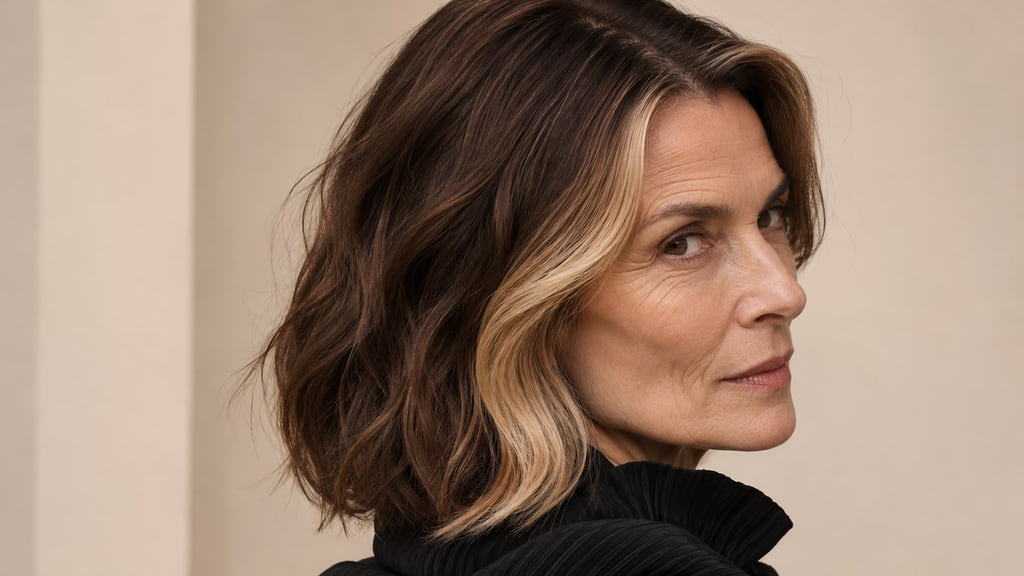
If your current hair differs from the reference, keep the goal—how strong and wide you want the front statement—while asking a colorist what route is suitable. Note whether the front pieces have been colored differently from the rest of your hair. For a separate decision about overall light-dark balance, see Hair Color by Contrast; keep this choice focused on the front panel.
Plan Regrowth and Color Upkeep
Watch the root boundary and the panel’s reflection as separate changes. A soft money piece may lose some visible distinction if its tone shifts closer to the base. A narrow bright panel can keep its width while its root start moves down. A high-contrast section may make either change easier to notice. These are qualitative comparisons; they do not set an appointment interval for your hair.
| Direction | Everyday check | Change to watch | Salon question |
|---|---|---|---|
| Soft money piece | Can you still trace the narrow accent in your usual part? | The reflection blending into the base or a softer root edge | Would I refresh tone, placement, or neither? |
| Narrow bright panel | Does the brighter strip still read at the width you chose? | Returning roots and a shift in warmth | Which change would I want addressed first? |
| High-contrast front section | Do you still like the clearly separated front area? | A more visible root line or reduced light-dark contrast | How much separation would I maintain? |
Think about your normal styling and tolerance for visible change before asking for a maintenance plan. A photo taken in the same light and part as your original reference gives a colorist a clearer comparison than a fixed schedule would.
Build Your Color Reference
Save a neutral-light photo of your current roots and front lengths, then one front and one three-quarter reference showing the desired panel. Include its first visible point and the darker hair beside it. You can bring this filled request:
“I want to compare a soft money piece with a narrow bright panel. My reference is brunette hair with a clearly visible but controlled brighter front panel. Keep my natural density and show me the difference in depth, reflection, and placement before we choose a service. My current front section is [describe its color history]. I prefer a [soft or clear] root connection and can live with [describe the change you would tolerate between visits]. I don’t want brightness spread across the whole face frame.”
Use reference photos as comparison material, not a guarantee. A colorist can assess the actual starting base and explain which direction is feasible. Choose the width and strength you prefer, then point to those features in the reference at your consultation.
Frequently Asked Questions
How do I compare these shades at a similar depth?
Use photos with comparable lighting and white balance. First compare how light or dark the panels look; then compare their visible warmth or coolness while keeping brightness roughly steady. Wella’s chart names depth and tone separately in its own system. Also check that the panel begins in a similar place, or placement may dominate the comparison.
Does my starting color change the achievable result?
Yes. Natural roots, older dark color, and previously lightened front pieces give a colorist different starting conditions. Show the front section and surrounding base together, and describe earlier services. A soft money piece on one base and a narrow bright panel on another are not a controlled comparison. The reference describes the difference you want to see, not what your hair must reach.
Will a soft money piece still look distinct?
It can, if you can trace a deliberate front section against the base in your usual part. Compare the first visible point and width in neutral light. If you want subtle brightness spread around the face rather than a distinct front-panel statement, use the separate Face-Framing Highlights guide for that placement decision.