
Face-Framing Highlights: A Practical Comparison

Choose the width, starting point, and contrast of brightness nearest your face. Compare fine face-frame ribbons, diffused brightness, and a stronger front panel on a similar starting base. Use the result as a direction to discuss with a colorist; your current color and color history affect what is achievable.

Start with a brunette lob and a narrow lighter section beside the face. Would you keep that section fine, spread the brightness through more front strands, or make one panel a deliberate focal point? Decide which edge of the highlight you want to see in your usual part before choosing a shade name. These are editorial placement examples, not promises about an individual result.
Read the Color Direction Before Choosing a Look
Trace the lighter section from its first visible point near the hairline through the ends. Compare its width with the brunette hair beside it, then compare its depth (how light or dark it appears) and tone (the visible color direction). In Wella’s hair color chart, the number before the stroke indicates depth and the number after it indicates tone. That numbering describes Wella’s system, not a universal code or a formula for your hair.
Fine face-frame ribbons retain separate narrow strands of brunette between lighter strands. Diffused brightness spreads lightness through a wider front area with a softer boundary. Both can frame the face without making the front a single high-contrast block. A stronger panel becomes a more graphic statement; keep this broader placement comparison distinct from choosing a bold money-piece look. When you compare photos, hold the base, light, and angle as steady as you can so the placement is what changes.
Compare Fine Face-Frame Ribbons, Diffused Brightness, and a Stronger Front Panel
The table describes visible directions on a brunette lob. Read each row for where lightness begins, how separated it looks, and what to ask about on your own starting base. A change in reflection can make a section look different even when its depth appears similar; compare those qualities separately.
| Direction | Front placement | Depth and reflection to compare | Starting-base question |
|---|---|---|---|
| Fine face-frame ribbons | Narrow, separated pieces at the hairline; trace their first visible point | Brunette remains between lighter strands; compare the lighter reflection at a similar depth | Can my current front sections show distinct fine ribbons? |
| Diffused brightness | A wider, deliberately visible front area with a soft transition into the base | Brightness spreads across more hair; compare the edge and warmth without changing the photo exposure | How much of my natural depth can remain between the brighter sections? |
| Stronger front panel | A broader, more clearly separated section nearest the face | Greater visible contrast with brunette hair; check whether depth or tone creates that contrast | What contrast is achievable on my current front section? |
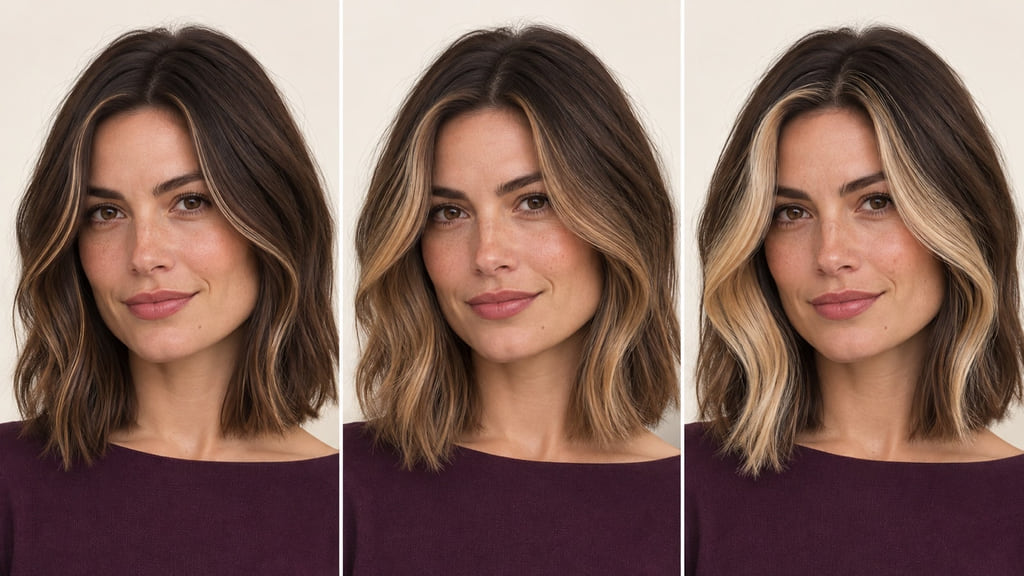
For a first choice, compare A, fine ribbons that leave brunette strands visible, with B, a broader but diffused front area. If you prefer a more graphic edge, use the stronger panel as a third reference. Circle the exact area you would change rather than calling one direction universally better.
Fine Face-Frame Ribbons
In this editorial example, a narrow lighter section stays readable against the brunette lob without turning the whole front into one block. Check whether the ribbons begin close to the part or lower along the face, and how much brunette remains between them. When comparing another photo, keep the face, exposure, and approximate starting depth similar. Ask your colorist which front strands should be brighter and which should keep their current depth.
Diffused Brightness
Here the lighter front area is deliberately visible, but its edge blends into adjacent brunette strands. Its width, first visible point, and reflected warmth make it a different decision from the fine ribbons. Compare at similar depth if you are judging tone; compare at similar tone if you are judging brightness. Ask where the blended area should begin in your usual part and how far it should extend toward the sides.
Stronger Front Panel
The broader light section has a clearer boundary against the brunette base. That visible separation can be a useful comparison edge, though an intentionally bold money-piece statement is a neighboring choice rather than the goal of every face frame. Keep the base, camera angle, and light steady while judging its contrast. Ask how wide the panel should be and whether its root connection should remain distinct or soften.
Account for Your Starting Base
Your natural roots, previous color on the lengths, current condition, and the brightness you want set the starting point for a colorist’s assessment. A photo of fine ribbons does not reveal whether the model’s brunette base was natural or previously colored. Show your roots and lengths together, and describe earlier lightening or dark color. Wella’s depth and tone terms can help you explain the difference you want, but its shade numbers cannot predict your result.
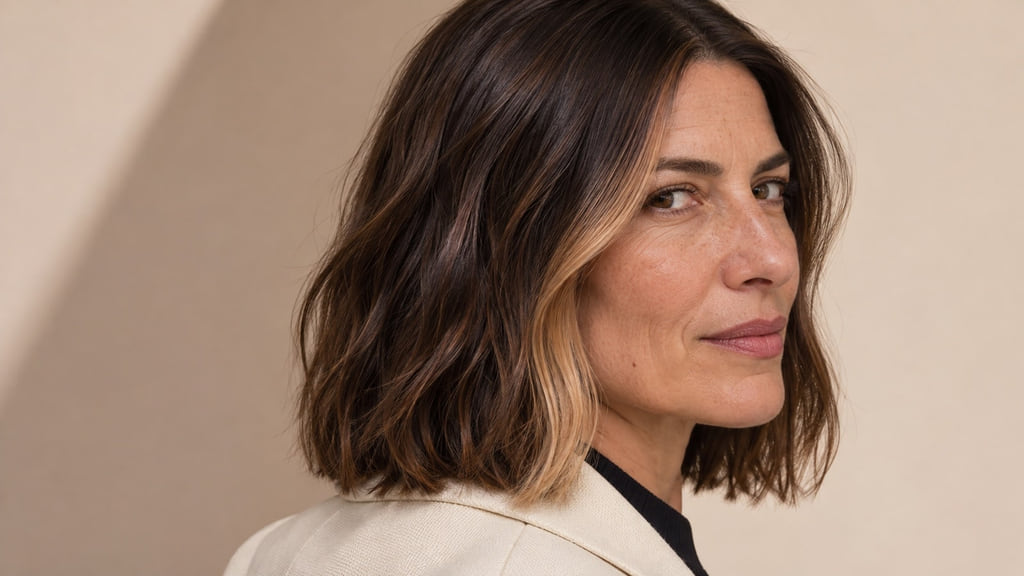
If your current hair has a different root depth or previously colored front sections, keep the goal of choosing width, starting point, and contrast, then let the colorist explain which route is feasible. A diffused reference may need a different plan on your base than fine ribbons do. For separate color decisions, explore Best Hair Colors for Fair and Pale Skin by Undertone or Hair Color by Contrast only if those are the questions you are deciding next.
Plan Regrowth and Color Upkeep
Watch two changes independently: the line where new root growth meets lighter hair and the reflection of the lighter sections through the lengths. Fine ribbons may leave more brunette visible between them, while diffused brightness can make a broader area look lighter even if its root edge is soft. A stronger panel may make its boundary more noticeable in your usual part. None of those observations sets a universal appointment interval.
| Direction | Everyday check | Visible change to watch | Salon question |
|---|---|---|---|
| Fine face-frame ribbons | Are the individual ribbons still visible in your normal part and styling? | Root contrast or a shift in the lighter strands' reflection | Which ribbons would I want refreshed? |
| Diffused brightness | Does the softly bright area still read as one intended zone? | A changed root transition or different warmth through the front | Would I revisit placement, tone, or both? |
| Stronger front panel | Do you still like the clear contrast during daily wear? | A more visible root boundary or tonal shift in the broad section | How much of that separation would I maintain? |
Consider how you wear your part, how much tonal change you notice, and whether you are willing to return for a color adjustment. Save a current-hair photo when the change starts to matter to you. That gives your colorist a concrete observation instead of an invented timetable.
Build Your Color Reference
Save one neutral-light photo of your current roots and front lengths. Add a reference that shows the chosen width and first visible point from the front or a three-quarter view; a second angle can show how the section joins the side. Keep exposure similar when comparing a fine ribbon with a diffused front area.
You can bring this request: “I want to compare fine face-frame ribbons with diffused brightness. My reference is a brunette lob with a narrow lighter face-framing section. Keep the natural density and show me the difference in depth, reflection, and placement before we choose a service. I prefer a visible but soft front transition. Please tell me what my current roots and color history allow.” This is a visual brief, not a chemical recipe or a guarantee.
Choose the width, starting point, and contrast you prefer, then discuss that marked reference with your colorist. Bring a photo of your current front sections alongside the chosen reference so you can point to the difference you want.
Frequently Asked Questions
How do I compare these shades at a similar depth?
Use photos with similar light and white balance. First compare how light or dark the front section appears, then compare its warm, cool, or neutral reflection while keeping depth roughly steady. Wella’s color chart separates depth from tone in its own system. Also check whether the first lighter strand starts in the same place.
Does my starting color change the achievable result?
Yes. Natural roots and previously colored lengths give a colorist different starting conditions. Fine ribbons on an untreated brunette front may require a different plan than diffused brightness over older color. Show both areas in neutral light and tell your colorist what has been applied before. A reference photo describes the direction you like, not the result your hair must reach.
How do I choose between a soft frame and a stronger panel?
Compare both directions on a similar brunette base in similar light. A soft frame spreads brightness across front strands; a stronger panel has a clearer boundary against the base. Decide which width and root connection you prefer in your usual part. If you want an intentionally bold, separated statement, treat that as a distinct choice to discuss with your colorist.