
Red, Copper, and Auburn Hair Colors by Undertone: Depth, Reflection, and Choice

Compare red-family depth and reflection before choosing placement and upkeep. Look at clear copper, brown-based auburn, muted red, and red-violet under the same light. Treat your favorite as a direction to discuss with a colorist: your starting base and color history affect what is achievable.

Read the Color Direction Before Choosing a Look
The copper-auburn layers above show why “red hair” is too broad a request: the brown base, copper reflection, and apparent depth all contribute to the look. First decide whether you want a clear orange-red reflection, a brown base with red warmth, a quieter red, or a violet-leaning red. Then decide where that color should sit and how much change you want to maintain.
Depth describes how light or dark hair appears; tone describes its color direction. In Wella’s hair color chart, the number before the stroke indicates depth, while the number after it indicates tone. This is Wella’s naming system, not a code shared by every brand. Shade names overlap too: ask to see a clear copper beside a brown-based auburn at a similar depth rather than choosing by name alone.
Compare Clear Copper, Brown-Based Auburn, and Muted Red
Use these four directions to compare reflections, then ask your colorist to interpret them for your hair. Keep the face, exposure, white balance, and apparent depth as consistent as possible. If depth changes, make that a separate decision.
| Direction | Visible reflection | Placement to discuss | Check against your base |
|---|---|---|---|
| Clear copper | Distinct orange-red copper | All over or concentrated near the face | Can the current depth show a clear reflection? |
| Brown-based auburn | Red-brown, with brown still readable | Through the lengths or as selected ribbons | How much of the existing brown can remain? |
| Muted red | Visible red with restrained saturation | Soft variation within the existing shape | Would a quieter reflection suit your upkeep preference? |
| Red-violet | Red with a violet-leaning reflection | Focused sections or an all-over direction | Will the red remain visible at the desired depth? |
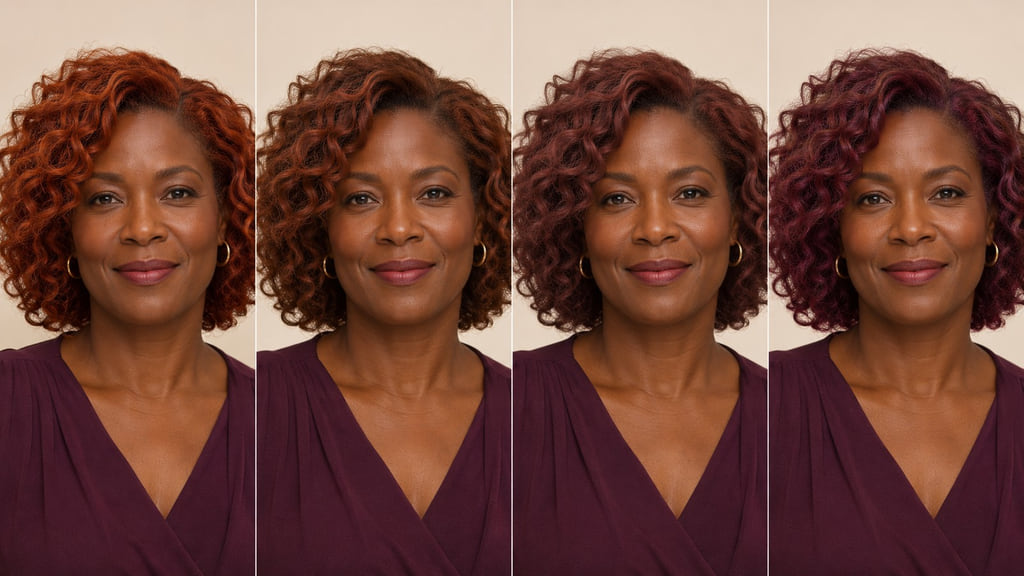
If clear copper and brown-based auburn appeal to you, compare them first at a similar depth. Copper makes orange-red reflection the focus; auburn keeps brown visible beneath the red. Show both to your colorist and ask what your current hair can display before deciding on placement.
Clear Copper
Look for a visible orange-red copper reflection without relying on extra brightness in the photograph. In a controlled reference, hold the cut, face, and apparent depth steady. Ask whether the color should run through the whole shape or brighten only selected sections, and what should stay close to your natural base.
Brown-Based Auburn
Look for red-brown reflection while the brown base remains legible. Compare it with clear copper under the same light: the key change is the reflection, not a claim that either direction suits everyone. Ask which sections can retain brown and where the red should become most visible.
Muted Red
Choose this reference when you want visible red with less saturation, rather than merely a lighter red. Hold depth steady as you compare it with auburn; otherwise a darker photograph may make the color look quieter than it really is. Ask how much red you want to see indoors and in daylight.
Red-Violet
Look for a violet-leaning reflection with red still visible. At the same apparent depth, compare it with muted red to separate hue from saturation. Ask whether you want that direction throughout the hair or in selected sections and how it may change between visits.
Account for Your Starting Base
Your natural color, previous color, and the condition of your lengths affect the route to any reference. Wella’s chart guide asks colorists to consider hair history and underlying pigment when planning a result. A clear copper photo on a lighter starting base does not tell you what the same direction requires on previously colored dark hair. Bring a current photo in neutral light and disclose past color services before discussing what is achievable.
If brown-based auburn is closer to your existing color, ask whether the brown can remain visible while the reflection changes. If your hair history or preferred routine makes the reference impractical, keep the red-brown direction as the goal and let the colorist propose a workable process. For separate comparisons of darker starting directions, see Brown vs. Brunette and Black Hair Shades by Undertone; for a lighter starting direction, see Best Blonde Shades by Undertone and Starting Level.
Plan Regrowth and Color Upkeep
Think about which change you would notice first: a root boundary, a quieter red reflection, or a brighter section near the face losing contrast. An all-over clear copper can make a shift in reflection easier to spot; brown-based auburn with some existing brown retained may change more gently in your own reference. The actual fade and service plan depend on your hair and the color used, so ask your colorist what to watch for instead of scheduling by a universal interval.
| Direction | Daily routine to consider | Watch as it grows or fades | Salon support to discuss |
|---|---|---|---|
| Clear copper | Whether you enjoy keeping a bright reflection visible | Root contrast and a softer copper after washing | How to refresh the reflection you chose |
| Brown-based auburn | Whether retained brown fits your usual styling | Where red becomes less visible against the brown | Whether selected sections need refreshing |
| Muted red | Whether a quiet reflection remains visible in your usual light | A shift toward brown or a less distinct red | How to retain the intended restraint without losing red |
| Red-violet | Whether the violet direction suits your routine and wardrobe | Which reflection remains visible between visits | How to keep red and violet in the chosen balance |
Build Your Color Reference
Save one front or three-quarter photograph in even light, plus a view that shows the roots and lengths. Add your current-hair photo in comparable light so the colorist can see the starting depth. You can say: “I want to compare clear copper with brown-based auburn. My reference is muted copper-auburn layers with natural skin texture. Keep the natural density and show me the difference in depth, reflection, and placement before we choose a service.”
Circle the reflection and sections you want to discuss; identify what you want to preserve. Bring the two references to a consultation and choose the direction with your starting base and upkeep in view.
Frequently Asked Questions
How do I compare these shades at a similar depth?
Use images with consistent light and exposure, then compare the reflection while the apparent lightness stays close. Wella’s chart separates depth and tone within its own numbering system; do not assume another brand uses the same code.
Does my starting color change the achievable result?
Yes. A clear copper reference and a brown-based auburn reference may require different changes from your current base. Share previous color and ask what your colorist can achieve while keeping the hair condition and your upkeep preference in the plan.
How should I describe the difference to my colorist?
Name the apparent depth, the reflection you prefer, and where you want it most visible. Color names vary by brand, so bring both references and ask what your starting base can support rather than requesting a guaranteed swatch or a dye mixture.