
Black Hair Shades by Undertone: Depth, Reflection, and Choice

Compare neutral black, blue-black, and soft brown-black at a similar depth and in the same light. Look for visible strands and a distinct reflection without changing the skin tone in a reference. Bring your current color and color history to a consultation.

Read the Color Direction Before Choosing a Look
In the neutral-black bob above, the hair reads as near-black while its individual strands remain visible. Start with that overall darkness, then ask whether you want a neutral, blue, or restrained brown reflection. Depth describes how light or dark the hair appears; tone describes its color direction. Wella’s color-chart guide puts the depth number before the stroke and the tone number after it in its own system. Other brands may use different codes.
Compare neutral black with blue-black under the same light, at roughly the same depth. A blue reflection belongs in the hair; it should not make the skin in a reference look cooler. If one picture is brighter or more retouched, it cannot isolate the shade difference. The directions below are editorial examples of visible effects, not universal rules for a skin undertone.
Compare Neutral Black, Blue-Black, and Soft Brown-Black
Hold the model, bob length, exposure, and overall depth steady as you compare. Then the reflection becomes the useful variable. A swatch or a second photograph in ordinary light can help you check whether the distinction survives outside studio lighting.
| Direction | Depth and reflection | What to notice | Consultation question |
|---|---|---|---|
| Neutral black | Near-black with restrained, balanced reflection | Separate dark strands remain visible through the bob | Can we keep this depth without losing strand detail? |
| Blue-black | Similar near-black depth with a blue reflection | Blue appears in the hair's lit areas, not in the skin | How noticeable could this reflection be on my starting base? |
| Soft brown-black | Near-black with a muted brown base | Brown softens the reflection without simply making the hair much lighter | How much brown can show while the outline still reads as near-black? |
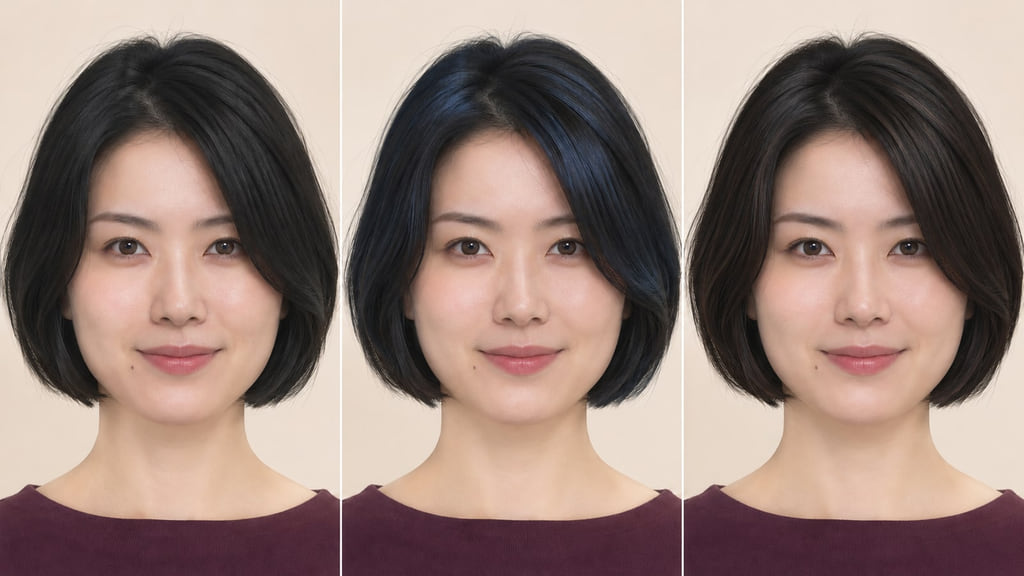
For a first choice, compare A, neutral black with separated dark strands, against B, blue-black at a similar depth with a visible blue reflection. If B draws your attention only because its photograph is brighter, compare physical samples or new photographs in the same light. The Wella depth-and-tone distinction is useful vocabulary here, but its numbering does not identify a formula across brands.
Neutral Black
This editorial example keeps the bob near-black and lets its darker interior show distinct strands. Compare it with the blue-black panel while holding the face, exposure, cut, and depth steady. Ask your colorist which parts of your current color can remain and whether the overall depth would still show the separation you want.
Blue-Black
Here the bob stays near-black while the lit strands carry a blue reflection. Look at that reflection beside neutral black, without treating a change in the model’s skin tone as evidence. Ask how your current base and previous color could affect the blue you see in ordinary light.
Soft Brown-Black
This direction retains a near-black outline but gives the hair a restrained brown base. The point is a softer reflection, not simply a lighter photograph. Compare it with neutral black at the same exposure, then ask which depth and which sections would let brown remain visible without losing the dark overall shape.
Account for Your Starting Base
Put a photograph of your natural roots beside one of your lengths. Note any previous coloring and the amount of length you want to keep. Wella’s professional guide treats hair history and underlying pigment as part of the starting point for a target shade. Its chart helps you name depth and tone; it cannot tell you from a screen image how your own hair will take color.
If you prefer neutral black, show where your current hair already has the depth you want and where it looks lighter. If you prefer blue-black but the reference assumes a different starting color or daily lighting, ask a colorist how to preserve a near-black base while discussing the achievable reflection. For a separate comparison with brown, see Brown vs. Brunette.
Plan Regrowth and Color Upkeep
Notice two changes separately: the difference between new roots and colored lengths, and any change in the reflection through the lengths. For neutral black, you may care most about keeping individual dark strands readable. For blue-black, you may care more about when the blue reflection becomes less visible in your usual light. Ask a colorist what care and refresh options fit the actual service and your routine; a photo cannot set a common appointment interval.
| Direction | Everyday check | Change to watch | Salon question |
|---|---|---|---|
| Neutral black | Do dark strands still separate in your usual styling? | New roots or lengths reading flatter than the reference | What would preserve visible detail? |
| Blue-black | Does blue still appear in your usual light? | A shift in reflection or a clearer root boundary | How would we maintain the reflection I prefer? |
| Soft brown-black | Does the brown remain muted beside the dark outline? | Brown becoming more or less prominent than intended | Which sections would we reassess first? |
Use the row that matches the change you are willing to notice and address. Daily styling, washing, and willingness to return to the salon matter more than an invented universal schedule.
Build Your Color Reference
Save the matched comparison above and one photograph of your own roots and lengths in neutral light. Add a side or back view that shows your current hair texture and the areas where you want the reflection to appear. A single front-facing image can hide the dark interior of a bob.
You can take this request to a consultation: “I want to compare neutral black with blue-black. My reference is a neutral-black bob with individual dark strands visible. Keep my natural density, and show me the difference in depth, reflection, and placement before we choose a service. Here is my current color and coloring history. Which direction can my hair support?”
Choose one direction and discuss it against your starting base. Bring your current-hair photo and the closest matched shade reference so you can point to the depth and reflection you want to keep.
Frequently Asked Questions
How do I compare these shades at a similar depth?
Use matched light and exposure, then compare the visible reflection while keeping the overall darkness roughly steady. Wella’s chart separates depth from tone within its own numbering system; use those words to describe the difference without assuming every brand shares the same codes.
Does my starting color change the achievable result?
Yes. Natural roots, previously colored lengths, and hair history are part of a colorist’s assessment. Bring a current-hair photo alongside the neutral-black and blue-black references so you can discuss the actual starting point.