
Fantasy Hair Colors by Skin Undertone: Depth, Reflection, and Choice
Choose a fashion-color direction by preference, starting canvas, and upkeep. Compare muted rose, cool blue, jewel violet, and clear copper-pink. Treat the result as a direction to discuss with a colorist; your starting base and color history affect what is achievable.

Read the Color Direction Before Choosing a Look
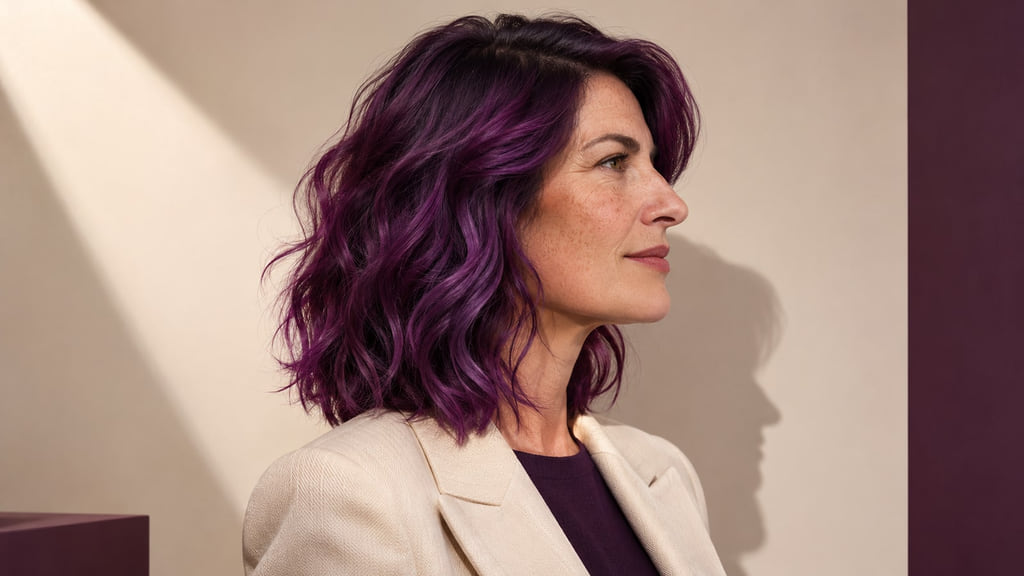
Picture deep violet shoulder-length waves with realistic dark roots. The violet is a reflection within a dark overall color; it does not make the whole shape pale. Start with the effect you want to see, then decide how much of your current depth to keep. Depth means how light or dark hair appears. Tone names a color direction within that depth. Wella’s hair-color chart guide puts depth before the stroke and tone after it in its own numbering system; other brands may use different notation.
Skin undertone can be a styling hypothesis, but it does not assign you a permitted shade. Compare a muted rose reflection with a cool blue reflection at similar apparent depth and in the same light. Notice which effect you prefer beside your skin, eyes, and brows. A selfie cannot diagnose undertone, and a swatch shown on a light canvas does not promise the same result on unlightened hair.
Compare Muted Rose, Cool Blue, and Jewel Violet
These four fantasy hair colors are editorial directions, not predictions for your hair. Compare the reflection, the depth beneath it, and where the color appears. The controlled image holds the face, cut, light, and framing close so the visible color direction is easier to judge.
| Direction | Visible reflection | Depth and placement to compare | Ask your colorist |
|---|---|---|---|
| Muted rose | Restrained pink-rose, without simply making the hair lighter | Keep a deeper root; compare a soft reflection through the lengths | How much rose can show on my current base? |
| Cool blue | Blue rather than pink or violet | Compare at similar apparent depth; decide between selected sections and a wider field | What would my starting color need for a clear blue reflection? |
| Jewel violet | Red-violet or violet within a deep color | Keep dark roots visible; decide where the violet catches light | Where can the violet show without losing the dark outline? |
| Clear copper-pink | Visible orange-red copper with pink | Keep the comparison at a similar depth; choose how close it sits to the face | How much copper would remain visible in ordinary light? |
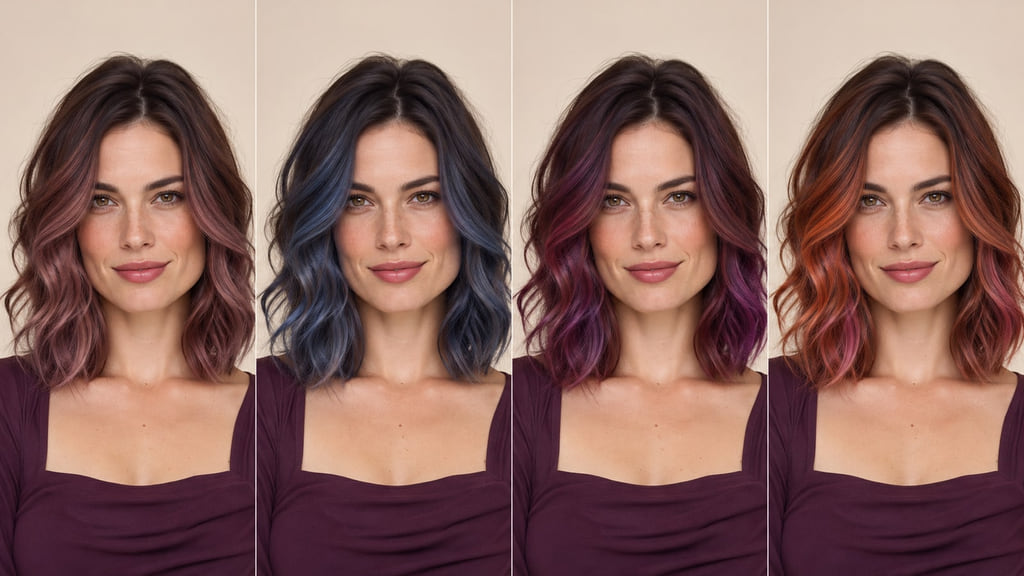
For a first decision, compare muted rose with cool blue. In this example, the rose stays subdued without becoming a pale pastel; the blue reads cool at a similar apparent depth. Mark the reflection you prefer and show both images to your colorist. A difference caused by brighter lighting or a lighter base would answer a different question.
Muted Rose
Muted rose adds a restrained pink reflection to the dark-rooted shape. Look for the rose on the waves rather than expecting a uniformly pale result. If you want to test reflection alone, keep the face, exposure, and apparent hair depth similar to the blue reference. Ask which parts of your current color could stay and which would need to change.
Cool Blue
Cool blue changes the visible reflection while keeping the cut and overall depth close to the rose example. Check whether you want blue across the outline or only in selected sections. Compare both choices at a fixed white balance; a cool-tinted photograph can make ordinary hair look bluer than it is. Ask what starting canvas the proposed blue service would require.
Jewel Violet
Jewel violet brings a red-violet reflection into a deep base, as in the dark-rooted waves above. The effect can remain concentrated where light catches the lengths. Decide whether you want that reflection beside the face, through the ends, or across the full shape. Ask your colorist how to keep the root depth you like while making the violet readable.
Clear Copper-Pink
Clear copper-pink shows an orange-red copper reflection, with pink also visible. It is a warmer-looking choice than the cool blue example at a similar apparent depth. Decide whether a face-framing section or a broader field better expresses the effect you want. Ask to compare references in neutral light before choosing a service.
Account for Your Starting Base
Take a photograph of your natural roots, previously colored lengths, and ends in neutral light. Record your color history and the length you want to keep. A muted rose reference may show a soft reflection on a prepared canvas, while your current hair may show a different depth or undertone after a service. Wella’s guide describes the starting point as including hair history and underlying pigment. Its shade numbers are useful within Wella’s system, not as a universal formula.
If cool blue is your favorite but your starting hair or routine does not support the reference, keep the decision focused on the visible goal. Discuss a deeper blue reflection or a smaller colored area as alternatives to a broad, lighter result. A colorist can assess the hair and explain what is feasible. For a separate look at changing shade directions, see Hair Color Trends 2027.
Plan Regrowth and Color Upkeep
Think about the version you would still enjoy as it changes. For muted rose, check whether the soft reflection remains visible and whether the root line suits the look. For cool blue, watch whether blue still reads clearly in your usual light. Ask your colorist how the proposed color and placement may change on your hair; the images cannot set a refresh schedule.
| Direction | Daily routine to consider | Change to watch | Salon conversation |
|---|---|---|---|
| Muted rose | Is the restrained rose still visible after your usual styling? | Reflection softens or roots become more distinct | Refresh rose or keep the quieter fade? |
| Cool blue | Can you still see blue in ordinary light? | Reflection shifts or becomes less clear | Keep the blue deep or change its placement? |
| Jewel violet | Does violet appear where you wanted it? | Dark roots expand or violet becomes subtle | Maintain the dark-rooted shape or move the reflection? |
| Clear copper-pink | Do copper and pink still read as the mix you chose? | One reflection becomes more noticeable than the other | Adjust the balance or the area colored? |
If you have little time for salon support, choose a placement and degree of change whose visible root and fade you are comfortable with. Bring a later photograph in the same light to the next consultation. That shows the color’s actual change on your hair better than an arbitrary timeline.
Build Your Color Reference
Save one photograph of your current hair in neutral light, the full dark-rooted outline from the hero, and the matched comparison with your two preferred directions marked. Add a closer view of the roots and ends. These references separate the shape you want to keep from the reflection you may change.
You can say: “I want to compare muted rose with cool blue. My reference is deep violet shoulder-length waves with realistic dark roots. Keep my natural density and show me the difference in depth, reflection, and placement before we choose a service.” This is a consultation brief, not a dye recipe or a promise of the pictured result.
Choose the direction you prefer, then discuss it using those references. You can also preview a color direction as an optional visual step. An on-screen preview cannot diagnose undertone or predict the chemical result on your starting hair.
Frequently Asked Questions
How do I compare these shades at a similar depth?
Hold the apparent lightness, exposure, white balance, cut, and framing close, then compare the reflection. Muted rose shows a subdued pink; cool blue shows blue. Wella’s chart guide separates depth from tone in its own numbering system, but its shade code does not measure your individual result.
Does my starting color change the achievable result?
Yes. Your natural base and color history affect what a service can achieve. The muted rose and cool blue examples show different reflections, but neither promises the pictured result on your hair. Bring a current-hair photo and ask which direction is feasible from your starting canvas.
Can a virtual preview predict the dye result?
No. A virtual preview can help you compare visible color direction and placement on screen. It cannot diagnose your skin undertone from a selfie or promise the same swatch result on unlightened hair. Ask a colorist to assess your starting base before choosing a service.