
Hair Colors for Soft Summer: A Practical Comparison

Compare muted cool-to-neutral directions while retaining natural depth. Mushroom brown keeps a brown base and subdued taupe reflection; soft beige blonde moves lighter without becoming bright; muted brunette dimension changes selected sections while keeping the base visible. Your starting color and color history shape what a colorist can achieve.

Read the Color Direction Before Choosing a Look
Use muted cool-to-neutral medium-brown waves as a starting reference, then decide whether you want to keep that depth or move lighter. In The Concept Wardrobe’s twelve-season framework, Soft Summer is described as muted and cool. That label can guide a visual comparison; it does not diagnose your coloring or select a dye for you. Compare the hair you have with the reflection and placement you want to see.
Muted describes the restraint of the color, not its lightness. A pale blonde can still look bright, while a medium brown can look softly gray-taupe. In this guide, mushroom brown and soft beige blonde are editorial examples at different depths, not a ranking of which looks better. Soft Autumn shares the muted idea but leans warmer in the same seasonal framework. Compare warm and cool reflections at similar apparent depth before deciding which direction interests you.
Compare Mushroom Brown, Soft Beige Blonde, and Muted Brunette Dimension
Depth is how light or dark the hair appears; reflection is the color you notice within that depth. In Wella’s color chart guide, the number before the stroke indicates depth and the number after it indicates tone. That notation belongs to Wella’s lines. Use the visible qualities below to compare photographs; leave any shade code or service choice to the colorist working with your hair.
| Direction | Depth and reflection | Placement | Question to ask |
|---|---|---|---|
| Mushroom brown | Brown base with muted taupe-brown reflection at a depth close to the starting brown | Mostly continuous brown; compare reflection without changing overall depth | Can my brown base stay while its reflection changes? |
| Soft beige blonde | Lighter blonde depth with balanced beige reflection and restrained saturation | Decide whether the lighter effect belongs throughout or in selected areas | How much lighter can my current lengths become? |
| Muted brunette dimension | Brown base stays visible; selected sections vary gently in depth | Place quieter lighter sections where you want movement | Which sections could change while the base remains? |
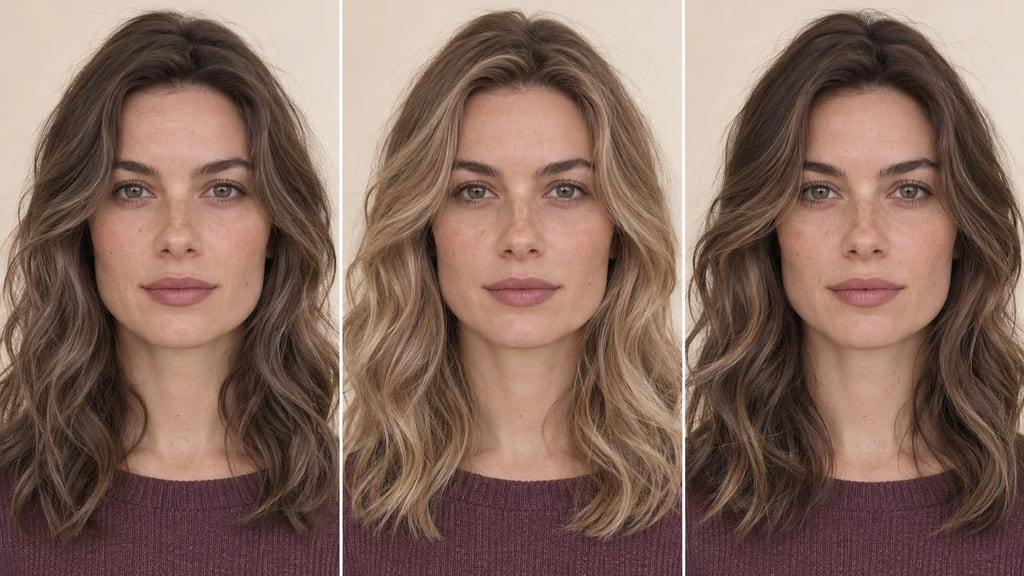
Start with mushroom brown beside soft beige blonde. The first keeps a brown field and changes its reflection; the second changes overall lightness as well. If the lighter result is too large a departure from your current hair, compare the first image with muted brunette dimension instead. These are visual references, not guaranteed outcomes or photographs of a client’s before and after.
Mushroom Brown
In this editorial example, mushroom brown shows muted taupe-brown reflection over a recognizable brown base. Compare it with your hair in similar light and at a similar apparent depth; otherwise a darker exposure may look cooler by accident. Do the roots, middle lengths, and ends still read as one brown direction? Ask which part of your current color could stay and where a reflection change would be visible.
Soft Beige Blonde
Here soft beige blonde is lighter, with a balanced beige reflection and subdued saturation. Lightness alone does not create the muted effect. Hold exposure and white balance steady when comparing it with mushroom brown so you can identify both the depth change and the reflection change. Ask whether the lighter direction is plausible throughout your hair or better discussed as selected placement.
Muted Brunette Dimension
This example retains the brown base and places a quieter difference in selected sections. Look for visible movement without turning every wave into a pale ribbon. Compare it with mushroom brown at a similar base depth to isolate placement, then check whether the lighter sections change the overall impression. Ask your colorist which areas of your current color can remain and which could take the added dimension.
Account for Your Starting Base
Photograph your natural roots, colored lengths, and ends in neutral light. Note any previous color and the length you want to keep. Wella’s color planning guide treats hair history and underlying pigment as part of the starting point. A mushroom-brown reference may be close to your roots but unlike previously lightened ends, so ask what can be retained and what needs a separate plan. Wella’s depth and tone numbers should not be treated as codes shared by every manufacturer.
Soft beige blonde raises a different question if your current hair is medium brown: which areas would need to become lighter, and how would that change your routine? If an all-over lighter direction does not suit the amount of change you want, retain more of the base and compare smaller areas of brightness. A colorist can assess your hair’s condition and history before discussing a service. For a broader family comparison, see Best Hair Colors for Light Summer or Best Cool Summer Hair Colors (True Summer); each answers a different seasonal question.
Plan Regrowth and Color Upkeep
For mushroom brown, watch whether the taupe reflection remains visible in your usual light and whether new roots create a boundary you dislike. For soft beige blonde, notice the difference between the new roots and lighter lengths, and whether the beige reflection still reads as restrained. These are cues to discuss a refresh or a placement change, not a universal appointment schedule.
| Direction | Daily routine question | Change to watch | Salon support to discuss |
|---|---|---|---|
| Mushroom brown | Does the brown still show its muted reflection in your usual light? | Reflection shifts or roots stand apart from the lengths | Refresh reflection or rethink the transition |
| Soft beige blonde | Are you comfortable seeing a lighter overall result each day? | Root contrast or a brighter-looking blonde becomes more noticeable | Maintain the lighter areas or reduce their reach |
| Muted brunette dimension | Do the selected sections still create the movement you wanted? | Lighter sections fade or their placement becomes less clear | Adjust placement while retaining the brown base |
Choose the direction whose visible changes and salon support fit your routine. Your colorist can help decide what maintenance would mean for your actual starting hair.
Build Your Color Reference
Save a full-outline photograph of the direction you prefer and a closer view of its roots, middle lengths, and ends. Add a neutral-light photo of your own hair. Try to keep exposure and white balance similar, then mark the depth, reflection, and placement you want to compare.
You could say: “I want to compare mushroom brown with soft beige blonde. My reference is muted cool-neutral medium-brown waves. Keep the natural density and show me the difference in depth, reflection, and placement before we choose a service.” This is a visual request, not a color formula or a promise to reproduce someone else’s hair.
Take those references to a colorist and choose one muted cool-to-neutral direction to discuss. You can also preview a color direction as an optional visual check. A screen preview cannot diagnose a season or predict the chemical result on your hair.
Frequently Asked Questions
Is this a diagnosis or a styling framework?
It is a styling framework for comparing visible color. The cited twelve-season model calls Soft Summer muted and cool; Wella’s chart separates depth from tone. Neither source can determine your personal result from a photograph. Use the terms to make a clearer reference for a colorist.
Do I need to dye my hair to fit a palette?
No. You can use the words to describe what you already like in your natural color. Mushroom brown keeps a brown field, while soft beige blonde shows a lighter one; comparing them does not obligate you to change either depth or reflection.
How can I compare depth and reflection?
Use photographs with similar light, exposure, and white balance. To compare reflection, keep apparent depth close; to compare depth, try to keep the reflection similar. A muted color is not necessarily pale. If you are comparing Soft Summer with the warmer Soft Autumn direction, keep depth steady before judging temperature.