
Hair Colors for Light Summer: A Practical Comparison

Compare light cool-to-neutral-cool directions with soft contrast: beige-ash blonde, soft light brown, and muted blonde dimension. Your starting base and color history affect what a colorist can achieve.

Read the Color Direction Before Choosing a Look
A soft beige-ash blonde lob with natural root depth gives you a concrete starting point: the lengths look light, while the root keeps a quieter transition. In The Concept Wardrobe’s twelve-season framework, Light Summer is described as light and cool. That describes a color direction within one styling model, not a diagnosis or a rule for your hair.
Depth is how light or dark hair appears; tone is its visible color direction. Wella’s hair color chart uses the number before the stroke for depth and the number after it for tone in its own system. A beige-ash blonde and a soft light brown can both have restrained reflection, but they make different depth decisions. Neither requires you to choose platinum. Light Spring belongs to a warmer, clearer direction in the cited seasonal framework; compare it at similar depth and lighting if those labels feel close.
Compare Beige-Ash Blonde, Soft Light Brown, and Muted Blonde Dimension
These are editorial examples for comparing visible qualities, not shades guaranteed to suit everyone. Begin with depth, then examine reflection and placement. Keep exposure and white balance similar across your references so a warmer photograph does not decide for you.
| Direction | Depth and reflection | Placement to compare | Question for your colorist |
|---|---|---|---|
| Beige-ash blonde | Light blonde with balanced beige and subdued cool ash reflection | Light lengths connected to natural root depth | Can I keep the root depth while changing the reflection? |
| Soft light brown | A brown base with restrained saturation, rather than simply a darker blonde | Brown through the main shape, with optional quiet dimension | Which part of my brown base should remain? |
| Muted blonde dimension | Lighter blonde sections with restrained saturation and a visible base | Selected lighter sections rather than uniform brightness | Where would the lighter sections make a visible difference? |
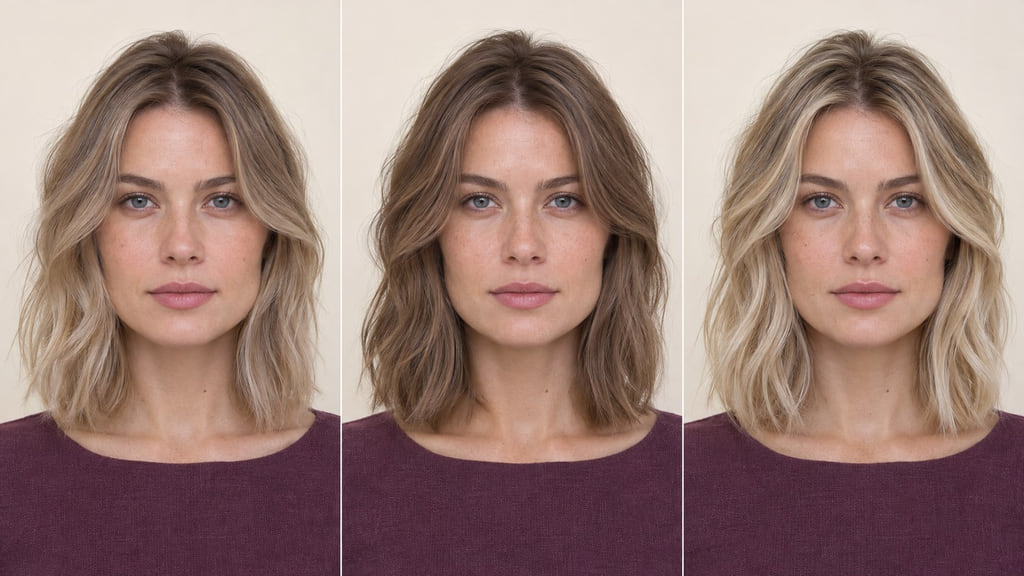
For a first choice, compare A, beige-ash blonde, with B, soft light brown. The blonde shows a balanced beige reflection softened by cool ash; the brown keeps a brown base and limits saturation. Decide whether you want to change the overall depth or preserve more of the brown field. The third panel adds selected lighter sections while retaining a visible base. Use the three views to name the visible difference you prefer before discussing what your own hair can achieve.
Beige-Ash Blonde
This example uses balanced beige with a subdued cool ash reflection. Compare it with another blonde at similar depth and fixed white balance to see whether the reflection, rather than the brightness, is what you prefer. Save a view that includes the roots and ends, then ask which part of your current color can stay while the lengths move toward this direction.
Soft Light Brown
This example keeps a brown base and restrains saturation instead of treating every Light Summer direction as a blonde. Compare it with beige-ash blonde in similar light, then decide whether the deeper overall field gives the softness you want. Ask which brown areas should remain visible and whether any lighter section is needed at all.
Muted Blonde Dimension
Here the lighter blonde appears in selected sections, while a visible base still connects the color to the roots. Keep the face, exposure, and cut length consistent when comparing it with an all-over blonde reference. Ask where the lighter sections would change the outline and where your current base can remain.
Account for Your Starting Base
Look separately at your natural roots, colored lengths, and ends. Note earlier color, the length you want to keep, and how much visible change you want. A beige-ash blonde reference cannot tell you what your current base can reach. A colorist can assess the hair in person and explain whether the goal calls for a depth change, a reflection change, selected placement, or a different plan. Wella’s depth and tone numbers are useful vocabulary within its system, not universal shade codes.
If your hair already reads light brown, soft light brown may preserve more of your starting depth than a blonde reference. If your routine leaves little room for frequent color work, ask whether a quieter placement would still show the reflection you like. Keep the aim of soft, light cool-to-neutral-cool contrast, then discuss the practical route with your colorist. For adjacent comparisons, see Summer Hair Colors, Best Cool Summer Hair Colors (True Summer), and Best Hair Colors for Soft Summer.
Plan Regrowth and Color Upkeep
With beige-ash blonde, notice whether a root line becomes more prominent or the reflection starts to look warmer than the reference you chose. Soft light brown may make a depth change less apparent, but its reflection can still shift. For muted blonde dimension, watch whether the lighter sections still look intentionally placed as they grow. Take a photograph when you like the color and another when you want to change it; those observations can guide the next salon conversation.
| Direction | Daily observation | Regrowth or fading to watch | Salon conversation |
|---|---|---|---|
| Beige-ash blonde | Does the beige-ash reflection still look restrained in ordinary light? | A stronger root boundary or warmer-looking lengths | How much root depth should remain visible? |
| Soft light brown | Does the brown base still show the quiet contrast you wanted? | Reflection changing while depth looks similar | Would you refresh tone, placement, or neither? |
| Muted blonde dimension | Are the lighter sections still visible without dominating the base? | Placement moving away from the original focal area | Which sections would you want to keep or move? |
Your desired upkeep depends on your starting color, placement, and tolerance for change; there is no single appointment interval for these examples. If you use color at home, follow the instructions for that product. The FDA’s hair dye guidance explains the importance of following package directions and allergy testing.
Build Your Color Reference
Save one unfiltered photograph of the direction you like and another showing the roots and ends. Add a current photograph of your own hair in neutral light. Mark the feature you want to keep, such as natural root depth, and the feature you want to change, such as the beige-ash reflection or the placement of lighter sections.
You can say: “I want to compare beige-ash blonde with soft light brown. My reference is a soft beige-ash blonde lob with natural root depth. Keep my natural density and show me the difference in depth, reflection, and placement before we choose a service.” This is a comparison request, not a dye formula or a promise that the reference will match your hair exactly.
Choose the closer direction and bring both photographs to a colorist. You can also preview a color direction to compare the visual idea, but a screen preview cannot predict lift, a chemical result, or your individual suitability.
Frequently Asked Questions
Is this a diagnosis or a styling framework?
It is a styling framework. Light Summer is described as light and cool in The Concept Wardrobe’s twelve-season model. Use that vocabulary to compare hair depth and reflection; a palette label or photograph cannot diagnose you.
Do I need to dye my hair to fit a palette?
No. Your natural hair can be the reference you keep. Beige-ash blonde and soft light brown are options to compare if you want a change, not obligations attached to a palette.
How can I compare depth and reflection?
Use photographs with similar exposure and white balance. First compare how light or dark the hair appears, then compare the beige or ash reflection at a similar depth. A platinum reference is not required for Light Summer, and Light Spring’s warmer direction is a separate comparison. Bring the two closest examples to your colorist.