
Hair Colors for Warm Spring: A Practical Comparison
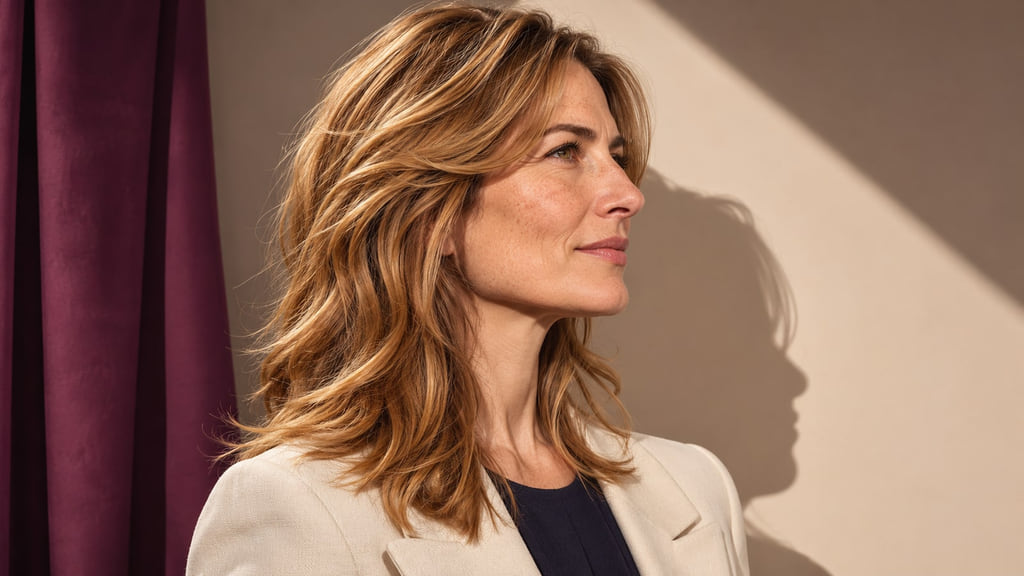
Compare warm, clear directions at realistic lightness and contrast: golden blonde, warm light brown, and clear copper. Treat the result as a direction to discuss with a colorist; your starting base and color history affect what is achievable.

Read the Color Direction Before Choosing a Look
Look first at the clear golden light-brown layers in the photograph: the brown depth remains visible while the golden reflection catches the light. That is one practical way to compare warm spring hair colors. Decide whether you want a lighter blonde depth, a brown base, or a copper reflection before choosing a placement or service.
The Concept Wardrobe’s twelve-season framework calls True Spring warm and bright. Warm Spring is another name used for that warmth-led direction in this framework. Use the label to compare color references, not to diagnose your coloring or declare one shade suitable for everyone. Bright Spring places more emphasis on clarity; Warm Autumn describes a softer, earthier warm direction. Golden blonde emphasizes lightness, while warm light brown keeps more visible brown depth.
Compare Golden Blonde, Warm Light Brown, and Clear Copper
Depth is how light or dark the hair appears; tone names its visible color direction. Wella’s hair-color chart guide uses the number before a stroke for depth and the number after it for tone. That notation belongs to Wella’s system, not every color brand. Compare the three directions under the same exposure and white balance. Hold depth similar when judging reflection, or hold reflection similar when judging depth.
| Direction | Depth and reflection | Placement to compare | Question for your colorist |
|---|---|---|---|
| Golden blonde | Lighter blonde depth with a visible golden reflection | Brightness throughout or selected lighter pieces near the face | Can we compare the gold at a depth realistic for my base? |
| Warm light brown | Recognizable brown base with a clear warm reflection | Even brown color or warm variation through the layers | Which brown sections should stay close to my current color? |
| Clear copper | Visible orange-red copper reflection at a chosen depth | Copper throughout or concentrated through selected lengths | Where do I want the copper to be most visible? |
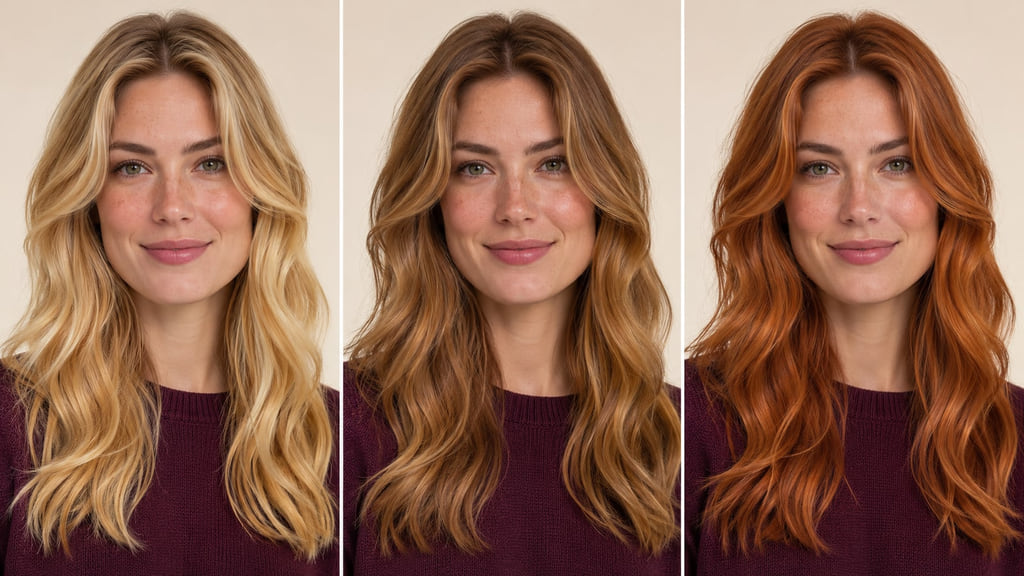
For a first decision, put golden blonde beside warm light brown. The blonde is lighter with a golden reflection; the brown retains a brown base. If your reference photographs differ in brightness as well as shade, find closer exposures before deciding which visible feature you prefer. A photograph cannot predict the result on your own hair.
Golden Blonde
Golden blonde shows gold at a lighter blonde depth. Compare its reflection with another reference at a similar depth and fixed white balance; otherwise added brightness may be mistaken for a clearer tone. Ask which part of your current color or shape you want to keep, and whether lighter pieces belong throughout or in selected areas. Your starting base determines what a colorist can plan.
Warm Light Brown
Warm light brown keeps a brown base and lets the warm reflection show within it. Compare it with another brown photograph of similar depth and exposure, then look at how warmth sits around the face and through the layers. Ask which sections should remain close to your existing brown and which, if any, should change.
Clear Copper
Clear copper has a visible orange-red reflection. Compare it under fixed white balance with a shade of similar depth so warm lighting does not create the apparent difference. Decide whether you want copper near the roots, through the lengths, or only in selected pieces, and ask what part of the existing color can stay.
Account for Your Starting Base
Bring photographs of your natural roots, previously colored lengths, and ends in neutral light. A golden blonde reference may express the reflection you like while hiding the change in depth it would require from your own base. Tell your colorist about previous color and the length you want to keep. Manufacturer shade numbers can help name depth and tone within that manufacturer’s system; they cannot assess your hair from a screen.
Warm light brown may be a more useful comparison if you want to retain a brown base rather than choose lighter pieces. That is a question about your current hair and routine, not a universal rule for Warm Spring. If you are still comparing neighboring Spring directions, see Best Light Spring Hair Colors and Best Bright Spring Hair Colors.
Plan Regrowth and Color Upkeep
With golden blonde, watch the contrast between new roots and lighter lengths, along with any change in the golden reflection. With warm light brown, decide whether the brown still reads at the depth you intended. With clear copper, notice whether the orange-red reflection remains visible where you wanted it. Use those observations to discuss a refresh or a change in placement; no single appointment interval fits every base and color history.
| Direction | Everyday observation | Change to watch | Salon discussion |
|---|---|---|---|
| Golden blonde | Does the gold remain clear in your usual light? | Root contrast or a shift in reflection | Keep the depth, refresh the tone, or move the lighter pieces? |
| Warm light brown | Can you still see warmth within the brown base? | Reflection or contrast against natural roots | Keep more of the base or adjust where warmth appears? |
| Clear copper | Is copper still visible in the areas you chose? | A softer reflection or a stronger root transition | How much copper do you want to maintain? |
Choose the direction whose visible changes and salon support fit your routine. Bring photographs taken when you like the color and when you would want it adjusted.
Build Your Color Reference
Save one neutral-light photograph of your current roots and lengths, plus two color references with similar framing. Include a full-hair view and a closer view of the roots and reflection. Mark what you want changed and what you want preserved.
You can say: “I want to compare golden blonde with warm light brown. My reference is clear golden light-brown layers with warm dimension. Keep the natural density and show me the difference in depth, reflection, and placement before we choose a service.” That gives a colorist a decision to discuss, not a dye recipe or a promise of an identical result.
Choose the warm, clear direction you prefer at a depth realistic for your base, then discuss it using those references. You can also preview a color direction as an optional visual step. A screen preview cannot diagnose a season or predict the chemical result.
Frequently Asked Questions
Is this a diagnosis or a styling framework?
It is a styling framework. The cited twelve-season model describes True Spring as warm and bright; depth and tone are ways to compare hair-color examples. Neither the label nor a photograph establishes an individual diagnosis or guaranteed result.
Do I need to dye my hair to fit a palette?
No. Your natural hair can be the starting reference. Golden blonde and warm light brown are optional directions to compare if you want a change; a palette label does not require either choice.
How can I compare depth and reflection?
Use similar light, exposure, and framing. Compare how light or dark the samples appear, then compare their golden, brown, or copper reflection at a similar depth. If you are also considering Bright Spring or Warm Autumn, keep the comparison controlled and use the season names as styling vocabulary rather than absolute rules.