
Wolf Cut: Shape, Texture, and Upkeep

Choose a shag-mullet balance by crown volume, face frame, and retained length. Compare short, medium, long, and softer wolf outlines, then check the shape against your natural texture, density, and routine.

A wolf cut keeps a shorter, layered upper shape against longer hair at the back. The most useful choice is the distance between those lengths, where the front frame ends, and how much hair remains at the perimeter. Bring a reference that shows the full outline in your usual dry texture rather than relying on the haircut name alone.
Read the Cut Outline Before Choosing a Look
Start with three visible lines: the shortest crown layer, the face frame, and the longest back edge or perimeter. A medium wolf can show a clearly separated crown and nape without the long tail of a more dramatic version. John Frieda’s wolf cut guide describes the cut as combining shag and mullet elements, with shorter top layers and longer sides and back. That combination matters more than a fixed length label.
A shag can have short crown layers too, but a wolf reference should make the retained back length and its contrast with the upper shape easy to see. Look at a side or back view, not only a face-on portrait. Layers also change where hair’s visual weight sits. Sam Villa’s layering explanation distinguishes patterns by their weight distribution and how visible the cutting line becomes; horizontal sectioning is one technique that can build weight. Use that language to discuss an outline with your stylist, not as a cutting recipe or a promise that one technique will suit every head of hair.
The variants below are editorial examples of silhouettes. Their labels do not guarantee the same volume on straight, wavy, curly, or coily hair, and none automatically becomes a wash-and-go cut.
Compare Short Wolf, Medium Wolf, and Long Wolf
Compare these outlines at the same camera angle if possible. Keep the crown, front, and lower ends in view, then decide which difference you actually want to preserve.
| Outline | Crown and front | Retained perimeter | Decision to check |
|---|---|---|---|
| Short wolf | Short upper layers and a compact face frame dominate. | A longer nape still shows behind the crown, even with a short overall endpoint. | Does the profile show enough crown-to-nape contrast? |
| Medium wolf | Separated crown layers and a visible face frame. | The nape reaches a shoulder-zone landmark in this example. | Can you keep the lower edge substantial enough for the contrast you want? |
| Long wolf | The shorter top remains visible above more length. | Longer ends extend well below the shoulders. | Are the retained ends visible and full enough in your reference? |
| Softer wolf outline | Upper layers connect more gradually through the sides. | The nape stays longer, with a less abrupt transition. | Do you still see a wolf silhouette rather than general shag layers? |
For example, choose between a short wolf with a visible nape below a compact crown and a medium wolf with more length at the shoulder. Both can show a shag-mullet balance; the question is which dry endpoint and degree of separation you can describe. A front-only photo or different styling in the two references can obscure that decision.
Short Wolf
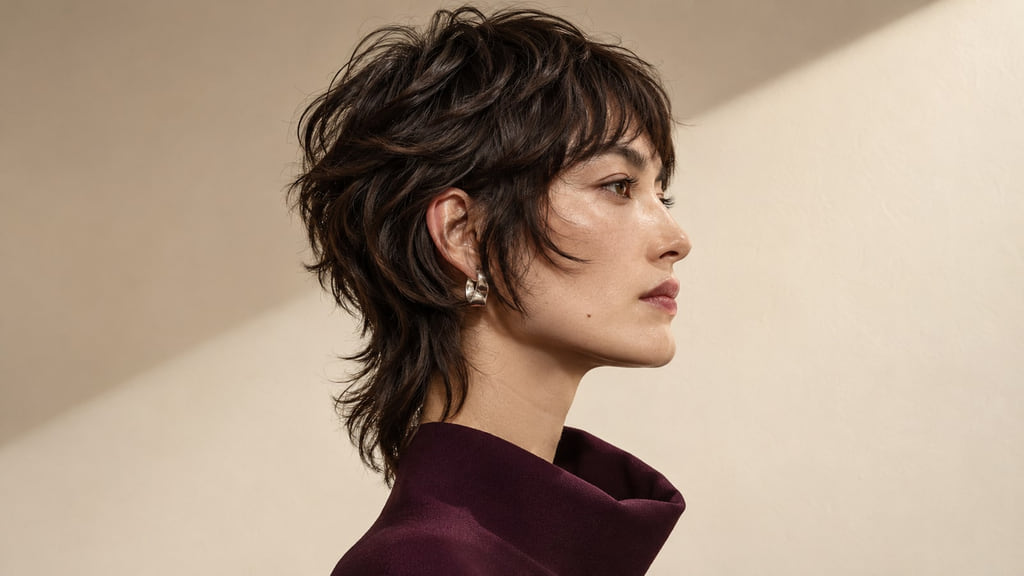
This is a short cut with a longer back section, not simply a short shag with uniform layers. Ask where the longest nape pieces will land dry and which front section frames your face. If your reference depends on extra lift at the crown, check how much of that lift is cut shape and how much is styling.
Medium Wolf
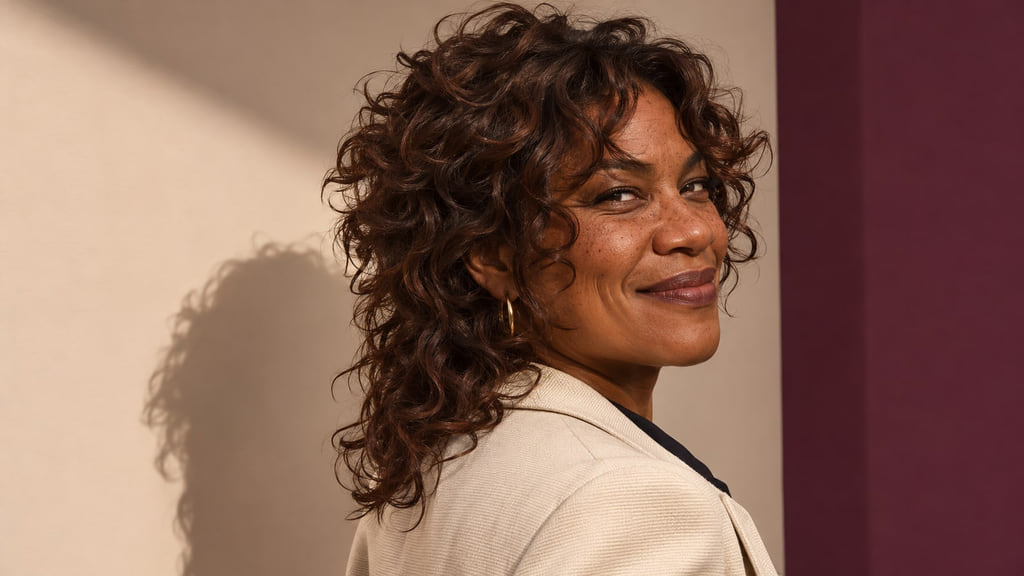
A medium version gives you room to separate the top from the nape without relying on very long ends. Compare the shortest crown piece and the remaining lower density in the same view. If the lower section looks too thin for your preference, ask whether a softer transition would protect more visible weight.
Long Wolf
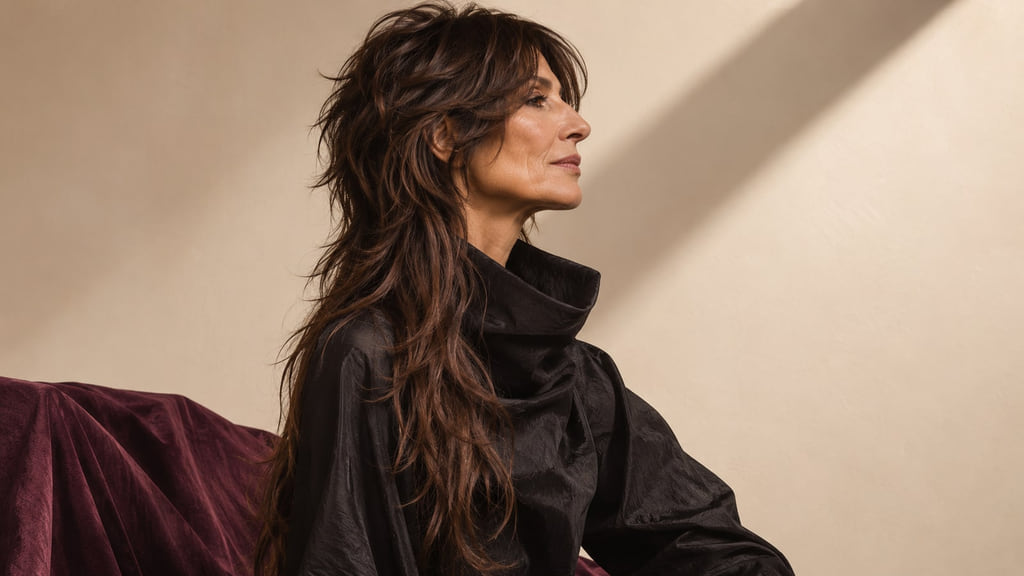
Long length can make the short crown look more separate. Keep the ends uncropped in your reference; otherwise you cannot judge the actual lower line. Ask which lengths stay intact and where the shorter layers will connect through the sides, especially if preserving lower fullness matters to you.
Softer Wolf Outline

Choose this reference when you want a quieter jump between crown and back. It still needs a visible longer nape to distinguish it from a general shag. Show your stylist a side view and point to the transition you want softened rather than asking only for “less layering.”
Account for Texture, Density, and Growth Direction
Texture describes how the hair falls; density is how much hair occupies the shape. Neither is the same as the thickness of one strand. On a short wolf, a strong wave or curl can move the dry nape endpoint upward, while a growth pattern at the front can change where fringe rests. On lower-density hair, removing too much from the lower section can make the intended contrast read as sparse ends. These are consultation points, not rules that exclude a texture or face shape.
Bring a photo of your hair in its ordinary dry finish. For a medium wolf, compare that photo with the styled reference: where does your crown naturally expand, where does the front fall, and how much weight remains at the bottom? If the reference depends on a finish you rarely do, ask for a softer upper transition or a different perimeter. A stylist can adapt the shape to the hair in front of them.
If your real decision is the connected layer pattern rather than the retained nape, compare shag haircuts and layered haircuts. A butterfly haircut places its main short-over-long contrast at the face frame. Keep those as separate silhouette questions.
Plan Styling and Grow-Out
Test the cut in the finish you can repeat. A short wolf with a lifted crown and separated fringe may need a daily reset to keep that contrast visible; a medium wolf may look quieter when air-dried. Notice how your own hair behaves after washing and on the next day before assuming the reference is effortless. Ask your stylist to show the expected shape without a full editorial set.
| Outline | Everyday check | What changes as it grows | Salon conversation |
|---|---|---|---|
| Short wolf | Can you reset the crown and fringe when they flatten? | The nape-to-crown gap may look less intentional. | Which short section needs to stay distinct? |
| Medium wolf | Does the lower edge remain visible in your normal finish? | The front and crown move away from chosen landmarks. | How much lower weight should remain? |
| Long wolf | Can you see both the top layers and the long ends? | The top-to-end contrast may become softer. | Which long length should be protected? |
| Softer wolf outline | Does the gentler transition still read clearly? | It may blend into a general layered shape. | When would you refresh the crown separation? |
There is no universal trim interval for these outlines. Revisit the cut when the fringe, crown, or perimeter no longer sits where you chose, or when the styling needed to recreate the reference exceeds your routine.
Build Your Haircut Reference
Save a side view that shows the crown-to-nape relationship, a back view with the ends uncropped, and a front view for the face frame. Add a photo of your own hair dry and styled as you normally wear it. Similar camera angles and lighting make a short-versus-medium comparison more useful than two unrelated fashion portraits.
You could say: “I want to compare a short wolf with a medium wolf. My medium reference has clearly separated crown layers and nape length. Please show me the difference in perimeter, front framing, and crown shape on my natural density and dry texture before we choose the cut. I want to keep enough weight in the lower section, and I need to know what each version looks like without a full set.”
Take the clearest two references to a stylist. Point to the length you want to keep and ask how the crown and front will sit in your ordinary dry finish.
Frequently Asked Questions
How will this shape work with my natural texture?
Check the dry crown, face frame, and nape on your own hair. Waves, curls, coils, density, and growth direction can change how clearly the shorter layers separate from the retained length. Face shape is one visual reference, but it cannot decide the cut for you. Bring a dry photo and ask what the selected outline would require in your routine.
What changes as the cut grows out?
The crown and fringe move away from their original landmarks, and the nape becomes longer relative to the front. A short wolf may lose its compact contrast sooner to your eye than a medium version; your preference determines when that matters. Judge the visible shape rather than a fixed calendar.
What should I show my stylist?
Bring front, side, and back views, with the full lower ends visible, plus your own dry-hair photo. Point to the shorter crown, the face frame, and the retained nape. If the reference looks like an ordinary shag or requires styling you will not repeat, say which part of the wolf outline matters most and ask for a practical adaptation.