
Low-Maintenance Hair Colors: Depth, Reflection, and Choice

Define low maintenance by visible regrowth, fading tolerance, and your schedule. Compare near-base brunette, rooted blonde, fine dimension, and intentional gray. Treat your choice as a direction to discuss with a colorist; your starting base and color history affect what is achievable.

Read the Color Direction Before Choosing a Look
If you want fewer visible changes between appointments, start with the change you notice first: a root boundary, a shift in reflection, or a placement that grows away from your preferred outline. A rooted brunette with soft, low-contrast highlights is one editorial example. Its dark base remains readable, while the lighter strands give you a separate tonal change to watch. Your schedule matters as much as the shade name.
Compare depth, how light or dark the hair looks, separately from tone, its visible color direction. In Wella Professionals’ color chart, the number before the stroke identifies depth and the number after it identifies tone. That describes Wella’s numbering system, not a universal code across brands. Near-base brunette and rooted blonde make different demands on your starting hair and tolerance for change; neither is inherently easier for everyone. No single number of weeks, price, or damage level defines low maintenance.
Compare Near-Base Brunette, Rooted Blonde, Fine Dimension, and Intentional Gray
Use the same light and framing when you compare these editorial examples. Check where the lighter or deeper section begins, how far its depth differs from the base, and whether its reflection changes the look you want. The table gives you a first choice to take to a consultation, not a forecast of a service on your hair.
| Direction | Visible reference | What may change first | Question for your colorist |
|---|---|---|---|
| Near-base brunette | Brown base with subtle reflection at a similar depth | Tone through the lengths, even if the root boundary stays quiet | Which reflection can stay close to my current depth? |
| Rooted blonde | Lighter blonde lengths, deeper natural-looking root, readable transition | The root-to-length transition or the blonde reflection | What route is realistic from my current base and color history? |
| Fine dimension | Narrow, separate lighter pieces with a visible starting point | The placement as hair grows or the tone of the light pieces | Where should the first lighter section begin? |
| Intentional gray | Visible natural gray with honest variation at the roots | The balance of gray and previously colored lengths | How much gray can remain visible through the transition? |
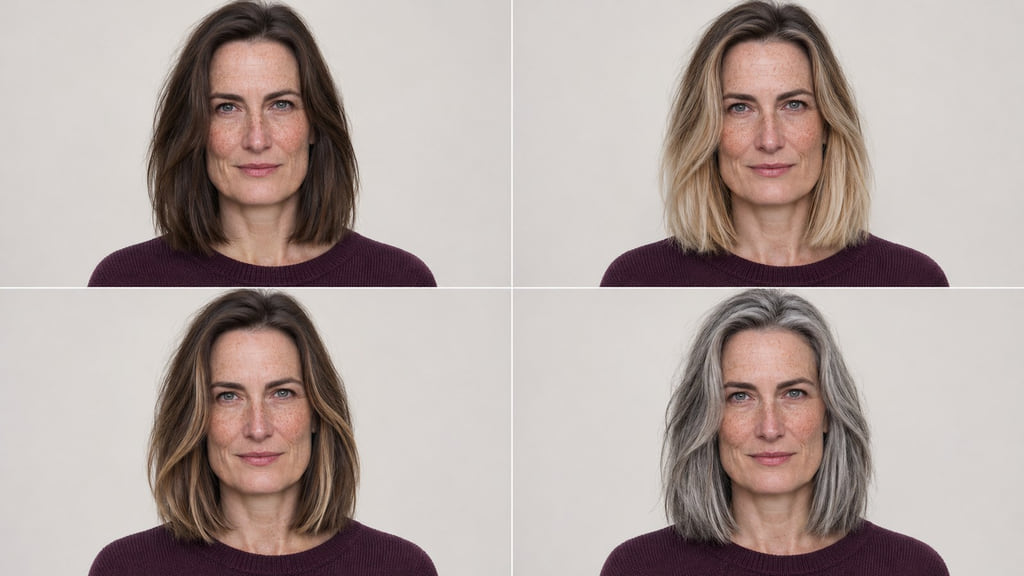
For a filled comparison, put A, near-base brunette, beside B, rooted blonde. A keeps a brown base and asks how much the reflection can vary at similar depth. B keeps a deeper root but moves the lengths to a lighter blonde depth. Save the reference that shows the root and ends together; the visible difference, rather than a promise of easy upkeep, is your consultation starting point.
Near-Base Brunette
In this editorial example, a brown base remains dominant while a subtle reflection changes the surface color. Compare two brunette photos at similar depth and fixed white balance before deciding whether you prefer a warmer or cooler direction. Ask which area of your current color should change and which part of the base should stay visible.
Rooted Blonde
This reference has lighter blonde lengths and a deeper, natural-looking root with a readable transition. Keep the model, exposure, and cut similar when comparing it with the brunette option so the difference in depth is clear. Ask how your current roots and colored lengths would affect that transition; the photo cannot determine the service.
Fine Dimension
Look for narrow, separated lighter pieces whose starting points you can see, especially near the front. Hold the base, exposure, and face steady when comparing placement: moving a narrow piece closer to the part can change its visibility without changing every strand. Ask where the first lighter section would begin on the way you actually part your hair.
Intentional Gray
Visible gray can be the desired appearance rather than something to cover. Use a reference that shows variation at the roots and through the lengths, including any older color still present. Ask which gray strands you want to leave visible. For the separate transition decision, see Gray Blending Ideas and Best Hair Colors for Gray Hair.
Account for Your Starting Base
Show your natural roots, any previous color, and the ends in one view. A near-base brunette reference may look close to untreated brown hair, yet previously lightened lengths can respond differently from the roots. Wella’s chart gives you language for depth and tone; it does not tell you what a particular head of hair can reach. Keep your color history, length, and desired amount of change in the discussion rather than choosing from a reference photo alone.
If your hair is darker or already colored and your favorite reference is rooted blonde, keep the goal of a softer visible transition while asking what is feasible. You may choose a smaller depth change or a different placement after the colorist assesses your hair. Root Shadow vs. Root Smudge explains that narrower root-finish decision. No reference photo can guarantee a chemical outcome.
Plan Regrowth and Color Upkeep
Check your roots and lengths separately in the same everyday light. With near-base brunette, you may accept new growth but want the reflection refreshed when the lengths no longer look like your reference. With rooted blonde, the darker root may remain intentional while the blonde tone changes or the transition travels lower. Decide which visible change you would tolerate until your next salon visit, and describe that change to your colorist instead of asking for a universal interval.
| Direction | Everyday check | Regrowth or fading to watch | Salon support to discuss |
|---|---|---|---|
| Near-base brunette | Does the reflection still look like the reference in your usual light? | Subtle roots; a tonal shift through colored lengths | Whether a tonal refresh or new placement matters more |
| Rooted blonde | Is the deeper-root transition still where you want it? | A moving boundary and changing blonde reflection | Which change you want addressed first |
| Fine dimension | Are individual lighter pieces visible in your usual part? | The starting point moves as hair grows; light pieces may change tone | Whether to repeat placement or revisit tone |
| Intentional gray | Is the amount of visible natural gray still your preference? | More gray at the roots beside any older color | Whether to leave it, blend a boundary, or change the lengths |
Build Your Color Reference
Save a photo in neutral light that shows the crown, part, and ends. Add a second view of your own hair in similar light, including the root and any previously colored length. You can take this filled request to a consultation:
I want to compare near-base brunette with rooted blonde. My reference is rooted brunette with soft, low-contrast highlights. Keep the natural density and show me the difference in depth, reflection, and placement before we choose a service. My first concern is visible regrowth; I can accept some tonal change between visits, but I want to discuss what fits my schedule and color history.
The request describes what you want to see, not a formula or a guarantee that your hair will match the photo. Choose the direction whose regrowth and fading you can live with, then discuss the reference with your colorist.
Frequently Asked Questions
How do I compare these shades at a similar depth?
Use photos with similar lighting, exposure, and framing. First match how light or dark the hair appears, then compare its warmer, cooler, or more neutral reflection. Wella’s depth and tone distinction can help name those separate observations, but its shade numbers apply to its own color system.
Does my starting color change the achievable result?
Yes. A near-base brunette reference and a rooted blonde reference can require different changes from the same starting hair. Show your natural root, previously colored areas, and ends to a colorist. The feasible service and upkeep depend on that starting point, not on which option looks quieter in a photo.
What makes a color low maintenance for my schedule?
Name the change you are willing to see between salon visits: new growth at the root, fading through the lengths, or a shift in the placement of lighter pieces. Tell your colorist which change you would want to address first. There is no universal number of weeks, price, or damage claim for a low-maintenance result; the plan depends on the service and your starting hair.