
Hair Colors for Pale Skin to Look Bright and Luminous: Depth, Reflection, and Choice
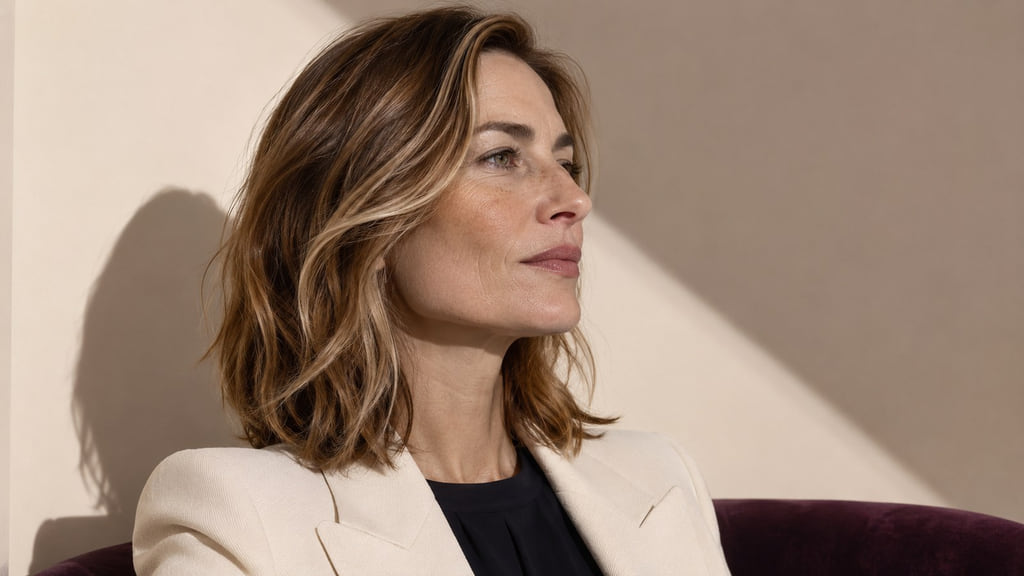
Compare a soft face frame, gentler root contrast, reflective midtone, and richer perimeter for a brighter-looking frame around pale skin. Use your preferred direction to discuss your starting base and upkeep with a colorist.

To find a brighter-looking frame around pale skin, compare where the lighter or deeper hair sits, how much it differs from your starting depth, and how it reflects neutral light. A soft face frame, gentler root contrast, reflective midtone, and richer perimeter make different visual choices. Bring two directions to a colorist; your natural base and color history determine how either could be achieved.
Read the Color Direction Before Choosing a Look
Picture neutral light-brown hair with a narrow brighter section beside the face. You can change its placement without making the whole head lighter, or keep the placement and compare a quieter root against a more distinct one. These are ways of arranging hair color beside pale skin, not ways of changing the skin itself.
Depth is how light or dark the hair appears; tone names its color direction. In Wella’s hair color chart, the number before the stroke indicates depth and the number after it indicates tone. Those numbers describe Wella’s system, not a universal shade code or a formula for your hair. Use the distinction to describe what you see in a reference: is the change in lightness, reflection, or both?
“Luminous” here is a subjective impression of a clear, dimensional hair frame under steady light. Pale describes skin depth, not a single undertone or a palette everyone should wear. If you want a broader shade choice by undertone, use the fair-skin guide. Here, compare a soft face frame with gentler root contrast as two different arrangements, without ranking anyone’s appearance.
Compare Soft Face Frame, Gentler Root Contrast, and Reflective Midtone
Keep your starting base visible when you compare references. In the examples below, placement, depth, and reflection are separate decisions; the same camera exposure and face let you judge the hair rather than a lighting change.
| Direction | Visible change | Keep in the reference | Ask your colorist |
|---|---|---|---|
| Soft face frame | A narrow, separated brighter front section with a readable start | The surrounding base depth and your usual part | How narrow can this section stay on my hair? |
| Gentler root contrast | Roots and nearby lengths closer in visible depth | Natural strand detail and the length color you like | How would the root boundary look as it grows? |
| Reflective midtone | An intermediate depth with separated strands catching neutral light | Skin exposure and enough hair dimension to read the reflection | Can my current base show this reflection? |
| Richer perimeter | A deeper edge beside the face with inner dimension retained | The lighter or varied color inside the outline | Where should the deeper edge begin and end? |
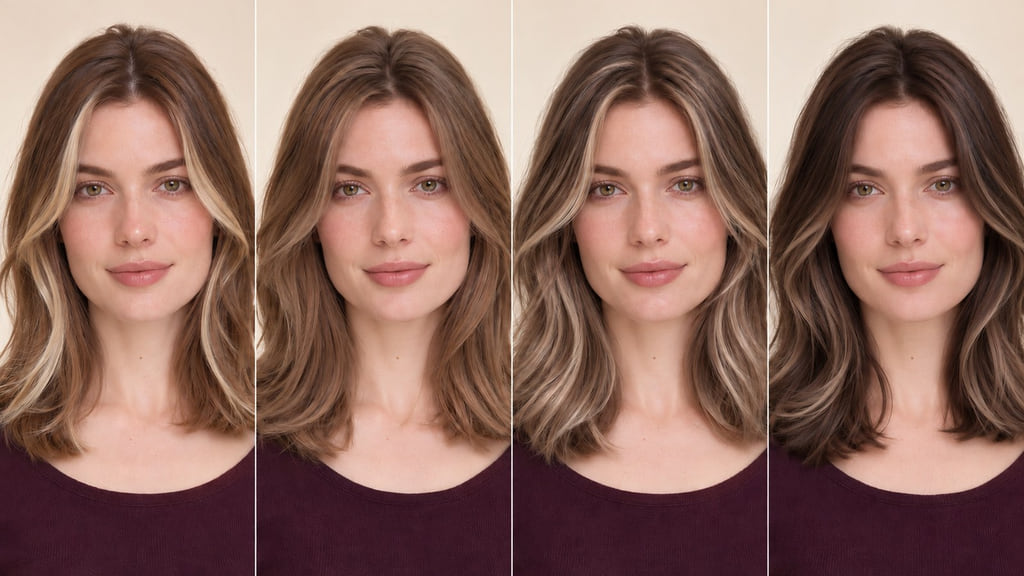
For a first choice, compare the left two directions. The soft face frame keeps the root-to-length difference in a small front section; gentler root contrast changes how closely the root and surrounding lengths meet. If you prefer the same light-brown starting base, decide which boundary you want to notice before discussing a service.
Soft Face Frame
Look for a narrow brighter section that starts visibly near the front and remains separate from the surrounding light brown. In a reference, keep the face and exposure similar while you compare the section’s width and starting point. Ask which strands should change and which should retain their current depth; the image cannot tell you whether that placement is achievable on your hair.
Gentler Root Contrast
Here the root and adjacent lengths sit closer in apparent depth, while individual strands still show. The front may appear quieter even if the overall shade family barely changes. Compare it with the face-frame example in the same light, then ask how your natural root would meet the colored lengths as it returns.
Reflective Midtone
An intermediate brown can show light on separate strands without making the skin look artificially brighter. Check that a reference reveals the hair’s texture and that the face has not been overexposed. Ask whether your current depth can support that reflection or whether the reference depends on a different starting base.
Richer Perimeter
A deeper edge beside the face can make the hair outline more defined while leaving variation inside it. Compare the edge width and where it ends rather than treating a darker border as a guaranteed skin-brightening trick. Ask which existing lighter areas you would keep so the result does not read as a flat block.
Account for Your Starting Base
Before selecting the soft face frame in a photo, note your natural root depth, previous color on the lengths, and whether you want to retain the current length. A light-brown reference with an untreated base is a different starting point from one with older dark dye or previously lightened front pieces. Show your colorist both the reference and your color history, then ask what contrast and placement your hair can reasonably reach. A Wella depth number can help describe the reference; it cannot settle the process.
If gentler root contrast fits your routine better, keep that visible goal even when your current shade differs from the picture. Ask whether the root or the surrounding lengths would need the main adjustment. For separate decisions, compare overall hair color contrast or the placement of face-framing highlights; this guide stays focused on the frame beside pale skin.
Plan Regrowth and Color Upkeep
Look at the boundary you chose after your usual wash and styling routine. A narrow front section may become less distinct as its reflection shifts; a softer root may keep looking blended while the colored lengths change. Photograph the same part in similar light when you want to discuss a refresh. Let the visible change and your tolerance for it guide the conversation, rather than assuming one appointment interval fits everyone.
| Direction | Everyday check | Change to watch | Salon-support question |
|---|---|---|---|
| Soft face frame | Is the narrow section still visible in your usual part? | Its start moving down or its reflection blending into the base | Would you refresh placement, tone, or neither? |
| Gentler root contrast | Does the root still meet the lengths as softly as you want? | A more visible root boundary or shifting length color | Which boundary matters most to maintain? |
| Reflective midtone | Do separate strands still catch light? | Reflection turning duller or warmer than your reference | Could the reflection be adjusted without changing depth? |
| Richer perimeter | Does the deeper edge still retain inner variation? | The outline looking flatter or a root edge becoming prominent | Which inner sections should remain lighter? |
Build Your Color Reference
Save one photograph with a clear front view and another showing the part and roots. Match their light and starting depth as closely as you can. A useful consultation brief is: “I want to compare a soft face frame with gentler root contrast. My reference is neutral light-brown hair with subtle face-framing brightness. Keep the natural density and show me the difference in depth, reflection, and placement before we choose a service.” Add your color history and say which visible boundary you prefer.
Choose the direction you want to discuss, then use your references to ask what your current base can support. Bring a view of your roots and another of the full length so the placement remains clear during the consultation.
Frequently Asked Questions
How do I compare these shades at a similar depth?
Keep the photos in similar neutral light and compare placement and reflection while the apparent lightness stays close. In Wella’s chart, depth and tone have separate positions in its shade code; that helps you name two variables, but the numbering does not transfer unchanged across brands.
Does my starting color change the achievable result?
Yes. A soft face frame on untreated light-brown hair and gentler root contrast on previously colored hair may require different plans. Bring your natural base, past color, and the two references to a colorist before choosing a direction.
Can I soften the front without coloring all of my hair?
You can ask about a narrow face-framing section while retaining the surrounding color. Compare its width and starting point with a gentler root transition, which changes a different boundary. Your colorist can explain which placement fits your existing color and how each would grow out.