
Hair Colors for Olive Skin: Depth, Reflection, and Choice
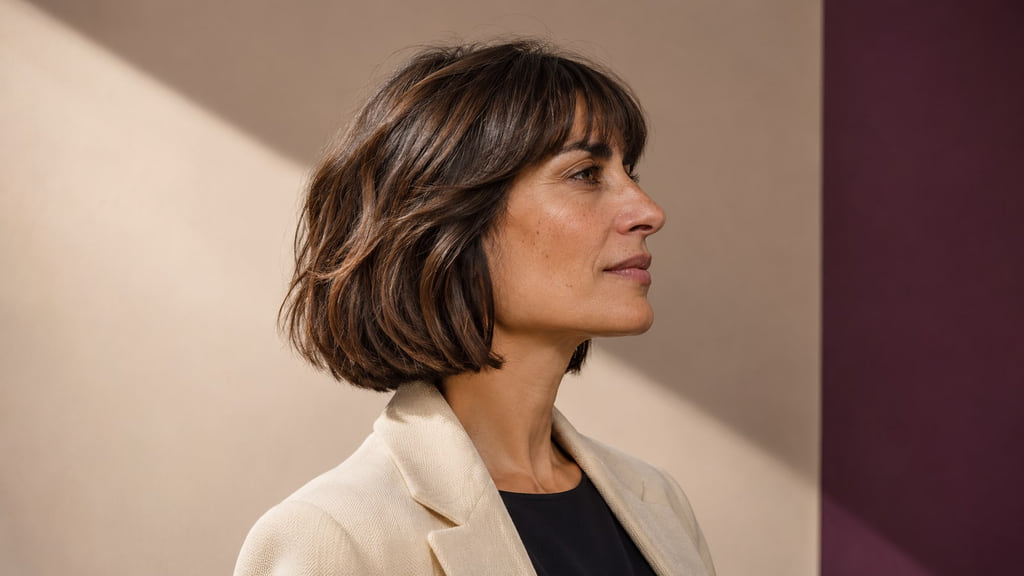
Compare neutral brunette, soft caramel, muted beige blonde, and auburn by their visible reflection, not by a single warm-or-cool label for olive skin. Keep the light and starting depth in view, then bring two references to a colorist. Your base and color history affect what is achievable.

Read the Color Direction Before Choosing a Look
Start with what you can see: a neutral brunette bob creates a continuous brown outline, while soft caramel brings brown-gold reflection into selected areas. Either can be a useful direction to compare with your own hair. Olive appearance does not assign you one warm or cool hair color, and a photograph cannot diagnose your undertone.
Depth means how light or dark the hair looks; reflection is the tonal direction visible within that depth. In Wella’s hair color chart, the number before the stroke indicates depth and the number after it indicates tone. That is Wella’s system, not a code shared by every manufacturer or a prediction of your result. Keep exposure and white balance fixed when comparing photos so a lighting change does not masquerade as a hair-color difference.
Compare Neutral Brunette, Soft Caramel, Muted Beige Blonde, and Auburn
These four looks are editorial examples. Compare their apparent depth, reflection, and placement before deciding which difference you want to discuss. The same olive-appearing complexion could be photographed with any of them; the image does not establish an individual match.
| Direction | Depth and reflection | Placement to compare | Ask your colorist |
|---|---|---|---|
| Neutral brunette | Brown base with a restrained neutral reflection | Continuous brown through the roots, lengths, and ends | Can I keep a similar depth and change only the reflection? |
| Soft caramel | Brown base with restrained brown-gold reflection | Selected brighter sections, with the brown base still visible | Where would you place the lighter sections on my starting hair? |
| Muted beige blonde | Lighter blonde depth with a balanced beige reflection | Compare a rooted version with an all-over lighter field | How much of my natural depth can remain? |
| Auburn | Brown base with a red-brown reflection at a comparable depth | Compare an all-over reflection with selected red-brown sections | What would the red-brown look like as it changes? |
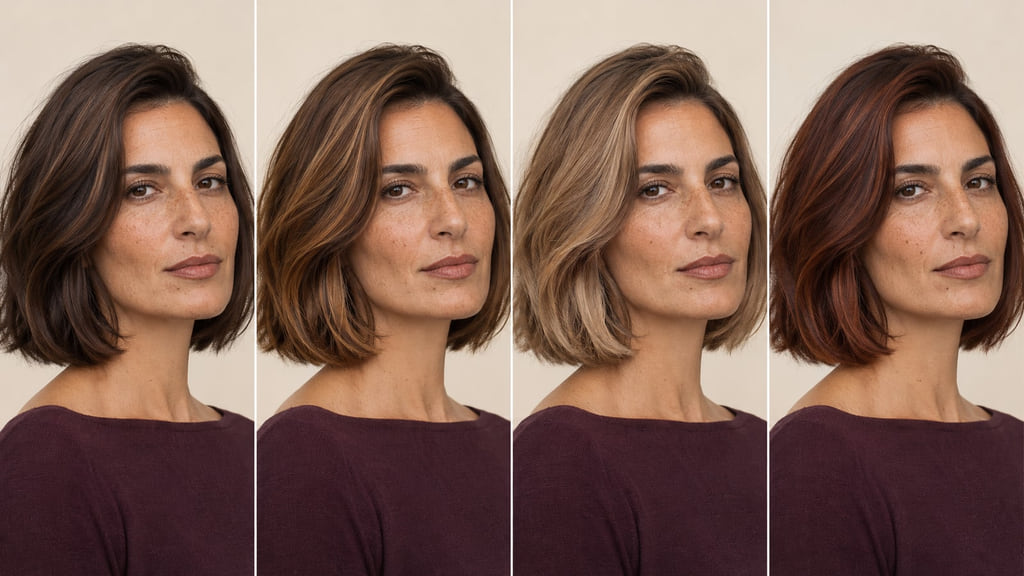
For a first decision, put neutral brunette beside soft caramel at a similar brown base depth. The brunette leaves a continuous brown field. Caramel introduces brown-gold light to selected strands; it need not mean lightening every strand. If you prefer the second image, mark exactly where the lighter areas begin and end. That placement is as useful to discuss as the shade name.
Neutral Brunette
In this example, the bob stays brown from root to end, with a balanced reflection rather than a strongly gold or ash finish. Compare it with another brown photograph at the same exposure and apparent depth. Does the difference you notice come from reflection, from the haircut outline, or from a darker image? Ask which part of your existing color can stay and what would actually need to change.
Soft Caramel
Soft caramel keeps a brown base visible and adds restrained brown-gold reflection in selected areas. Compare it with neutral brunette under fixed white balance before assuming the whole result is lighter. Look at the face frame, interior, and ends separately. Ask your colorist where brightness could sit on your hair and how much of your base would remain.
Muted Beige Blonde
Muted beige blonde changes apparent depth as well as reflection: the field is lighter, while the beige tone stays balanced rather than strongly gold or gray. A rooted photograph and an all-over blonde photograph can imply different amounts of change even when both carry the same shade name. Save the version whose root connection and amount of lightness you actually want. Then ask what your current color would allow.
Auburn
Auburn shifts a brown base toward red-brown reflection. Compare it with neutral brunette at a similar depth and exposure so a darker photograph does not make one look quieter by accident. Notice whether you want red-brown across most of the hair or only in selected sections. Ask which version would preserve the parts of your current color you like.
Account for Your Starting Base
Your natural roots, colored lengths, and ends may start at different depths. Bring photographs of each in neutral light, along with your color history and the length you want to keep. Wella’s chart and consultation guidance describe the starting base and previous color as factors in planning a result. A neutral brunette reference might resemble your roots but differ from older color on the ends. Ask which areas could follow the reference and which require a separate plan; a shade number only has meaning within its manufacturer’s system.
For soft caramel, show both the brown base and the location of the brown-gold light. If old color or your usual routine makes that placement impractical, ask whether a smaller area of brightness would preserve the effect you prefer. The goal is to compare reflections while keeping the real starting canvas in view, rather than selecting a chemical service from a screen image. For a separate discussion of skin depth, see Best Hair Colors for Fair and Pale Skin by Undertone or Best Hair Colors for Medium Skin Tones.
Plan Regrowth and Color Upkeep
For neutral brunette, look at whether new growth still connects visually with the lengths and whether the brown reflection remains close to your reference. For soft caramel, notice when the lighter sections move farther from the placement you wanted or begin to dominate the brown base. Those are useful signs to bring to your next consultation. They do not set one appointment interval for everyone.
| Direction | Daily routine question | Change to watch | Salon support to discuss |
|---|---|---|---|
| Neutral brunette | Do you like a mostly continuous brown outline? | Visible root-to-length contrast or a change in brown reflection | Refresh the reflection or soften the transition |
| Soft caramel | Are you comfortable with light near the face or through the lengths? | Bright areas move away from the intended placement | Reassess the amount and location of brightness |
| Muted beige blonde | Do you want to keep a lighter overall field? | Roots become more distinct or beige looks warmer than intended | Discuss root connection and tone |
| Auburn | Do you still like the red-brown direction in ordinary light? | Red-brown reflection becomes less visible or changes direction | Revisit the desired reflection |
Choose the direction whose visible changes fit your tolerance for salon upkeep. A colorist can assess your hair and suggest the actual plan.
Build Your Color Reference
Save one image that shows the whole hair outline and a closer view of the roots, middle lengths, and ends. Add a photograph of your own hair in similar neutral light. A filled-in salon request could be: “I want to compare neutral brunette with soft caramel. My reference is a neutral brunette bob with natural olive-appearing skin. Keep the natural density and show me the difference in depth, reflection, and placement before we choose a service.” This is a visual request, not a dye formula or a promise that another person’s result can be copied.
Bring those references to a colorist and point to the difference you want. You can also preview a color direction as an optional visual step. A screen preview cannot diagnose your undertone or predict the chemical result on your hair.
Frequently Asked Questions
How do I compare these shades at a similar depth?
Use photographs with consistent exposure and neutral white balance, then compare neutral brunette with soft caramel while the brown base looks similarly dark. Look at reflection and placement separately. If you compare manufacturer shade numbers, identify the brand: Wella’s chart uses the number before the stroke for depth and after it for tone, but that notation is not universal.
Does my starting color change the achievable result?
Yes. Natural roots and previously colored lengths can begin at different depths and reflections. A neutral brunette reference may be closer to your roots, while caramel might call for light in selected sections. Bring a photograph of each part of your hair and tell the colorist about previous color. Ask what can remain and what would need to change before choosing a service.
Can a virtual preview predict the dye result?
No. Use it to compare visible directions, then check the references in consistent light and discuss your starting base with a colorist. A photograph or preview cannot diagnose an olive undertone, establish that everyone with olive-appearing skin needs ash or gold, or predict the process needed to reach a shade.