
Haircuts for Straight Hair: Shape, Texture, and Upkeep
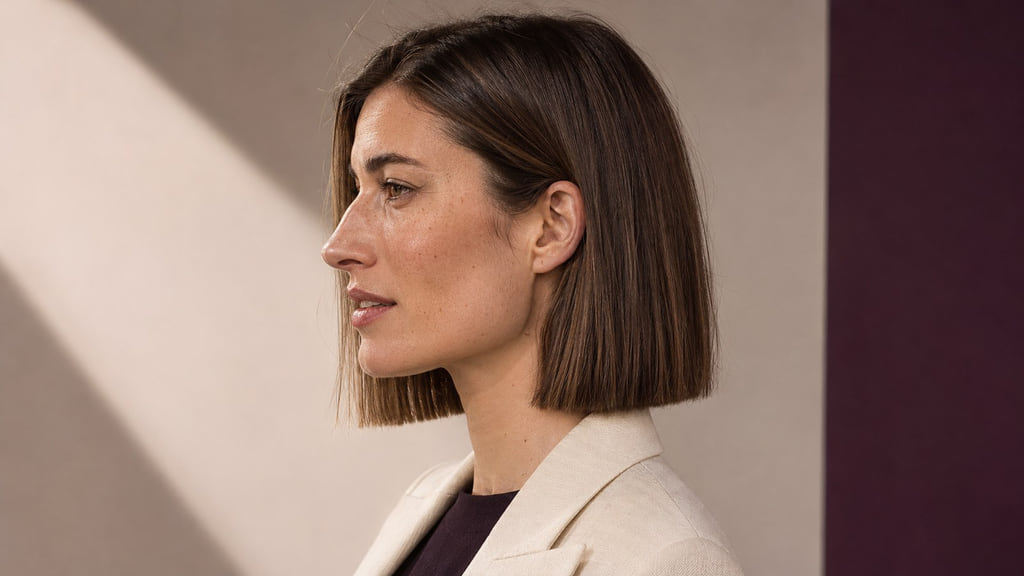
Choose the edge and layer visibility that straight hair will reveal. Compare a graphic blunt edge, soft long layers, a structured pixie, and a side fringe. The useful choice is the shape you can describe and maintain with your actual texture, density, and routine.

Read the Cut Outline Before Choosing a Look
Start with the edge you want to see when your hair is dry. A straight blunt lob, for example, puts a continuous line near the shoulders; longer layers keep the bottom connected while changing how the lengths fall above it. Sam Villa’s explanation of horizontal and vertical layering describes how cutting direction distributes weight. Use that vocabulary to describe the visible line in your reference, rather than assuming a photograph predicts the result on your own hair.
Straight hair can be fine or coarse, sparse or dense, smooth or prone to separating. The graphic edge and the softer layered outline are different design choices, not a ranking of which hair looks better. Trace the perimeter, find the shortest visible section, and note where the shape looks fullest before you choose a name for the cut.
Compare Graphic Blunt Edge, Soft Long Layers, and Structured Pixie
These examples keep the decision focused on perimeter, front section, and volume placement. Each photograph is an editorial shape reference; it does not show a guaranteed result or a change in natural density.
| Option | Perimeter | Front and volume | Question for your stylist |
|---|---|---|---|
| Graphic blunt edge | Deliberate, continuous line that straight hair makes easy to see. | Weight reads near the lower edge; density itself does not change. | Where should that line fall on my dry hair? |
| Soft long layers | Length and a connected bottom edge remain visible. | Longer internal sections add a softer transition without a short crown shelf. | Where will the first layer show in my usual finish? |
| Structured pixie | Short sides and nape expose a compact outline. | A longer front section and crown make the shape legible. | How short can the nape be while keeping my preferred front? |
| Side fringe | The main haircut can keep its chosen lower edge. | One front section crosses from a visible side part. | Where will that section land when it dries naturally? |
If you are comparing a graphic blunt edge with soft long layers, hold the dry references at the same scale. In the first, follow the uninterrupted bottom line. In the second, look for longer internal sections while the ends still connect. The difference gives you a concrete consultation question without claiming that either cut creates more hair.
Graphic Blunt Edge
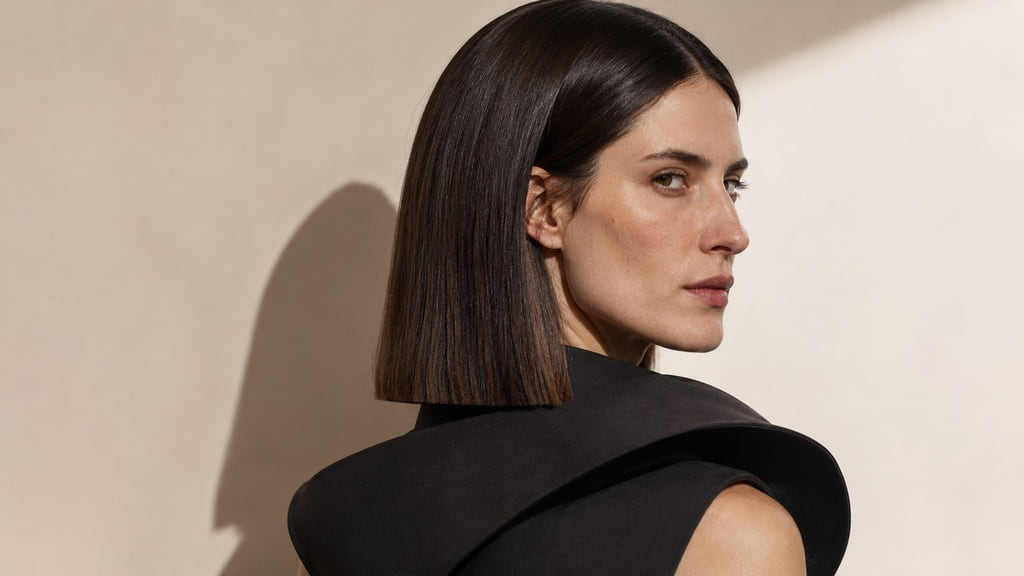
The edge is the feature to protect in this reference. Decide where it should meet your neck or shoulders in your usual dry finish. If your ends separate or your density differs from the person in the photo, ask what line your hair can show without assuming the photograph has changed the amount of hair.
Soft Long Layers
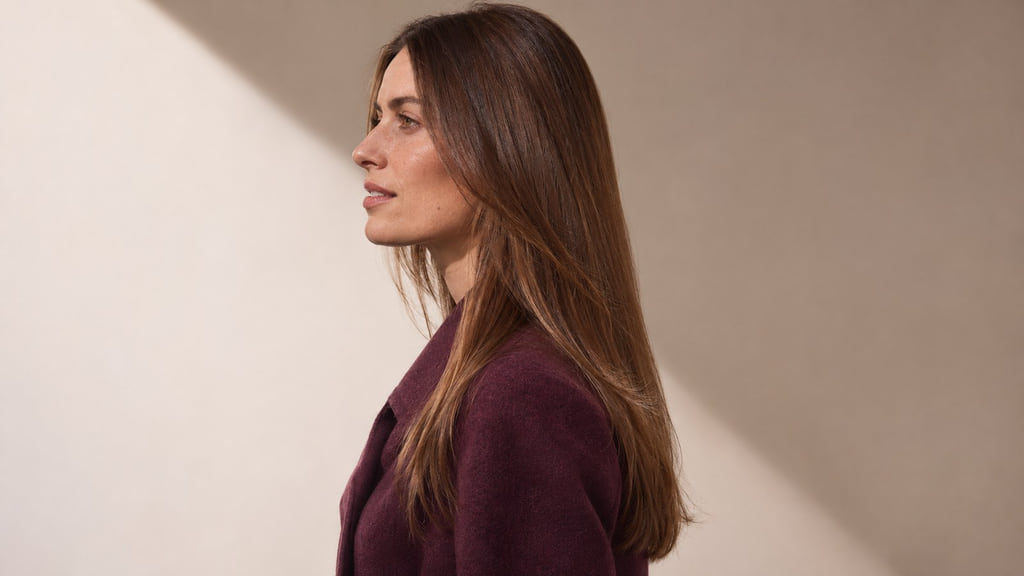
Here, the length remains part of the silhouette. Point to where you want movement to begin and where you still want a connected bottom edge. Ask your stylist to show how the longer sections will sit with your natural part, without creating a short shelf at the crown.
Structured Pixie
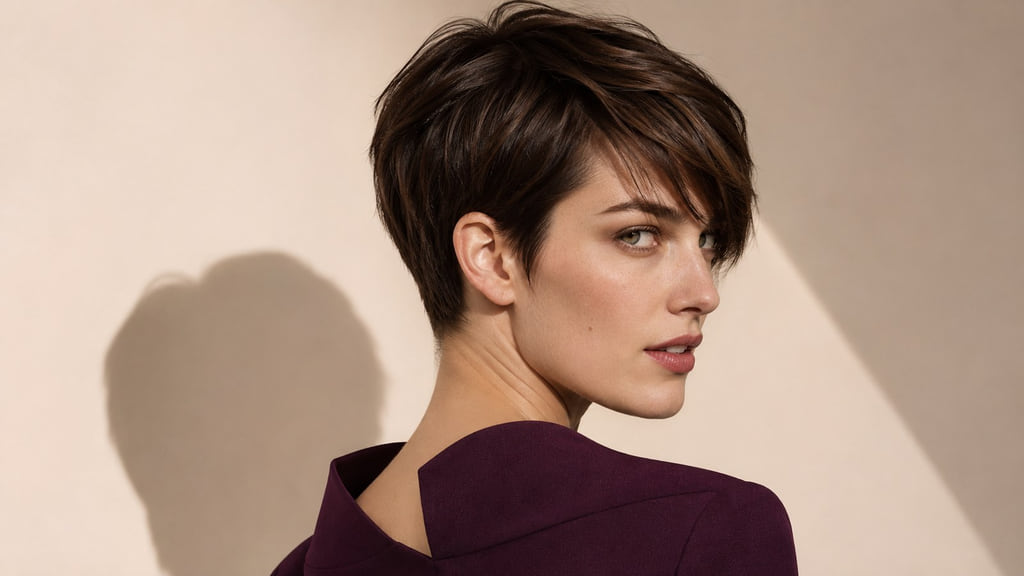
A structured pixie makes the ear, nape, and front section easy to inspect. Compare those three areas at a similar camera angle rather than treating every short cut as the same silhouette. Decide which part you are willing to reset in the morning and which outline you would want maintained.
Side Fringe

The diagonal front section is the decision here, not a curtain shape with two sides opening at the center. Show the stylist your usual part and where the shortest dry point should land. Ask how the section will separate around your hairline and whether it can still tuck away when you want it to.
Account for Texture, Density, and Growth Direction
Look at your hair dry and loose before using any of these photographs. Texture describes how strands lie; density describes how many strands occupy an area. Growth direction and parting affect where a blunt line opens or a fringe falls. A cut can redistribute visible weight, but it cannot increase your natural density. Sam Villa’s face-shape consultation guide also treats face shape as one consideration alongside texture and density.
For a blunt edge, show where your ends gather and where they separate. For soft long layers, show how much length you want to retain and how your hair falls without a polished set. If the reference has a different density or finish, keep the visible goal and ask your stylist how the cutting plan should change for your hair. For neighboring texture decisions, compare haircuts for curly hair, curly bob haircuts, or haircuts for wavy hair.
Plan Styling and Grow-Out
Imagine the cut after your usual wash and on an ordinary morning. A graphic perimeter may need a quick alignment to look as crisp as the reference; long layers may need attention where the sections stop moving together. A pixie exposes changes around the nape, while a side fringe makes a shifting front length noticeable. Ask about the specific signs that would make you want the shape refreshed, without assuming a fixed schedule.
| Option | Daily attention to discuss | Change to watch as it grows |
|---|---|---|
| Graphic blunt edge | How the ends line up after your normal drying routine. | The continuous lower edge becoming less precise. |
| Soft long layers | Whether the long sections need arranging to show movement. | Weight settling lower as the internal sections lengthen. |
| Structured pixie | How you reset the front and crown. | The nape and sides losing their compact outline. |
| Side fringe | How the front section falls from your usual part. | The shortest piece moving into a new position. |
Choose the maintenance you are comfortable doing: a daily reset, occasional styling, and salon upkeep are separate commitments. A reference photo cannot tell you how much of each your own hair will need.
Build Your Haircut Reference
Bring one photograph of the outline you want, one showing the front, and photos of your own hair in its usual dry state. Mark the length you want to keep and the area where you will accept a more visible layer or shorter section. Use those views to point out what should stay and what you are ready to change.
Here is a salon brief you can adapt: “I want to compare a graphic blunt edge with soft long layers. My reference is a straight blunt lob with a clean perimeter. Please keep my natural density and show me where the lower edge and first visible layer would sit on my dry hair. I usually part it on the side and spend little time resetting the front. Which outline would be easier for me to keep?”
Frequently Asked Questions
What is the best haircut for straight hair?
Start with the visible edge and the amount of layer definition you want. Compare a blunt perimeter with long connected layers in your usual dry finish, then account for density, growth direction, and the upkeep you will actually do.
Will layers make straight hair look fuller?
Layers change how length and visible weight are distributed; they do not add strands. Ask where the shortest layer will show and whether the bottom edge will stay connected on your hair.
How do I decide between a pixie and a longer cut?
Compare the dry nape, front section, and maintenance commitment. A pixie exposes those shorter boundaries; a longer cut preserves more length. Discuss how each will grow before choosing the silhouette.