
Haircuts for Thick Hair: Shape, Texture, and Upkeep

Place weight and internal movement without removing the entire perimeter. Compare long layers, a structured bob, a shag variation, and a cropped shape. The useful choice is the outline you can describe and maintain with your actual texture, density, and routine.

Read the Cut Outline Before Choosing a Look
Look at the outer edge of your hair first: that is the perimeter. Then notice where shorter sections begin and where the shape looks widest. On thick, wavy, shoulder-length hair, those details tell you more than a haircut name. You might want movement around the face while keeping the bottom edge substantial.
Layers change how length and weight are distributed. In Sam Villa’s explanation of horizontal and vertical layering, the sectioning direction changes the visual weight and the visibility of the cutting line. That is useful language for a consultation, not a cutting prescription for every head of hair. Ask your stylist to show you where the shortest layer would fall on your dry hair.
Hair density means how many strands grow in an area; strand coarseness describes the thickness of an individual strand. Dense fine hair and coarse hair can need different placement even when both are called “thick.” Avoid treating thinning as a universal solution. Decide which part of the outline you want to preserve and which part feels too compact.
Compare Long Layers, Structured Bob, Shag Variation, and Cropped Shape
These four examples are different ways to place weight. Compare them by the same visible criteria rather than ranking one as best for every person.
| Shape | Perimeter and shortest section | Where the weight reads | Ask your stylist |
|---|---|---|---|
| Long layers | Retained long edge; shorter sections begin inside the length | Fullness can stay at the ends while bends separate higher up | Where will my shortest dry layer land? |
| Structured bob | Clear jaw-to-collarbone edge; restrained layering | Strongest line stays near the bottom | Will the dry edge still read cleanly with my texture? |
| Shag variation | Broken edge; shorter crown and connected front sections | More visible movement around crown and face | How will the fringe connect when I wear my natural texture? |
| Cropped shape | Short sides and nape; longer front or crown | Focus shifts upward and toward the front | What will the ear and nape outline look like as it grows? |
For example, if you like your current length but want the middle to move, compare long layers with a structured bob. The first keeps a longer edge and changes the interior; the second makes a shorter, clearer edge the main feature. Bring images taken at similar angles so you can point to the actual difference.
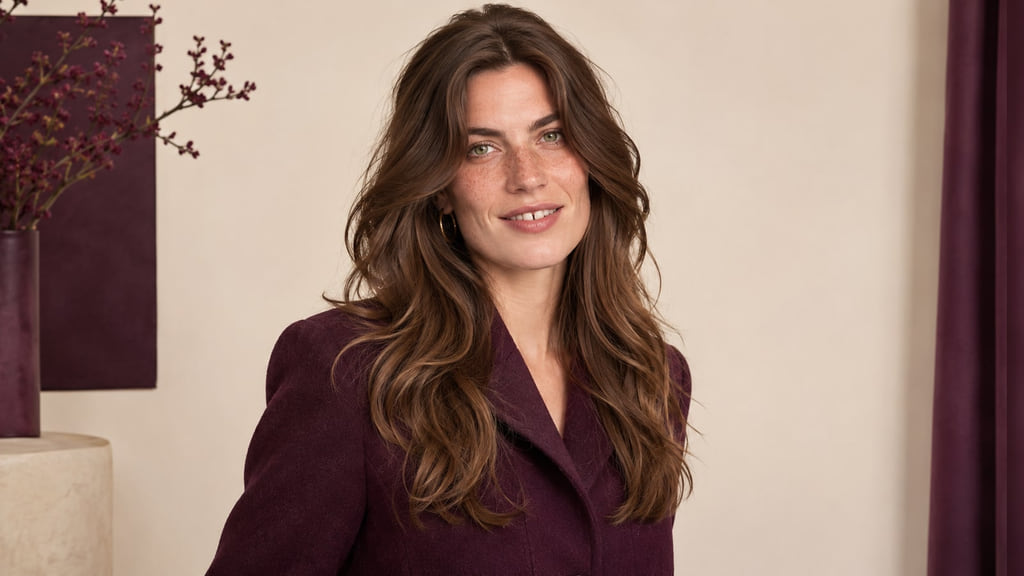
Long Layers
Long layers keep the lower length visible while shorter pieces move within it. In this example, the bottom edge remains full and the shortest visible layers begin above it. If your ends already feel sparse, show your stylist how much of the perimeter you want to keep before discussing interior movement.
Structured Bob
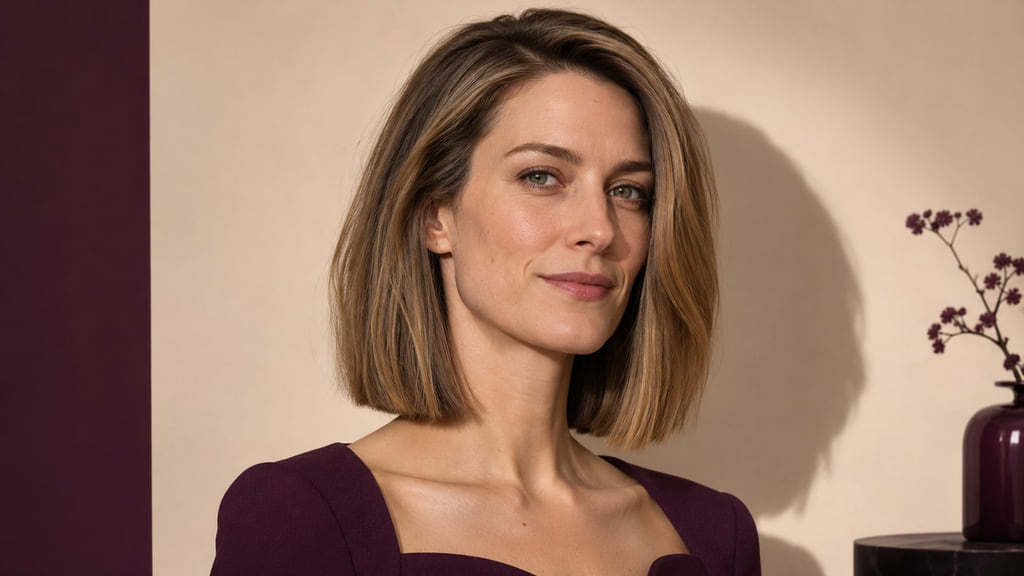
A structured bob makes the dry perimeter easy to identify against the jaw, shoulder, or collarbone. The jaw-length example below keeps the edge compact and the layer change subtle. Ask whether that line will sit where you expect after your hair dries in its usual pattern.
Shag Variation
A shag variation shows shorter crown sections, a connected fringe or face frame, and a less continuous edge. The natural waves in this example make the separation visible. If you prefer an unbroken bottom line, use this image to explain which parts of the shag you like and which you would change.

Cropped Shape
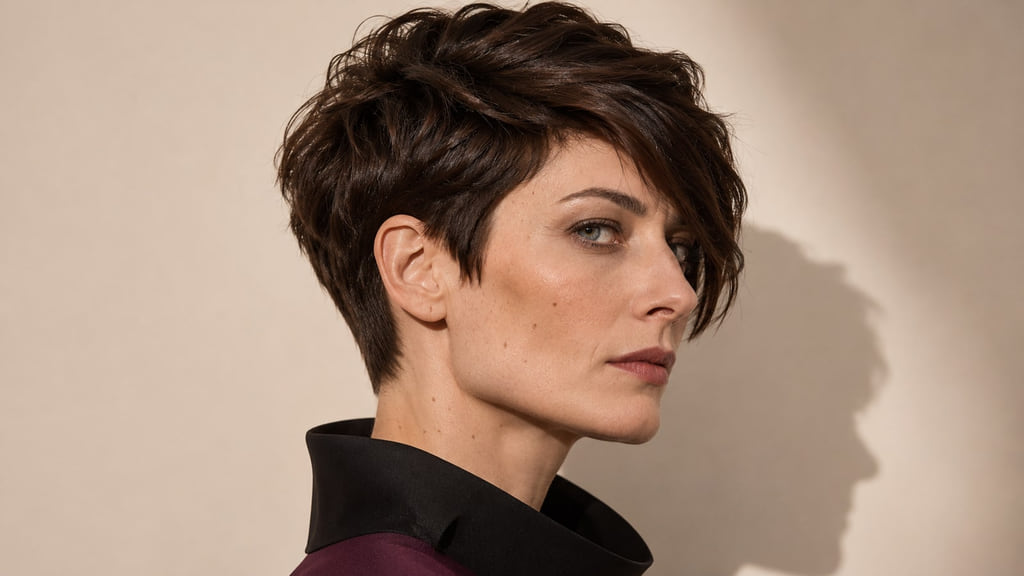
A cropped shape keeps the sides and nape short relative to the crown, with a distinct front section. Compare the ear and nape outline as carefully as the front view. Those shorter boundaries become more noticeable as they grow, so ask what you would need to maintain at home and in the salon.
Account for Texture, Density, and Growth Direction
Compare a reference with your hair when it is dry and styled as you normally wear it. Waves may gather at different points from straight hair; a fringe may split along its natural growth direction. Density, strand diameter, parting, and the current length all affect how much of the reference you can carry over. Sam Villa’s haircut consultation guidance treats face shape as one consideration alongside texture and density.
For long layers, point to the shortest section you want and the part of the perimeter you want to protect. For a structured bob, show the dry length landmark and ask whether your normal air-dry or styling method will hold that line. If your starting texture differs from the photo, use the image as a shape reference, then agree on the placement with your stylist rather than requesting a copied cutting technique.
If you want a broader comparison, see Layered Haircuts by Length and Hair Texture, Best Haircuts for Wavy Hair, or Shag Haircuts by Length and Texture.
Plan Styling and Grow-Out
Think through the simplest version of your routine. Will you air-dry, define waves, smooth the edge, or reset the front pieces each morning? Long layers may leave more room for the perimeter to shift without changing the whole silhouette. A structured bob makes a moved edge more obvious. Neither is automatically easier; the answer depends on how you wear your own hair.
| Shape | Daily check | What may become noticeable as it grows | Salon conversation |
|---|---|---|---|
| Long layers | Do the shorter sections settle with your usual drying method? | Front pieces and internal volume may drop lower | Which layer or edge needs refreshing first? |
| Structured bob | Does the lower line hold its shape without a full set? | The perimeter may move past its chosen landmark | How precise do you want to keep the edge? |
| Shag variation | Can you reset the fringe and crown as you prefer? | Shorter sections may lose separation | Which connections should stay visible? |
| Cropped shape | Will you style the front and sides each day? | Ear and nape boundaries may soften | How often do you want those boundaries refined? |
Choose the kind of upkeep you are willing to do. If you cannot easily return for a precise edge, tell your stylist before choosing the bob or cropped outline. If you prefer long layers, note when the front section starts falling into your eyes or the ends stop making the shape you wanted.
Build Your Haircut Reference
Save one photo showing the full outline and another showing the front and side at a similar dry texture to yours. Add a current photo of your own hair in its everyday state. Then use a short brief such as this:
I want to compare long layers with a structured bob. My hair is thick, wavy, and shoulder length, and I want deliberate movement inside the shape. Please keep the natural density visible. Show me the difference in the dry perimeter, front framing, and crown shape before we choose a cut.
Point to what you want to keep as clearly as what you want to change. Use the two outline references to narrow the discussion, then settle the dry length, front section, and layer placement with your stylist.
Frequently Asked Questions
How will this shape work with my natural texture?
Look at where your dry hair bends, separates, and builds volume. Compare those points with the photo’s perimeter and shortest section. Face shape can help describe proportions, but texture and density belong in the same decision.
What changes as the cut grows out?
Long layers may gradually change where movement begins. A structured bob makes a moving bottom edge easier to see; a cropped cut can show changes around the ears and nape. Ask which feature you would want to refresh first.
What should I show my stylist?
Bring a full-outline reference, a front or side view, and a photo of your current dry hair. Say whether your priority is a preserved perimeter, internal movement, or a shorter visible edge. Describe density and strand coarseness separately, and ask about any thinning technique in the context of your own hair.