
Spring Hair Colors: A Practical Comparison

Compare Light Spring, Warm Spring, and Bright Spring by the visible feature you want to emphasize: lighter depth, warmer reflection, or clearer color. Use those directions to choose a subtype guide and a reference for your colorist. Your starting base and color history affect what is achievable.

Read the Color Direction Before Choosing a Look
The warm brown hair in the opening photograph has a restrained copper reflection. To choose a Spring direction, ask whether you would change its depth (how light or dark it looks), its warm reflection, or its clarity first. The answer gives you a useful comparison even if you keep your current hair color.
The Concept Wardrobe’s twelve-season framework places Spring alongside Summer, Autumn, and Winter and divides Spring into Light, True, and Bright. In this article, Warm Spring names the warmth-led True Spring direction in that particular framework. These labels organize color references; they do not diagnose a person or require a dye shade. They are separate from calendar spring hair trends.
Depth and reflection are different questions. Wella’s hair-color chart guide uses the number before the stroke for depth and the number after it for tone, the visible color direction. That is Wella’s numbering system, not a shared code for every brand. When comparing two photographs, hold the lighting and depth similar to judge reflection; hold reflection similar to judge depth.
Compare Light Spring, Warm Spring, Bright Spring
The three directions below are editorial hair-color examples informed by the named seasonal framework. They describe what to compare in a reference, not which color every person with a label should wear.
| Direction | Feature to foreground | Placement to compare | Question for your colorist |
|---|---|---|---|
| Light Spring | Lighter visible depth with a warm, clear reflection | Lightness throughout or selected pieces while retaining your base | How much lighter can the reference look without changing the whole base? |
| Warm Spring | Warm golden or restrained copper reflection at a chosen depth | Warmth throughout or concentrated through selected lengths | Can we compare two reflections at the same depth? |
| Bright Spring | Clearer color signal and more visible contrast | Clear pieces against the base or a more even clear color | Where should the contrast be most noticeable? |
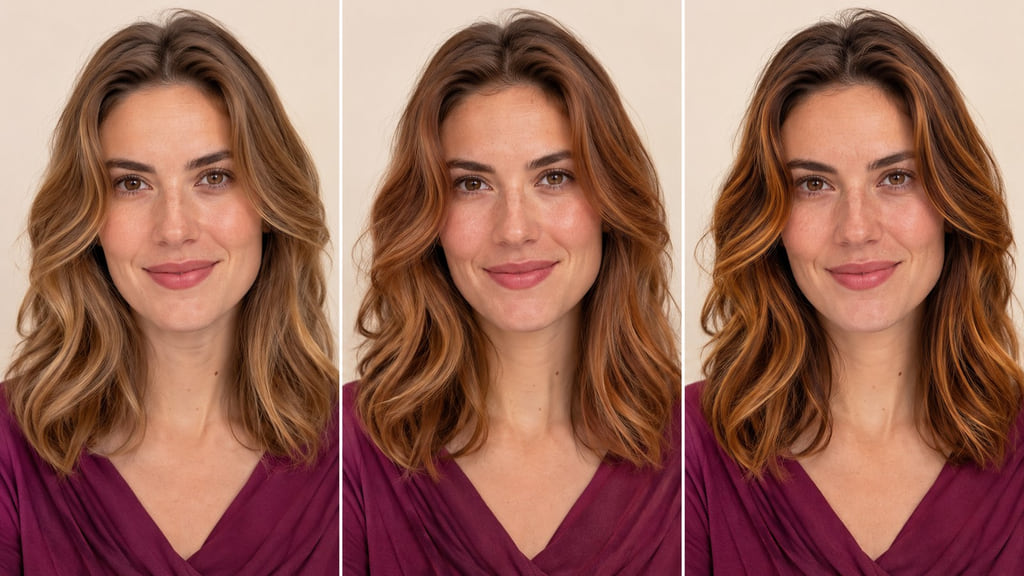
Put the left and center references side by side for a first decision. The Light Spring example changes the apparent depth; the Warm Spring example keeps more brown depth but makes copper more visible. If the clearer right-hand option draws your attention, compare its contrast with the other two rather than treating it as the automatic winner.
Light Spring
In this example, Light Spring leads with lighter depth. Notice how the left panel reads lighter while retaining a warm-brown connection to the starting color. Compare it with another photograph at similar exposure before deciding whether the difference comes from the hair or the lighting. Ask which parts of your current base you want to preserve. For more shade and placement options, open the Light Spring guide.
Warm Spring
The center panel lets a restrained copper reflection lead without making lightness the main change. Compare it with the lighter panel at a similar depth if you want to isolate warmth from brightness. Ask whether the reflection should appear throughout or only in selected sections. The Warm Spring guide develops this warmth-led choice.
Bright Spring
The right panel shows a clearer warm-brown signal and stronger separation between the lighter and darker strands. Compare its contrast under the same light before deciding if you want that emphasis around the face or through the lengths. Clarity is a styling variable, not a requirement to color every strand vividly. See the Bright Spring guide for its separate direction.
Account for Your Starting Base
Your natural roots, previous color, and the length you want to keep determine the useful comparison. A Light Spring photograph may show a lighter depth than your starting base; the picture alone cannot show how your hair would reach it. Save a neutral-light photograph of your roots and lengths, and tell your colorist about previous services. Use Wella shade numbers only when discussing that manufacturer’s system, not as a universal formula.
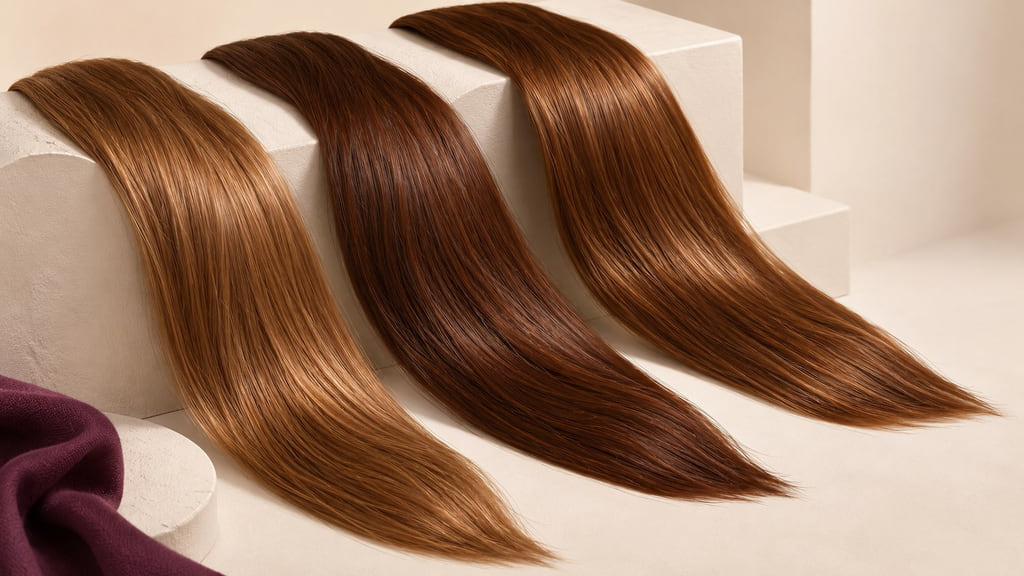
If a Warm Spring reference is much lighter than your own hair, first ask whether you prefer its warmth or its depth. You may be able to discuss a warm direction while retaining more of your base; the method depends on your color history and a consultation. For the broader model, read Seasonal Hair Color Analysis. Summer Hair Colors and Autumn Hair Colors cover neighboring comparisons without turning this page into a full seasonal diagnosis.
Plan Regrowth and Color Upkeep
Watch what changes in your usual light. For a lighter direction, notice when natural roots become more distinct from the lengths. For a warmth-led direction, check whether the golden or copper reflection still reads as intended. For a clearer direction, look at whether the separation between lighter and deeper sections still feels useful. Bring a photograph of the change you would want adjusted to your colorist; no single refresh interval fits every starting base.
| Direction | Everyday observation | Change to watch | Salon discussion |
|---|---|---|---|
| Light Spring | Does the lighter area still sit where you want it? | Root contrast and shifting reflection | Keep the depth or change where lightness begins? |
| Warm Spring | Is the warm reflection visible in your usual light? | A softer copper or golden signal | Refresh reflection or keep more of the natural base? |
| Bright Spring | Do lighter and deeper sections still read separately? | Less distinct placement or contrast | Keep the clear contrast or soften its placement? |
Choose the level of visible change and salon support you are comfortable maintaining. The table names observations to bring to an appointment; it does not set a schedule.
Build Your Color Reference
Save one photograph of your current hair in neutral light, with roots and ends visible. Add two references with similar exposure: a full-hair view for depth and placement, then a closer view for reflection. Mark one feature you want changed and one you want preserved.
You can say: “I want to compare Light Spring with Warm Spring. My reference is light warm-brown hair with clear, restrained copper reflection. Keep the natural density and show me the difference in depth, reflection, and placement before we choose a service.” This is a decision brief for a conversation, not a dye recipe or a promise of an identical result.
Choose the light, warm, or bright direction you want to investigate next and bring the controlled references to a colorist. Ask which parts of your current color can stay and which would need to change.
Frequently Asked Questions
Is this a diagnosis or a styling framework?
It is a styling framework. The cited twelve-season model groups Spring into three directions, while depth and tone help describe the hair references you compare. Neither a label nor a photograph establishes an individual diagnosis.
Do I need to dye my hair to fit a palette?
No. Your natural hair is a valid starting reference. A lighter Light Spring example and a warmer Warm Spring example are optional ideas to compare if you want a change; a palette name does not require either service.
How can I compare depth and reflection?
Use photographs with similar light, exposure, and framing. Compare how light or dark the hair appears first, then compare golden or copper reflection at a similar depth. That keeps a seasonal color comparison distinct from a list of calendar spring trends.