
Hair Colors for Warm Skin Tones: Depth, Reflection, and Choice

Compare warm and balanced shade directions at a suitable depth. Put golden brunette, caramel, copper, and balanced beige blonde side by side. Your starting base and color history affect what a colorist can achieve, so use your preferred look as a direction to discuss, not a promised result.

Read the Color Direction Before Choosing a Look
Start with the visible change you want. A warm chestnut lob with restrained golden reflection keeps a brown foundation while letting small shifts in the light show through. Compare that reflection with a quieter brown or a brighter caramel at a similar depth, meaning how light or dark the hair appears. Wella’s color chart uses the number before the stroke for depth and the number after it for tone. That distinction is useful for a conversation, but its codes belong to Wella’s system.
Warm undertone is not a rule to maximize orange, gold, or brass. Treat undertone as a styling hypothesis, separate from how light or deep your skin looks. Golden brunette preserves a broad brown field with a restrained gold reflection. Caramel can make brown-gold sections more visible, especially when placed through the lengths. Neither is a universal match; compare the effect you prefer beside your features in the same light.
Compare Golden Brunette, Caramel, Copper, and Beige Blonde
Compare these directions as visible color choices before discussing a formula. When comparing reflections, hold apparent depth and white balance as steady as you can. Placement matters too: a brighter section over a brown base reads differently from the same color across the whole head. The Wella depth and tone distinction supplies useful terms for that comparison.
| Direction | Depth and reflection | Placement to compare | Question for your colorist |
|---|---|---|---|
| Golden brunette | Brown base with restrained golden reflection | Gold across the brown field or in selected sections | Can I keep this brown depth while changing the reflection? |
| Caramel | Brown-gold reflection against a retained brown base | Caramel through the lengths or closer to the face | Where should the brighter sections begin? |
| Copper | Visible orange-red reflection at a chosen depth | Copper throughout or against a quieter root | How much copper do I want to see in ordinary light? |
| Balanced beige blonde | Lighter blonde depth with a restrained beige reflection | All-over lightness or lighter lengths with root depth | Which lighter areas can my current base support? |
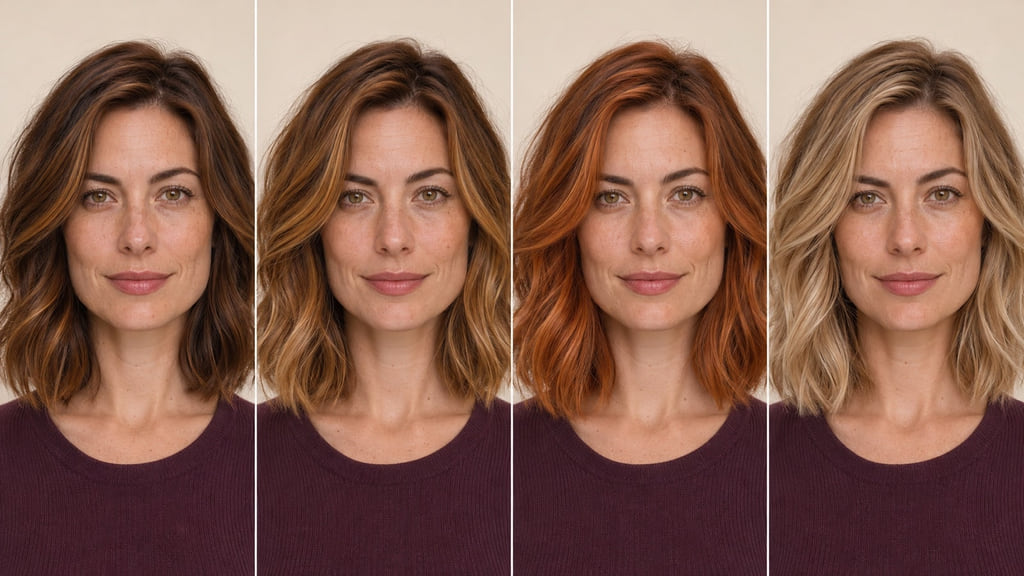
For a first decision, compare golden brunette with caramel. Option A keeps a brown field and lets gold appear as a restrained reflection. Option B brings brown-gold brightness into clearer sections. Mark whether the difference you want is in the reflection, the location of the lightness, or both. Then use copper and beige blonde to test whether a more visible warm reflection or a lighter, more balanced field is closer to your goal.
Golden Brunette
Golden brunette has a brown base with a restrained golden reflection in the comparison above. Compare it with another brown reference at similar depth and fixed white balance so that the reflection is the main change. Keep the face, exposure, and cut length consistent. Ask which part of your current brown you want to preserve and where, if anywhere, you want the gold to appear more clearly.
Caramel
Here, caramel adds a brown-gold reflection that is more noticeable in selected sections. Compare it with golden brunette at similar apparent depth before treating brightness as a separate decision. A caramel balayage reference, for example, also shows where the lighter color sits. Ask whether you want the change near the face, through the lengths, or across more of the hair.
Copper
Copper makes an orange-red reflection visible. Compare it with a brown reference at similar depth and fixed white balance if you want to judge the reflection itself. A lighter copper photograph changes depth as well, so note both differences. Ask whether that color should run through the whole head or sit against a quieter root and brown sections.
Balanced Beige Blonde
Balanced beige blonde has a lighter blonde depth with a restrained beige reflection. To compare beige with another blonde reflection, use references at similar lightness. Beside golden brunette, the change in depth is part of the choice. Ask how much root depth and how much lighter length you want to see, then discuss what your starting hair can support.
Account for Your Starting Base
Look separately at your natural roots, previously colored lengths, and ends. Their current depth and color history matter when you discuss a golden brunette reference, as do the length you want to keep and the contrast you prefer beside your features. A photograph shows the effect you want; it cannot tell you which service will produce it on your hair. Wella’s explanation of starting point and color history is a useful reason to bring those details to a colorist, without treating its shade numbers as a cross-brand formula.
If caramel appeals to you but your existing color or routine differs from the reference, ask which sections could change while retaining the base you like. The Hair Color by Skin Tone guide addresses the wider depth and undertone comparison. The Best Hair Colors for Fair and Pale Skin by Undertone and Best Hair Colors for Medium Skin Tones guides cover those separate starting points. Return to the same decision here: which warm or balanced reflection do you prefer at a suitable depth?
Plan Regrowth and Color Upkeep
For golden brunette, notice whether the brown field still has the depth you wanted and whether gold remains visible where you chose it. With caramel, watch the contrast between new growth and the brighter sections and whether those sections still sit where you prefer. Discuss a refresh when the visible effect stops meeting your goal; the right timing depends on your hair and placement rather than one schedule for everyone.
| Direction | Everyday check | Regrowth or fading to watch | Salon support to discuss |
|---|---|---|---|
| Golden brunette | Does the brown depth still frame the cut as intended? | Root contrast or a quieter golden reflection | Would the base, reflection, or neither need attention? |
| Caramel | Are brighter sections visible where you wanted them? | Root-to-length transition or a changed brown-gold reflection | How much placement maintenance suits your routine? |
| Copper | Is the orange-red reflection still at the strength you chose? | A less visible copper tone or a stronger root difference | Would you maintain or soften the copper direction? |
| Balanced beige blonde | Does the lighter field still read as balanced in your usual light? | Root contrast or a reflection warmer than your reference | Which lighter sections would need attention later? |
Build Your Color Reference
Save a photo of your current hair in neutral light that shows roots and ends. Add a front or three-quarter reference showing the reflection you want and a second view showing where the lighter or warmer sections sit through the length. Keep the white balance comparable. Point to the feature you want to change and the one you want to keep.
You can say: “I want to compare golden brunette with caramel. My reference is a warm chestnut lob with restrained golden reflection. Keep the natural density and show me the difference in depth, reflection, and placement before we choose a service.” Choose the closer direction and discuss it with your colorist using your current-hair photos and references.
Frequently Asked Questions
How do I compare these shades at a similar depth?
Use images taken under the same light and white balance. First compare how light or dark the hair appears, then hold that depth roughly steady while comparing golden, brown-gold, copper, or beige reflection. Wella’s color chart separates depth and tone within its own system; it does not make one shade code universal across brands.
Does my starting color change the achievable result?
Yes. Golden brunette may keep more of your current brown field, while caramel may ask for brighter sections and different placement. Previously colored lengths can change the conversation again. Show your roots and ends to a colorist and ask what can be preserved before choosing a service.
Does warm undertone require a very golden shade?
No. Warm undertone is not a rule to maximize orange, gold, or brass. Compare a restrained golden brunette with a quieter brown or balanced beige at a similar depth. Choose the reflection you prefer in consistent light, then discuss that direction with your colorist.