
Winter Hair Colors: A Practical Comparison
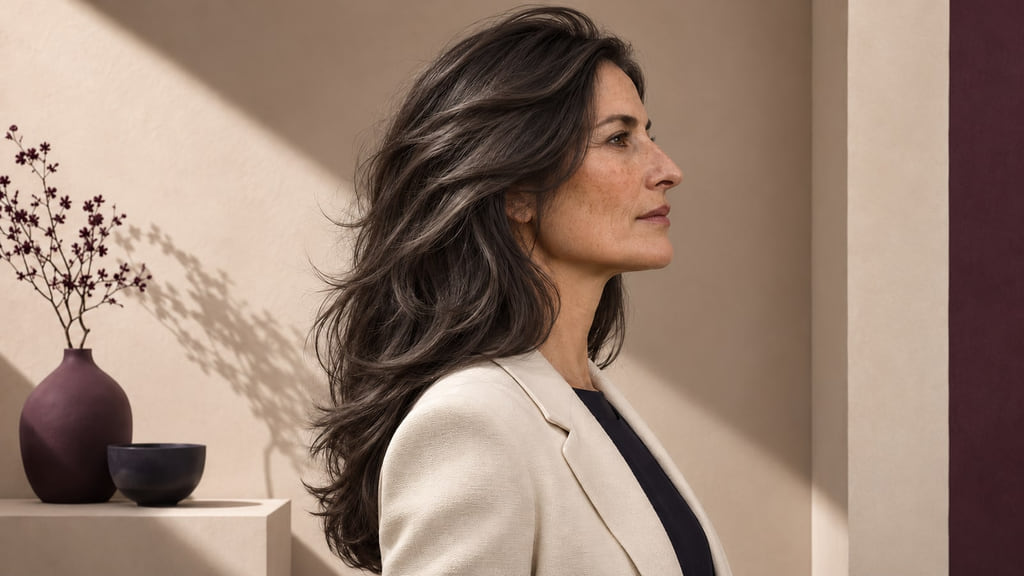
Compare Bright Winter, Cool Winter, and Deep Winter before opening a subtype shade guide. Use depth, reflection, and placement to name the difference you want; your starting base and color history affect what a colorist can achieve.

Read the Color Direction Before Choosing a Look
Compare bright, cool, and deep Winter directions before entering subtype shade guides. In the deep brown reference above, you can see individual strands rather than a single dark shape. Decide whether you want clearer contrast, a cooler reflection, or greater overall depth. These are visual directions to discuss with a colorist, not required shades.
The Concept Wardrobe’s twelve-season framework names Winter alongside Spring, Summer, and Autumn. This page compares directions within that attributed palette family. It does not forecast winter-season trends or diagnose your coloring. Bright Winter and Cool Winter, for example, ask different questions: how clear should the color read, and how cool should its reflection appear?
Compare Bright Winter, Cool Winter, Deep Winter
Depth is how light or dark hair appears. Reflection is the color visible within that depth. Wella’s hair-color chart guide uses the number before the stroke for depth and the number after it for tone. That notation belongs to Wella’s system; the comparisons here are editorial examples, not shade numbers or formulas.
| Direction | Visible emphasis | Depth and reflection to compare | Placement question |
|---|---|---|---|
| Bright Winter | Clearer contrast | Deep brown with a crisp, cool-neutral reflection | Would narrow, clear highlights add definition while keeping the base? |
| Cool Winter | Cooler reflection | Similar brown depth with a more distinctly cool cast | Would a consistent cool reflection suit the whole outline or selected sections? |
| Deep Winter | Greater depth | Deeper cool-to-neutral brown with visible strands | How much of the original brown should remain visible? |
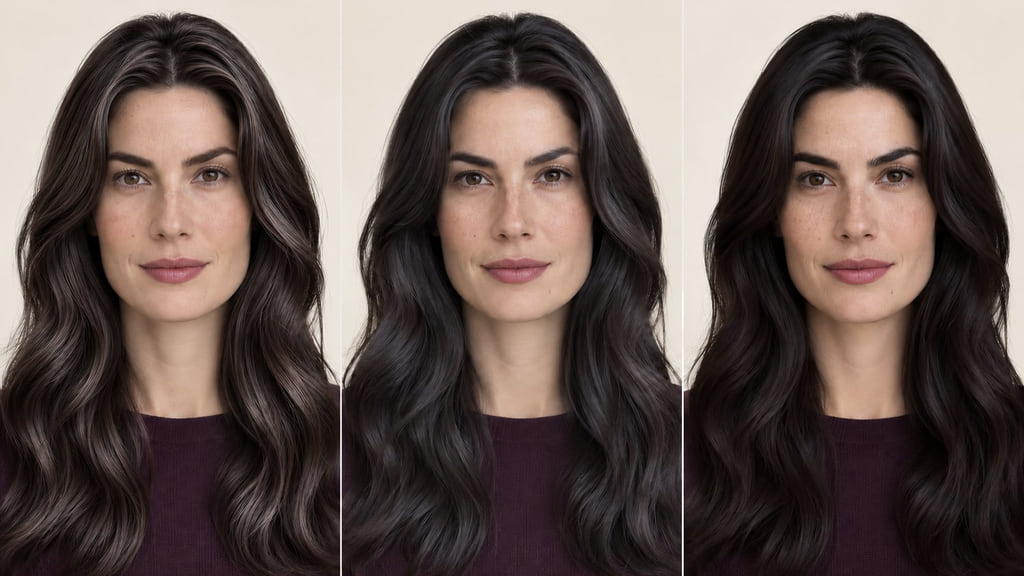
Suppose you are choosing between the first two. The Bright Winter reference keeps its brown depth and lets the strand highlights read more clearly. The Cool Winter reference holds a similar depth but shifts the visible reflection cooler. Keep the face, exposure, and cut comparable so the hair difference remains the subject of the conversation.
Bright Winter
For a Bright Winter direction, compare a clear cool-neutral brown with a softer version at the same apparent depth. Notice whether the brighter strand definition is the change you actually want. Ask your colorist which sections could gain clarity while the natural density and the deep base stay recognizable. This is a styling example, not a rule that Bright Winter requires highlights. For shade choices within this direction, see Bright Winter Hair Colors.
Cool Winter
For a Cool Winter direction, compare a charcoal-brown reflection with the clearer brown reference under the same light. Decide whether the cooler cast should run throughout the hair or appear in selected sections. Ask your colorist what can change in reflection while preserving the depth you like. A photograph alone cannot confirm a seasonal label. Explore shade options in Cool Winter Hair Colors.
Deep Winter
For a Deep Winter direction, let the deeper overall depth lead while keeping separate strands visible. Compare it with the first reference at a similar exposure: does the darker outline keep enough brown movement for your preference? Ask how much of your current color would remain visible and where the transition at your roots would appear. Deep Winter Hair Colors continues the depth-led comparison.
Account for Your Starting Base
Photograph your natural roots, colored lengths, and ends in neutral light. Include your color history, the length you want to keep, and the size of the change you would accept. A clear Bright Winter reference on deep brown hair may be a useful target, but the photograph does not show the service needed to reach it from your hair. Use the visual terms above; leave any shade number within the manufacturer’s own system.
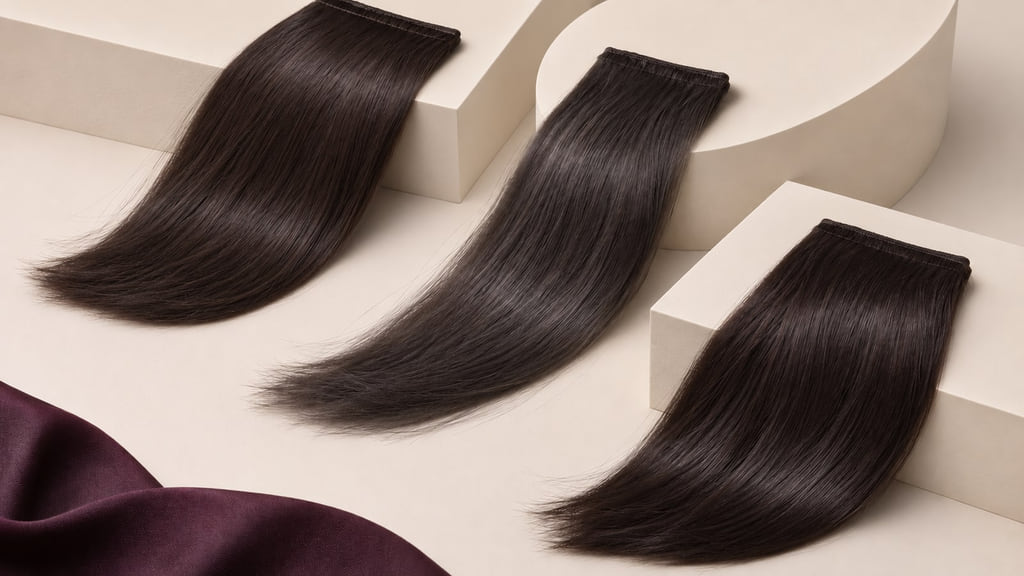
If the Cool Winter reference appeals to you but your current lengths look warmer or your routine is simple, ask which part of the reference matters most: the overall cool reflection or just a cooler section near the face. Seasonal Hair Color Analysis explains the wider framework; Spring Hair Colors and Summer Hair Colors cover other palette families. Keep this decision focused on the three Winter directions.
Plan Regrowth and Color Upkeep
For a clearer Bright Winter example, check whether the bright sections still read distinctly against the base as your hair changes. For a Cool Winter example, watch whether the cooler reflection remains visible in your usual lighting. In either case, note when roots or a changing reflection begin to bother you, then ask what salon support the proposed service would need. There is no single refresh interval for every starting base or color service.
| Direction | Daily routine check | Change to watch | Salon conversation |
|---|---|---|---|
| Bright Winter | Do clear strands stay visible with your usual styling? | Root contrast or less distinct bright sections | Would you maintain the placement or prefer a quieter transition? |
| Cool Winter | Does the cool reflection read in your ordinary light? | Reflection shifts or roots become noticeable | How much coolness would you want to maintain? |
| Deep Winter | Can you still see detail in the dark outline? | Roots contrast or the interior reads flatter | Would you keep this depth or allow more brown to show? |
Choose the amount of visible change and salon support that fits your routine. A preferred image cannot tell you how your own color will grow out or change.
Build Your Color Reference
Save one photograph showing your current full hair outline in neutral light and a closer view of your roots and ends. Add the matched comparison above, then point to the specific difference you want to test. Similar exposure matters: a shadow can make hair appear deeper without a different color.
You can say: “I want to compare Bright Winter with Cool Winter. My reference is neutral-cool deep brown hair with open strand detail. Keep the natural density and show me the difference in depth, reflection, and placement before we choose a service.” This is a consultation brief, not a dye recipe or a promise of an identical result.
Choose the closest direction and discuss those references with your colorist. Ask what is realistic from your current base before choosing a service.
Frequently Asked Questions
Is this a diagnosis or a styling framework?
It is a styling framework. The cited twelve-season model names Winter as a palette family; Wella’s chart distinguishes depth and tone within its own notation. Neither determines your individual result. Use the terms to compare what you can see.
Do I need to dye my hair to fit a palette?
No. Your natural hair may already give you the depth and reflection you prefer. Bright Winter and Cool Winter are two optional ways to compare a clearer versus cooler look, not instructions to change your hair.
How can I compare depth and reflection?
Use the same light, framing, and exposure. Hold apparent depth close when comparing a clearer Bright Winter example with a cooler Cool Winter one; hold reflection close when testing greater depth. This page compares palette-family directions, not seasonal trends.